
Like many others, I’ve been fascinated by the thought of living in a tiny house. I even considered doing so while I planned my move to South Carolina. But after watching shows like Tiny House Nation, I soon realized that it takes a certain mentality and more than a little will power to confine one’s life into 300 square feet. Bedrooms you have to climb ladders and crawl into, bathrooms where the toilet and shower are in the same space, chairs that are more at home in a camper than a living room, nope! That’s all fine for a short period, but I am neither mentally prepared or have the will power to live in such a small space for the rest of my days.
I’ve done it before and it was not pleasant.
When I arrived in Arandis, Namibia during my stint in the Peace Corps, I fully expected to live in a tiny grass hut. Such was my preconception of Namibia and Africa in general. I knew there were modern cities in Africa. Windhoek, Namibia’s capital, looks like any European metropolis, complete with the traffic and noise. But I didn’t think I’d be working in Windhoek. This was the Peace Corps after all. They go to where the need is most, and that tends to be in rural areas. So, I saw grass huts in my future.
I was surprised to find that my first home while in country was a three bedroom house built of concrete blocks. It had full plumbing, power, a nice kitchen, and a living room with a 65” TV and sectional sofa, and a small front lawn. Hardly a grass hut.
So much for preconceptions!
However, by the time I left Namibia, and due to managerial snafus, I was moved to a 500 square foot house, then to a 100 square foot cabin that was originally intended for one person staying overnight. Truthfully, not even one person would want to spend a night in that tiny closet. The place was poorly designed and I barely had enough room for a single bed. Yet I stayed in that cabin for 5 excruciating months. I had an old hot plate for cooking, a fridge the size of a foot stool, and the water from the faucet was not ideal for drinking. I was told that it was temporary, that I was in “transition”. It was hot, smelly and full of mosquitoes. It was not the best 5 months of my life.
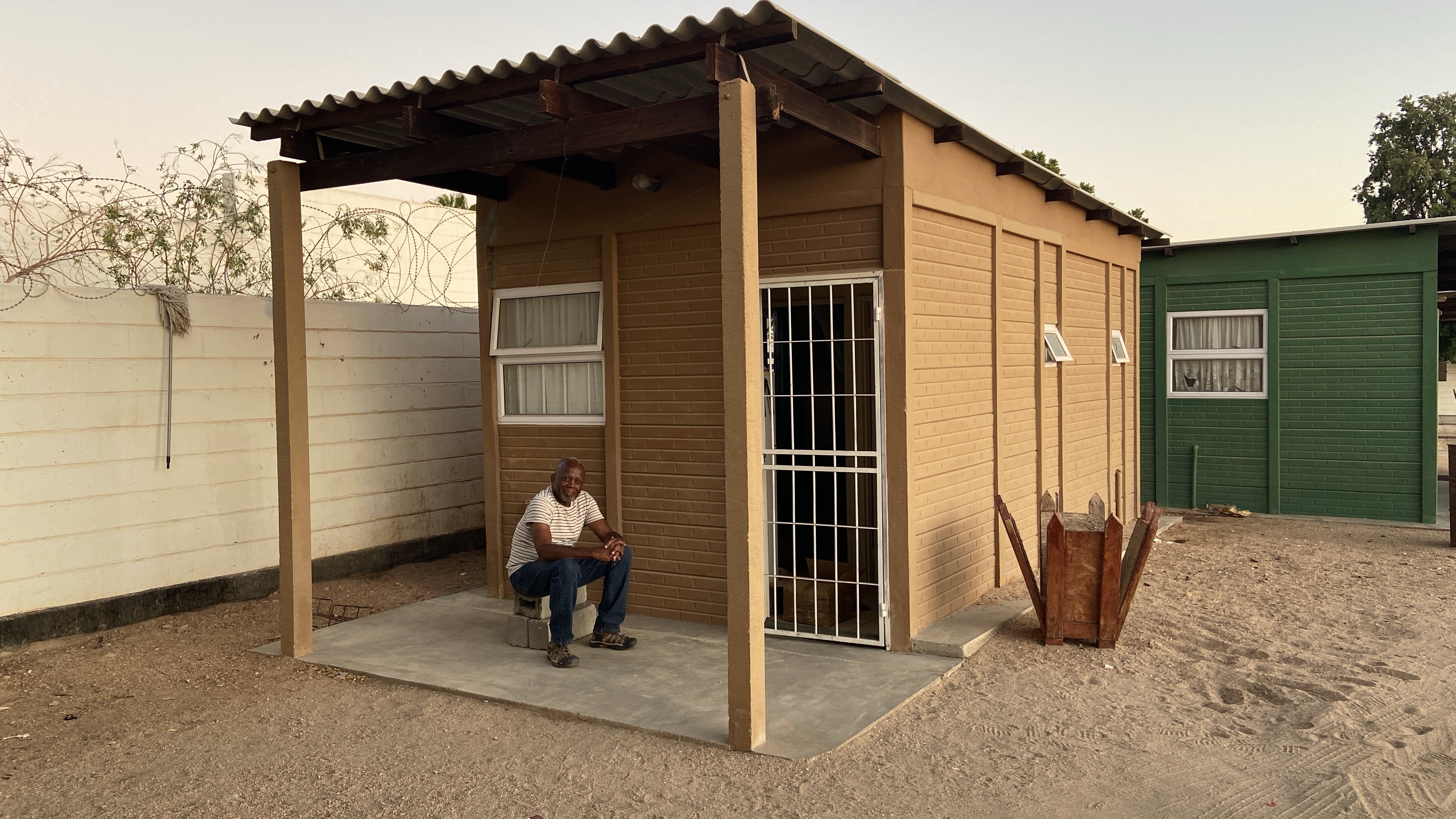
When I came back to Florida I rented a 450 square foot cottage. After living in that tiny cabin, 450 square feet felt absolutely palatial! Still, I was in transition; going from my Peace Corps life in Africa to the life I had previously known in Florida. I eventually moved back into my 1450 square foot home and, when I did, I found that I had far more space than I needed. My mind had adjusted to the confining space I was forced to live in.
I had no use for a dining room, one of the smaller bedrooms I used to stage house renovation and repair projects which I could have done in the garage. The other small bedroom remained empty. I pretty much stayed in three room; the kitchen, the living room, and the primary bedroom. Together they were about 800 square feet. I had room to spare!
When I sold my home in Florida my initial intentions were to find a place in South Carolina that was smaller, perhaps around 1000 square feet. I thought that anymore space would be wasted on me. But, sometimes things just don’t pan out like we planned. Instead of downsizing, I’m actually upsizing. The house I intend to buy is a bit more than 1500 square feet. Ah well. It’s still not Buckingham Palace, so there’s that.
Unfortunately, my new home won’t be finished for quite some time. It’ll be at least 10 months before the house is ready. So, I’m in transition once again and, once again, I’m existing in a small space.
I’m renting a studio apartment while my new home gets built. The apartment is 462 square feet. Because space is so limited I find that I need to revisit some of the strategies I used in Namibia and, more so, in the small rental in Florida to optimize storage and make this little spot feel like somewhere I want to be, not escape from.
With that in mind I’d like to highlight some of those strategies. Maybe you can use some. Maybe you can suggest some. I’m always open to new ideas. So, let’s get crackin!
The first thing I want to talk about is a table. Elevated, flat, hard, durable surfaces in a studio apartment is, unsurprisingly, hard to come by. This place has approximately 4 square feet of counter space. It’s nice counter space, made of a composite granite-like material, but it’s barely enough real estate to prep a decent sandwich, much less cook a meal. Obviously a table of some sort is the answer.
In the small rental back in Florida I had bought and used a very inexpensive stainless steel table. I got the idea from my friend, Sara. She had a nice stainless table she was using as a kitchen island. That table proved to be very versatile. It was easy to clean and maintain. So, I got one too.
While I would highly recommend a stainless steel table, I would strongly suggest that you not get a cheap one like I did. Mine cost about US$100 and it was not very good. The table top was stainless, but barely so, and the rest of the table was of lower grade metal. The lower surface was definitely a poor grade aluminum. The table top was of low grade stainless. Over time I found tiny rust spots on it. Food grade stainless will not rust so the metal in that table was obviously not food grade.
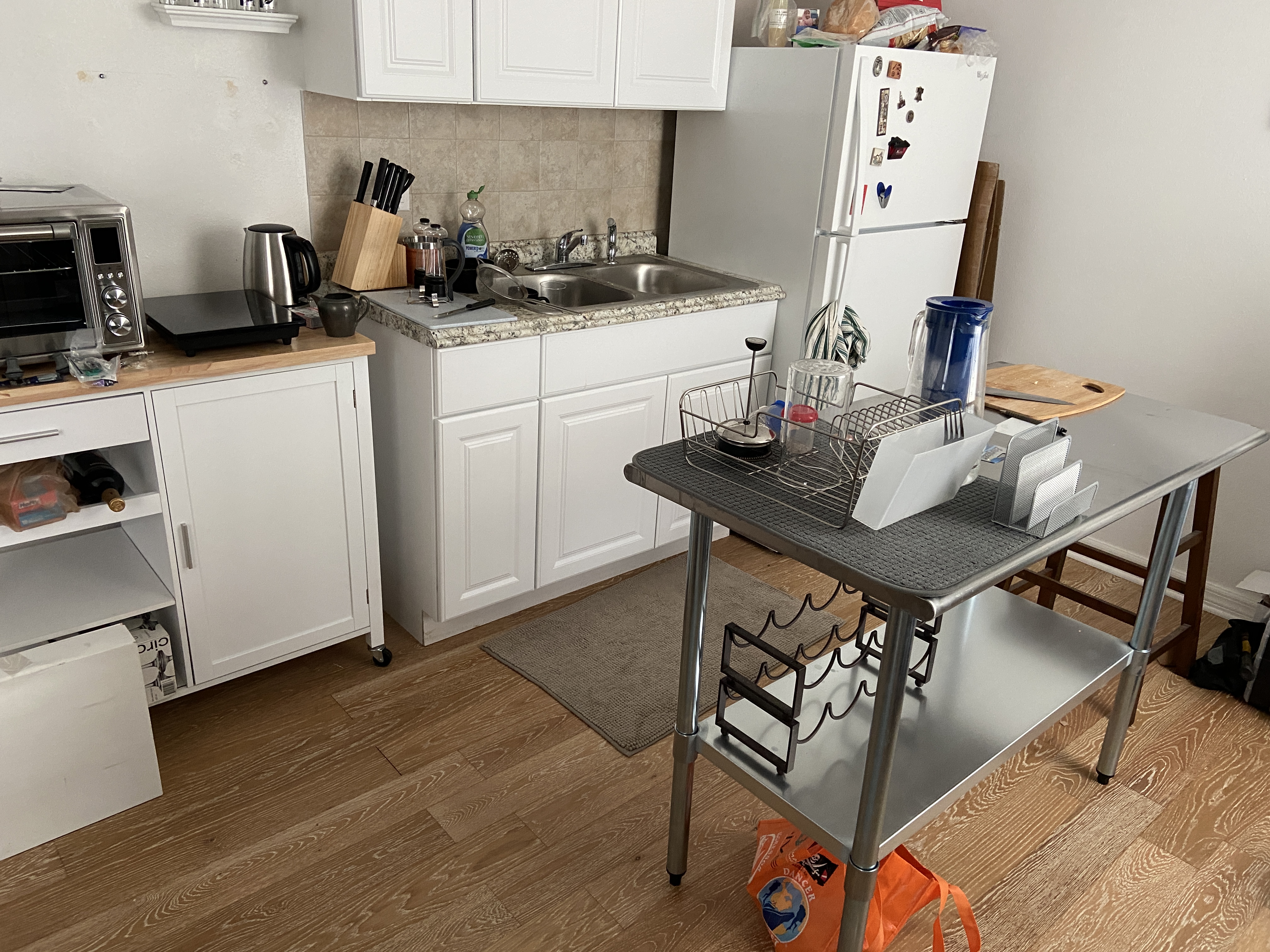
Still, the table served its purpose. I used it for food prep, a workstation desktop, a sound studio station, a dining table, and more. Even so, I was happy to leave it behind. If you decide to get a stainless steel table get one that has food grade stainless as its top surface. It will definitely cost more than a hundred bucks, but it’ll be worth it in the long run.
This time around I decided to take a different approach. While shopping in Costco I came upon a robust, adjustable height table with a glass top from a company called Tresanti. Glass is key because it makes the top easy to clean and maintain and it makes the table extremely versatile while looking sharp.
As I mentioned, the table is height adjustable. Back when I was working I found that standing was a lot better for me than sitting at my computer all day. I had my desk raised and the company I worked for gave me a chair that allowed me to easily sit in a quasi-standing position whenever I needed to. I’ve been standing whenever I’m at my computer ever since.
This table, then, is perfect! It’s the right size to sit behind my two comfort chairs, dividing my “living room” from my kitchen/editing studio/whatever else I need the space to be. (More about those chairs in Part 2.) I can dress it up for an intimate, candle lit evening, fit it out to record audio for my next video, or pound out this post for my blog.
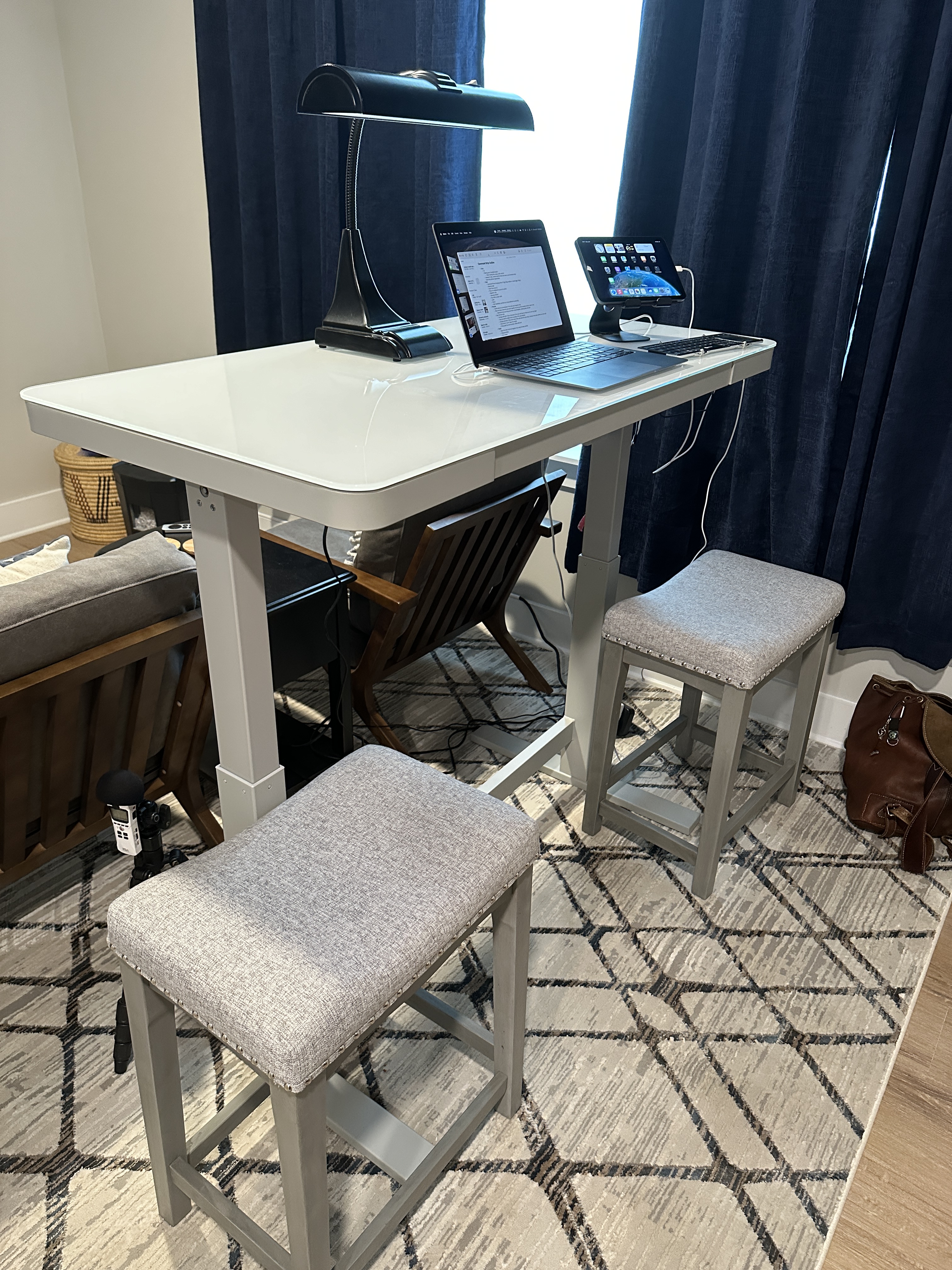
The table was a tad spendy, but it will be with me for a long time.
I bought two fairly inexpensive, decent quality upholstered stools to go with the table. The stools are comfortable and serve as my dining chairs and as extra seating on the rare occasion when I’m entertaining more than two people. Together the table and stools look as if they were made for each other.
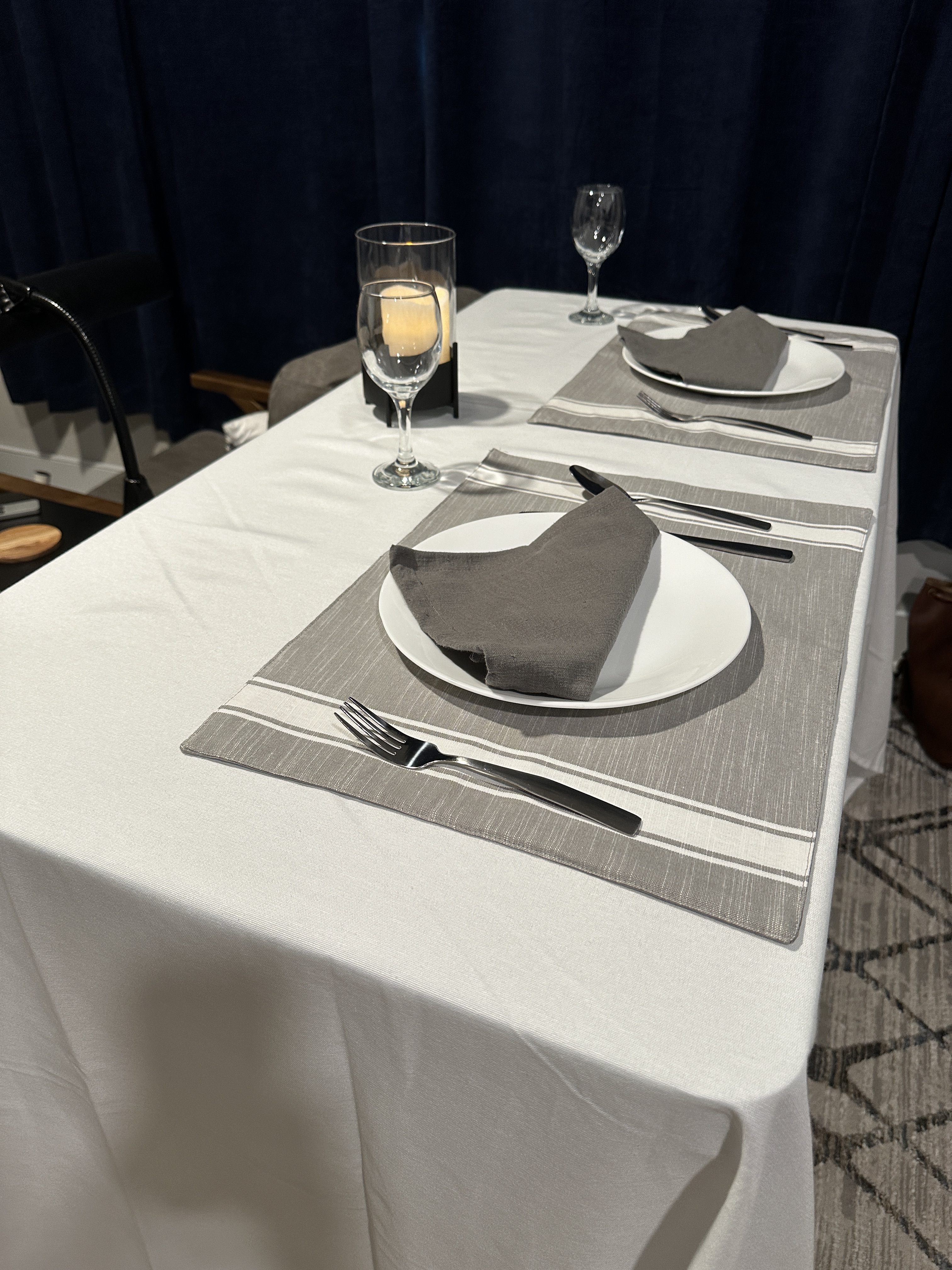
So, I’ve doubled my elevated surface area, added more seating, and have created a flexible workspace that looks great. And what I’ve bought will find use in the house I’ll eventually move into, so nothing is wasted.
The second item I’d like to talk briefly about is actually an indulgence of mine that just happened to be useful.
One of the few bits of furniture that I brought with me is a lamp that I found in Goodwill several years ago. I bought it for US$10 not knowing if it would work.
Some of you younger readers won’t recall ever seeing this type of desk lamp. It has a heavy metal base, a bendable snake-like stem, called a goose neck, and a wide, rectangular…, I guess you would call it a globe. It’s the portion of a lamp where the light source, a bulb in most cases, would be. This lamp, however, is fluorescent. It uses two, 16 inch long fluorescent tubes as its light source. These types of lamps were popular years ago, especially in accountants and newspaper editors.
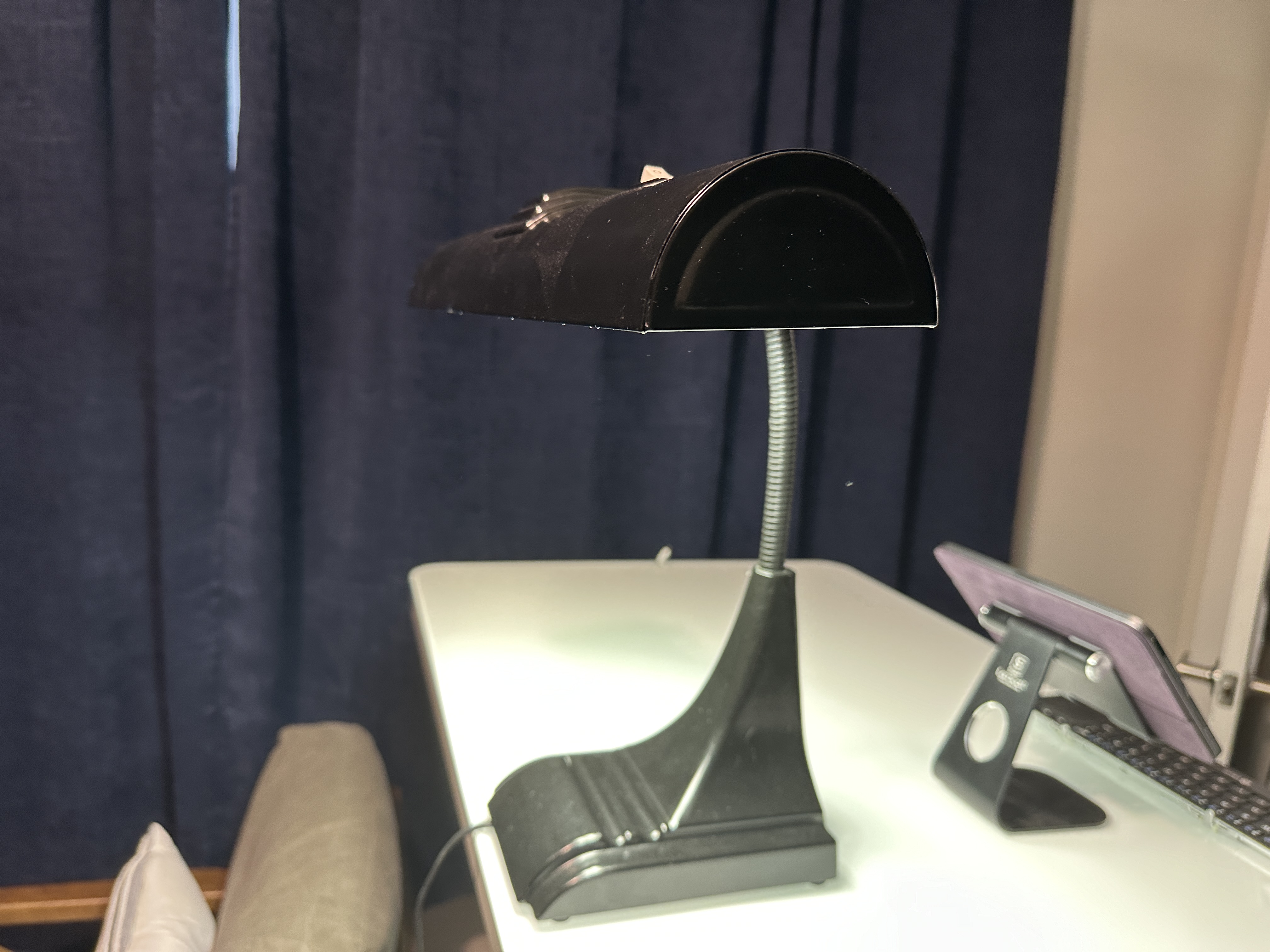
What’s special about this lamp, special to me anyway, is its versatility. It’s ideal for reading and any time I need a more focused light source. The thing I like most about the lamp, however, is its looks: clean lines, functional, understated with a hint of Art Nouveau aesthetics. It takes up very little of what precious desktop real estate I do have while providing a much needed function. The cost puts it in line with my new found frugalism and the looks certainly coincide with Mid Century Modern tastes.
A win-win!
More about living in small spaces in part 2. Until then…
Stay tuned.
Vern
 GoGeezer