Darting Around

I’ve never been one for sports. I don’t religiously follow teams, though I will watch a game recap. I could never properly perform a basketball layup, throw or catch a football with any finesse, or hit a baseball no matter how hard I tried, so I was always the last one to get picked for a team.

I was turned off from tennis when some bozo said he’d coach me for free, but it turned out he just wanted someone he could blast 200mph serves at. I had even bought a tennis racket with the intention of learning the basics. Besides, I figured women might take notice (more like pity) of a strapping young man trying to whack a fuzzy yellow ball across a net and failing miserably. And, sadly, no women took notice. 

A friend of mine tried and failed to teach me the finer points of golf. While I enjoy smacking the hell out of those little white balls on a driving range, I absolutely suck at playing the game on a course. I figured that if I was going to spend that much time in sand traps, I may as well go to a beach instead.

There are really only two activities that may loosely be considered sports that I am any good at: table tennis (ping pong) and darts.

I picked up table tennis during my stint in the military while stationed in Thailand. I was looking for something to do that didn’t cost money and didn’t involve drinking. I started playing in the NCO (Non-Commissioned Officer) rec rooms on the bases wherever I was stationed, and I got to be fairly good, winning more matches than I lost.

During my time at IBM, I had a manager who also enjoyed ping pong and was quite good at it, though he was half again my age at the time. We discovered that IBM had a table tennis setup in one of the lounges on site, and my manager and I would go and play during our lunch breaks. 

We weren’t in the league of those world class players who stand ten feet away from the table and can make the ball move blindingly fast or seem to hover just above the net, but we had a lot of fun. 

I don’t play anymore, though I’m sure I’ll pick it up again given the opportunity.

I started playing darts after looking for something that my then-wife and I could do together after my daughter went off to college. I bought an electronic dart board. It wasn’t very good and broke not long after we started playing regularly. But we played enough that we were hooked, so I bought better one.

While I got fairly decent at it, my ex got really good, beating me 3 out of 5 games almost every time we played. I think she practiced while I was at work, though she never would admit it. 

She had a very unconventional way of throwing. She would swing her arms like a baseball pitcher winding up for a pitch, then throw the dart, not hard, but with uncanny accuracy. My throwing style at the time was copied from players I’d seen on the internet. They all threw basically the same way; using the forearm and wrist to kind of flick the dart. These guys were pros, but my mimicked throw produced mixed results. You can imagine my frustration at losing to a woman who threw darts like a Yankee pitcher trying for a no-hitter.

Since that time, my dart throwing accuracy has improved. Back in 2019, the organization that hosted me while I was in Namibia, the Rössing Foundation, had put on a sporting event for its employees. Darts was among the activities, and I won the first-place trophy! The first time I’d ever won a trophy for anything!
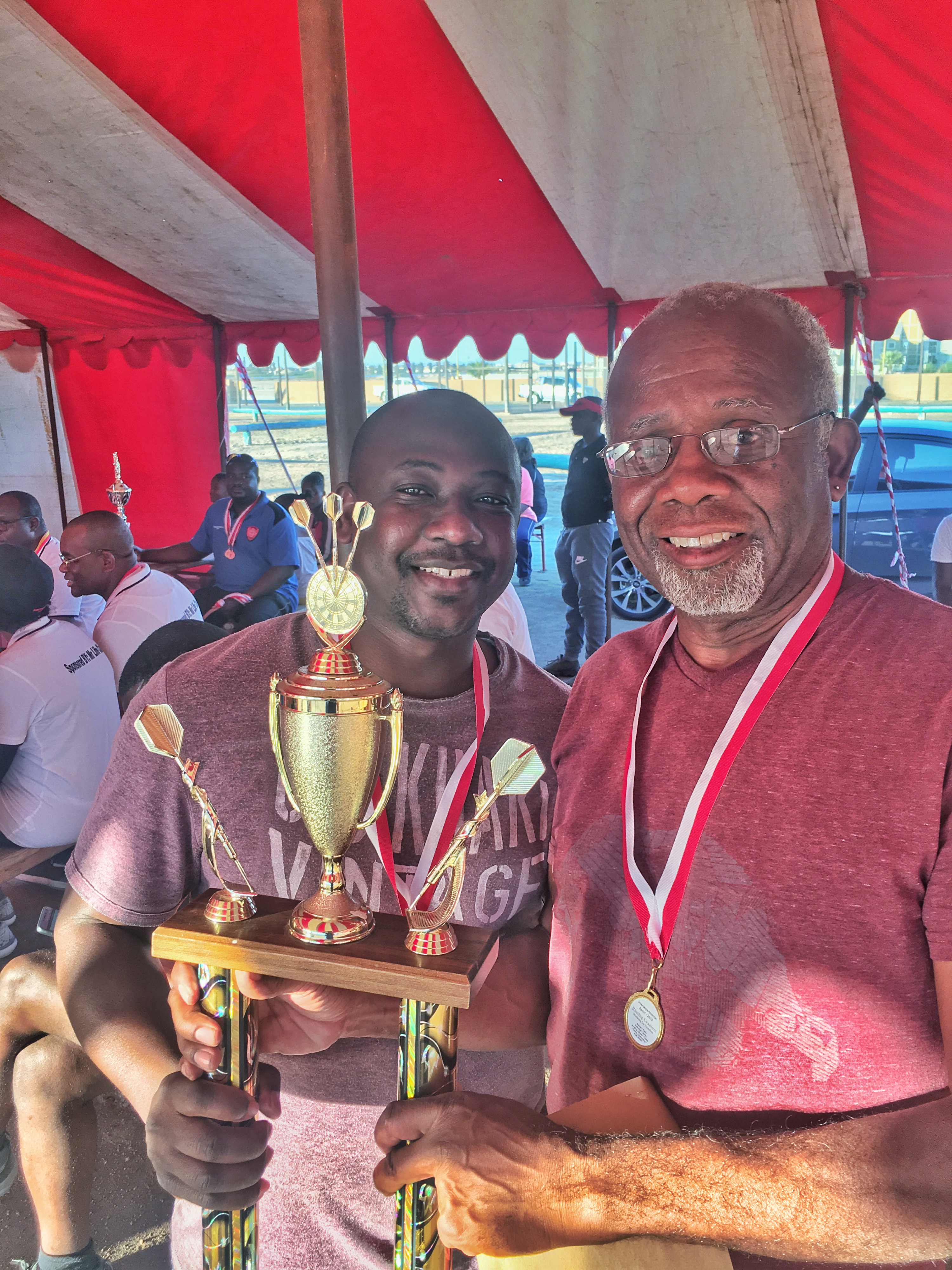
That’s my friend, Florian, on the left.

While I was in Namibia, I found that the locals also enjoyed darts, and I would play them after work at a local bar. It was there, oddly enough, that I learned to associate beer with darts. An association that I enjoy to this day.

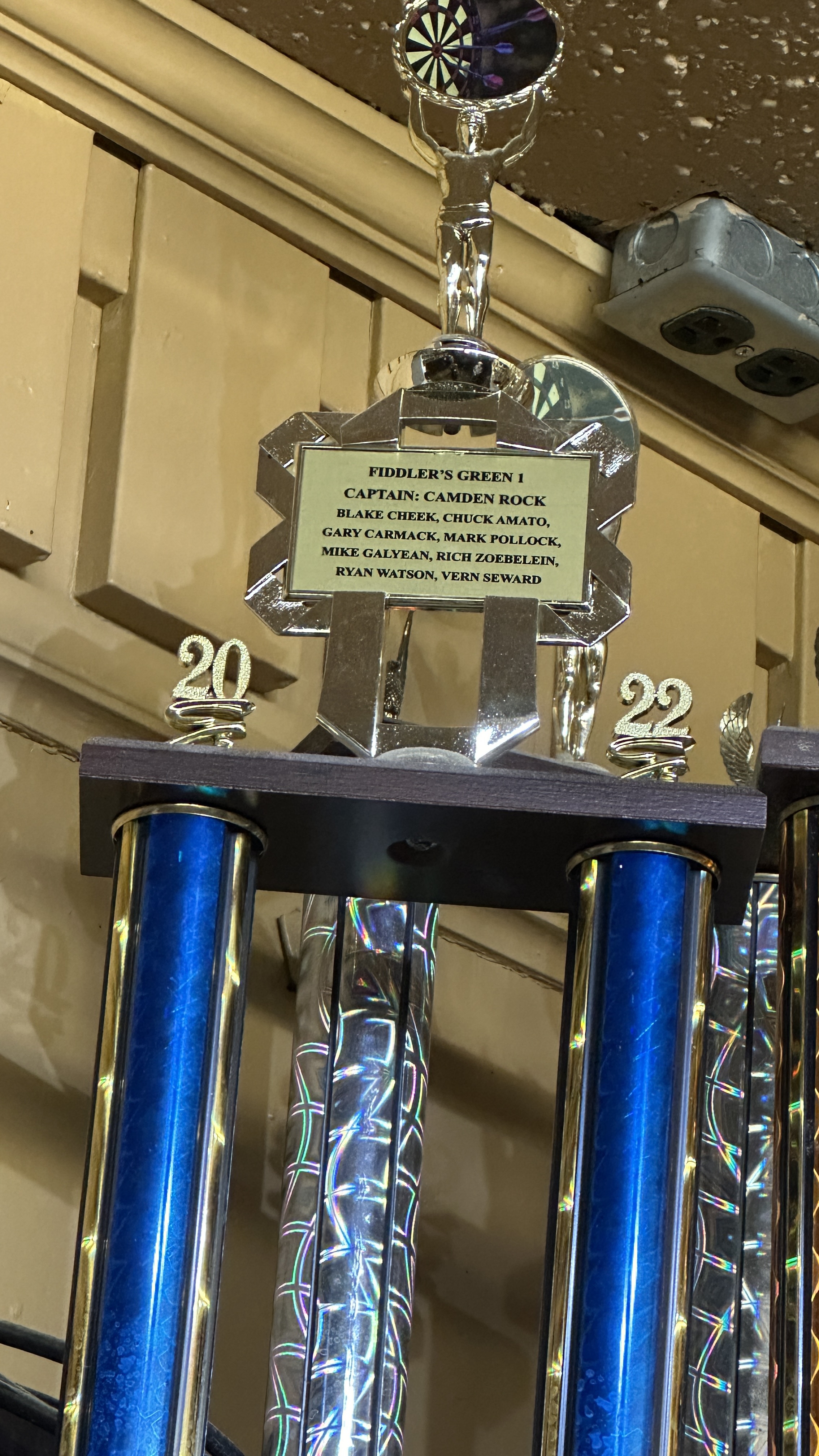
My skills had improved since returning from Namibia (so did my beer drinking), enough so that I wound up on a team in the Orlando Darts League. We played out of Fiddler’s Green in Winter Park. I was there for 3 seasons, and the second season I was there, we were first in our division and got a trophy for our efforts!  Every game was enhanced by a pint or two of Guinness. 
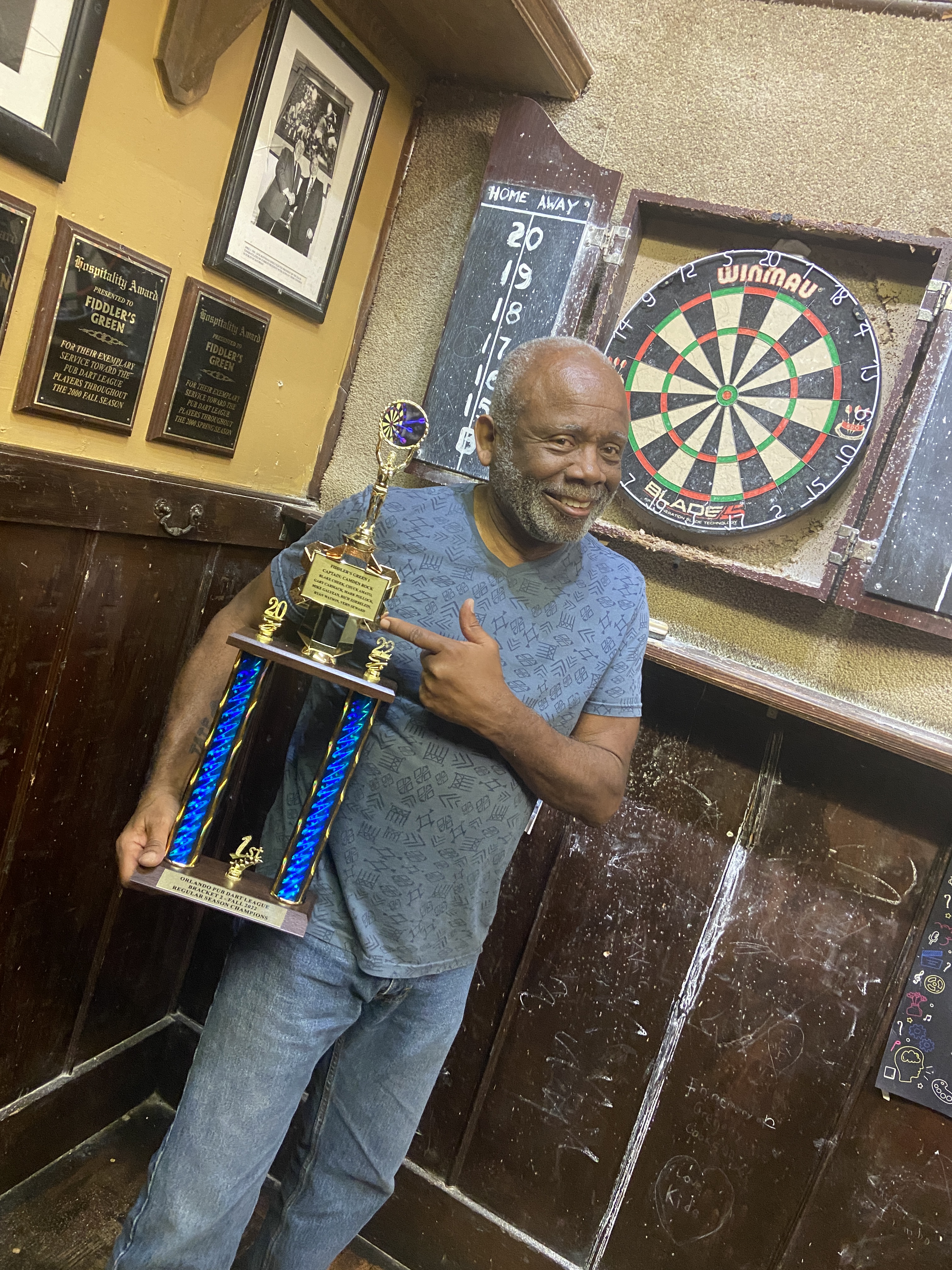
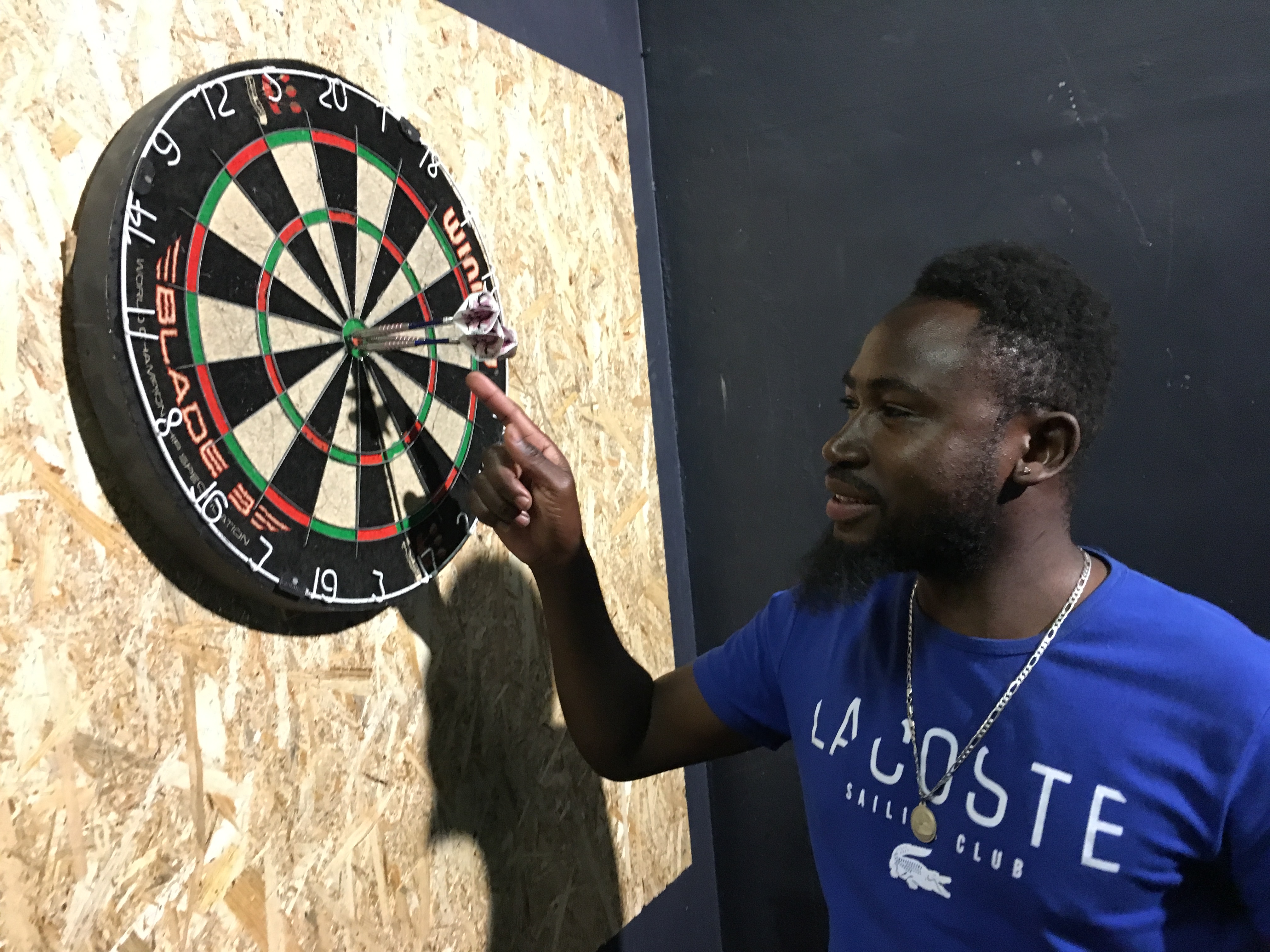
That’s my name I’m pointing to.

Since moving to the Greenville, SC area, however, my dart throwing skills have declined dramatically. I was still good enough to get signed onto a team out of Doc’s Tavern in Greenville, and we actually won first place in our division last season, but we did so without much help from me. This season my team, called ‘No Ton Intended’, moved up to Division 2 and we are getting spanked soundly by nearly every team we’ve played so far. And I don’t think I’ve won a match yet this season, regardless of how many beers I drank.
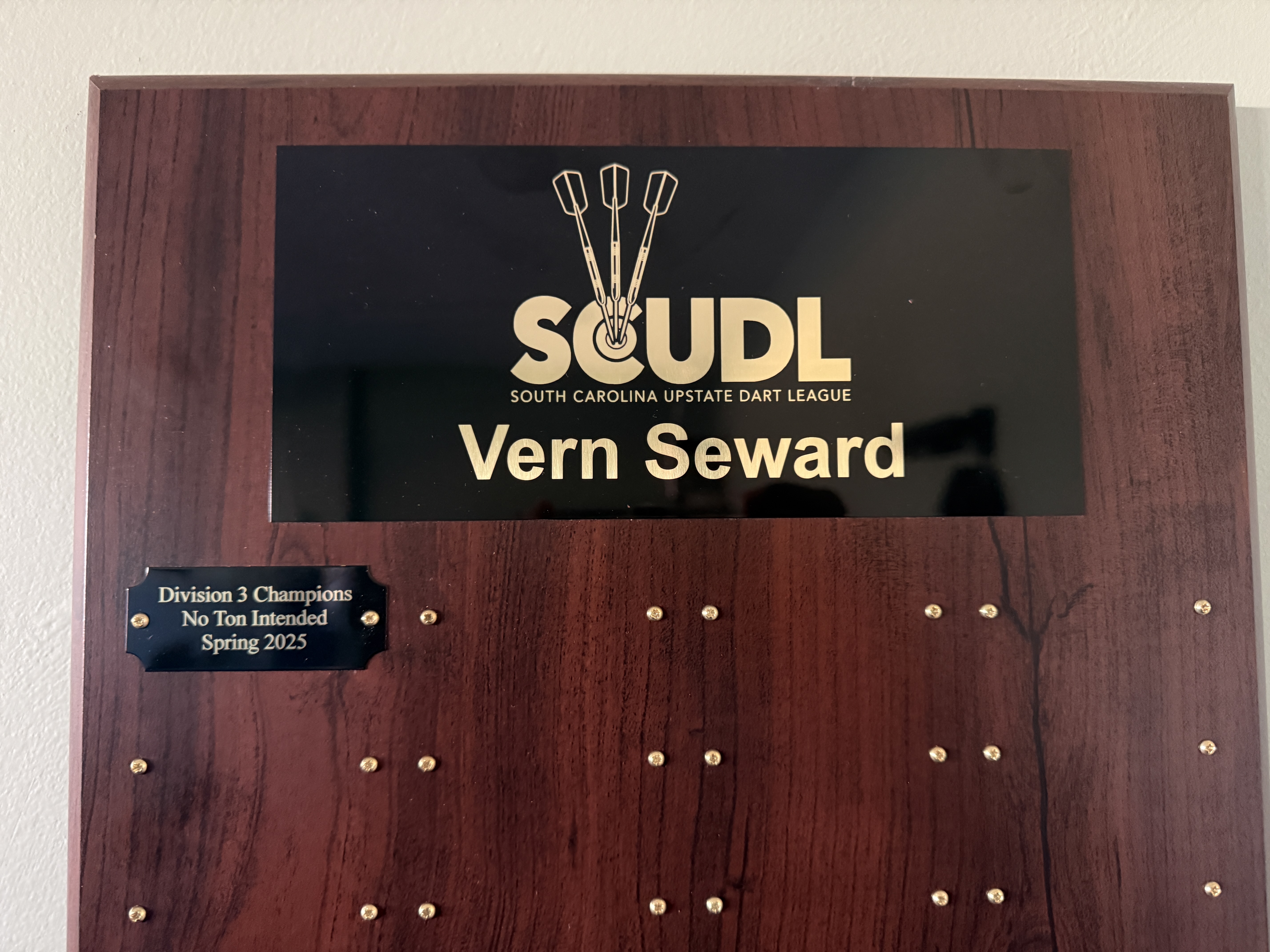
The plaque was a surprise. Not sure how many of those empty spots I’ll fill in.

I know what the problem is: practice, or rather, the lack of it. Like any skill, throwing a pointy bit of metal at a 1-inch diameter target about 8 feet away and hitting it consistently takes practice. Lots and lots of practice. 

A quick search on the internet reveals that professional darters practice anywhere between 1 hour up to an astounding 12 hours a day!! I’m retired and I enjoy throwing, but 12 hours a day?? 

Nope!

Still, after reviewing my league performance so far this season, it’s obvious that I need to practice. A lot. The problem is that I have nothing to practice on. I’ve moved into my house about 4 months ago, and my focus has been on fitting up the house to make it feel like home. The apartment I had the year before I moved in was so small that I had to go outside to change my mind. (Old joke, but still makes me chuckle.) Places where I could go to practice were inconveniently far away for daily throws. What I need is a dart setup here, in my house somewhere. 

Now, I’m on a mission!

Other tasks around the house have been put on hold until I can establish a dart practice space. I can’t just throw a dartboard on a wall and have at it. A dartboard must be hung at a specific height (5 feet, 8 inches from floor to bullseye) and must be a specific distance from the throw line (7 feet, 8 and 3/4 inches). There must be proper lighting. There should be a backboard behind the dartboard that can catch errant throws without causing damage to the wall. And more. 

An engineering challenge that is not outside the scope of my abilities.

So, after careful consideration ( and a few beers), I’ve decided to build a dart practice setup consisting of, not 1, not 2, but 3 dart boards: a regulation board, a practice board where the high-point target areas are all reduced in size, and an electronic dart board.

I’m going to go all out with this setup. I’m putting it in my garage. The walls will be painted. The floor will be epoxy-coated, and the garage will be kept neat and free of clutter and accumulated stuff. 

That’s the goal anyway. Right now, the floor is bare concrete. The walls are painted, but there’s stuff everywhere. 

I’m working on it!

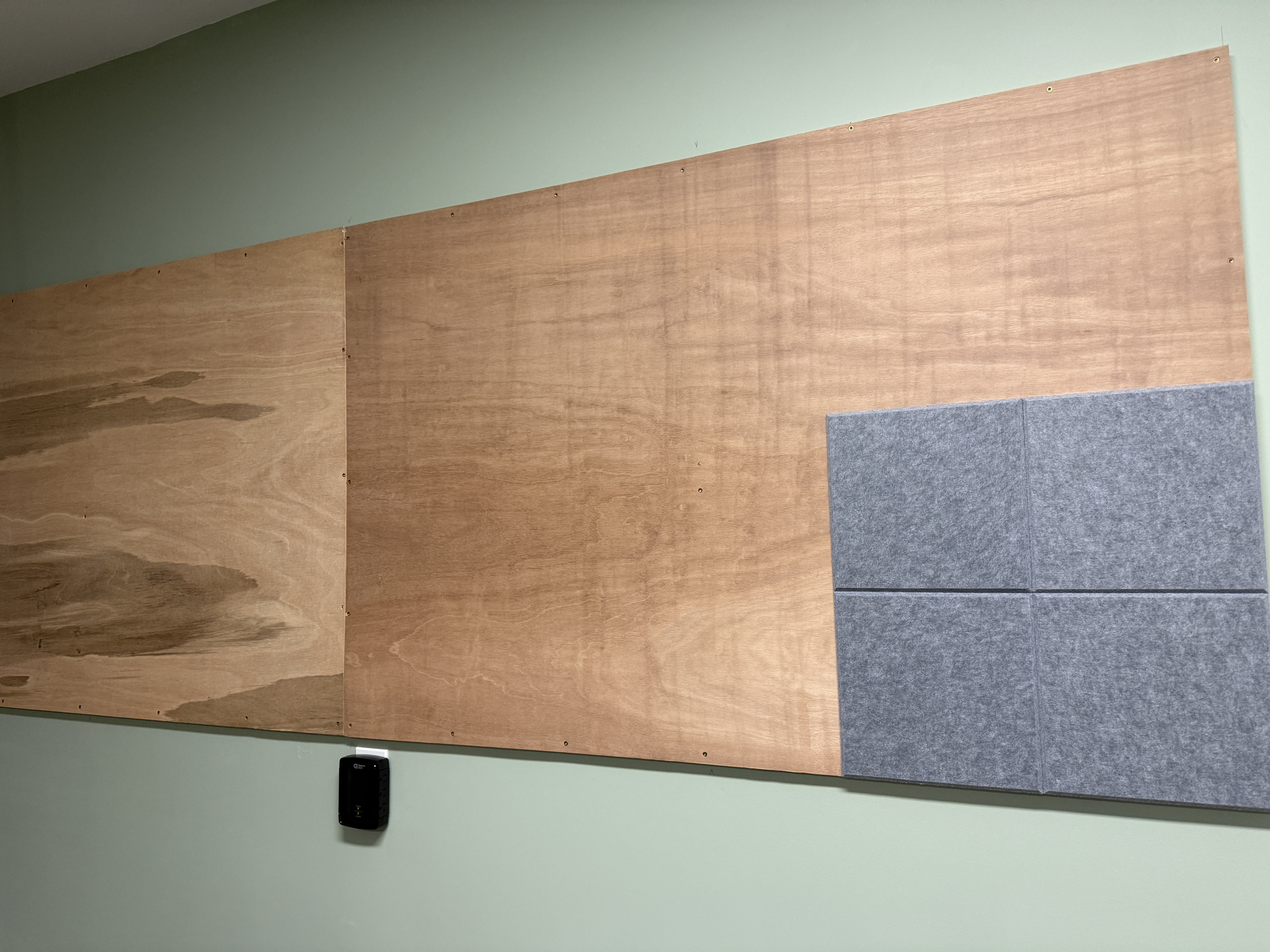
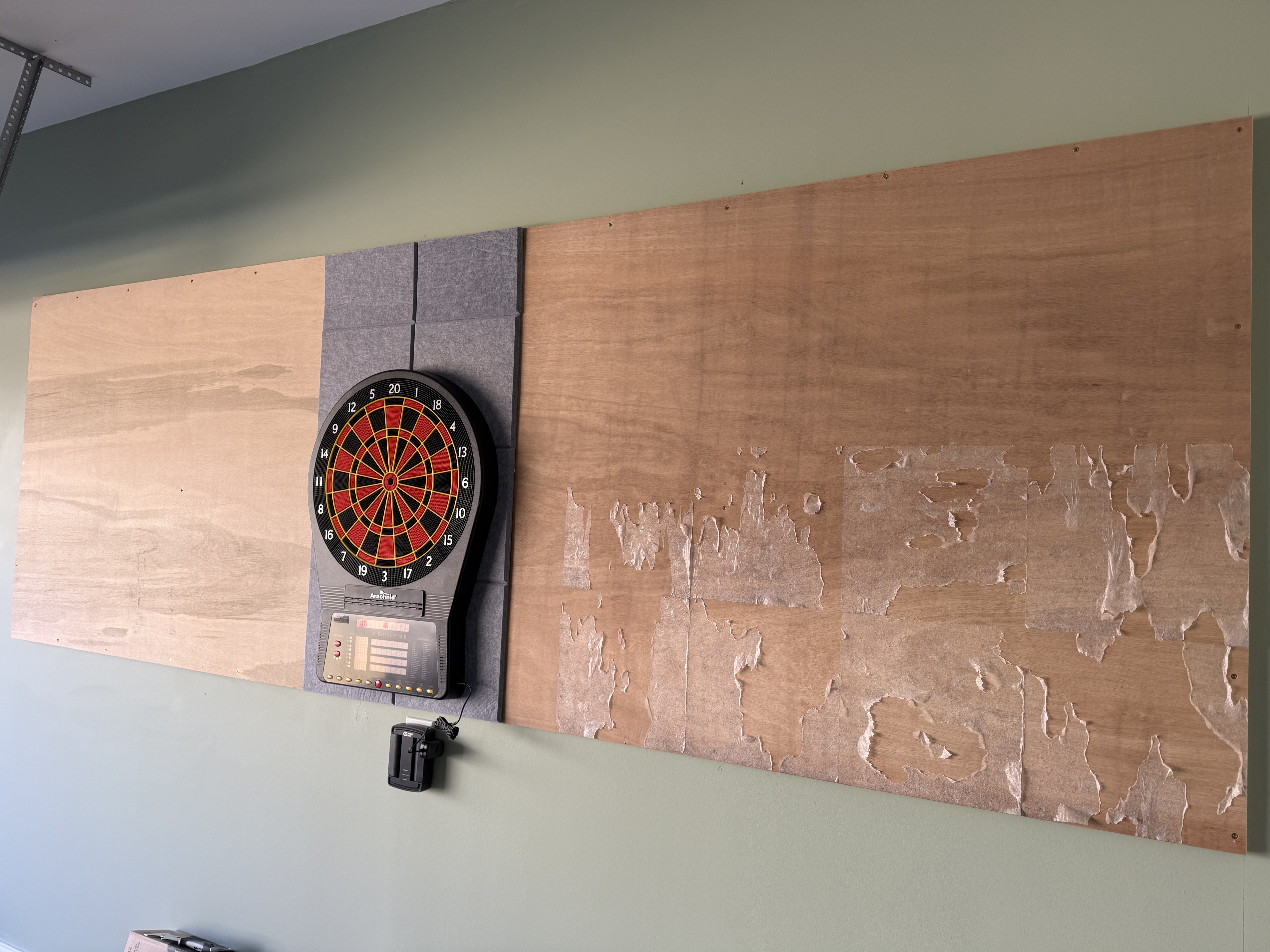
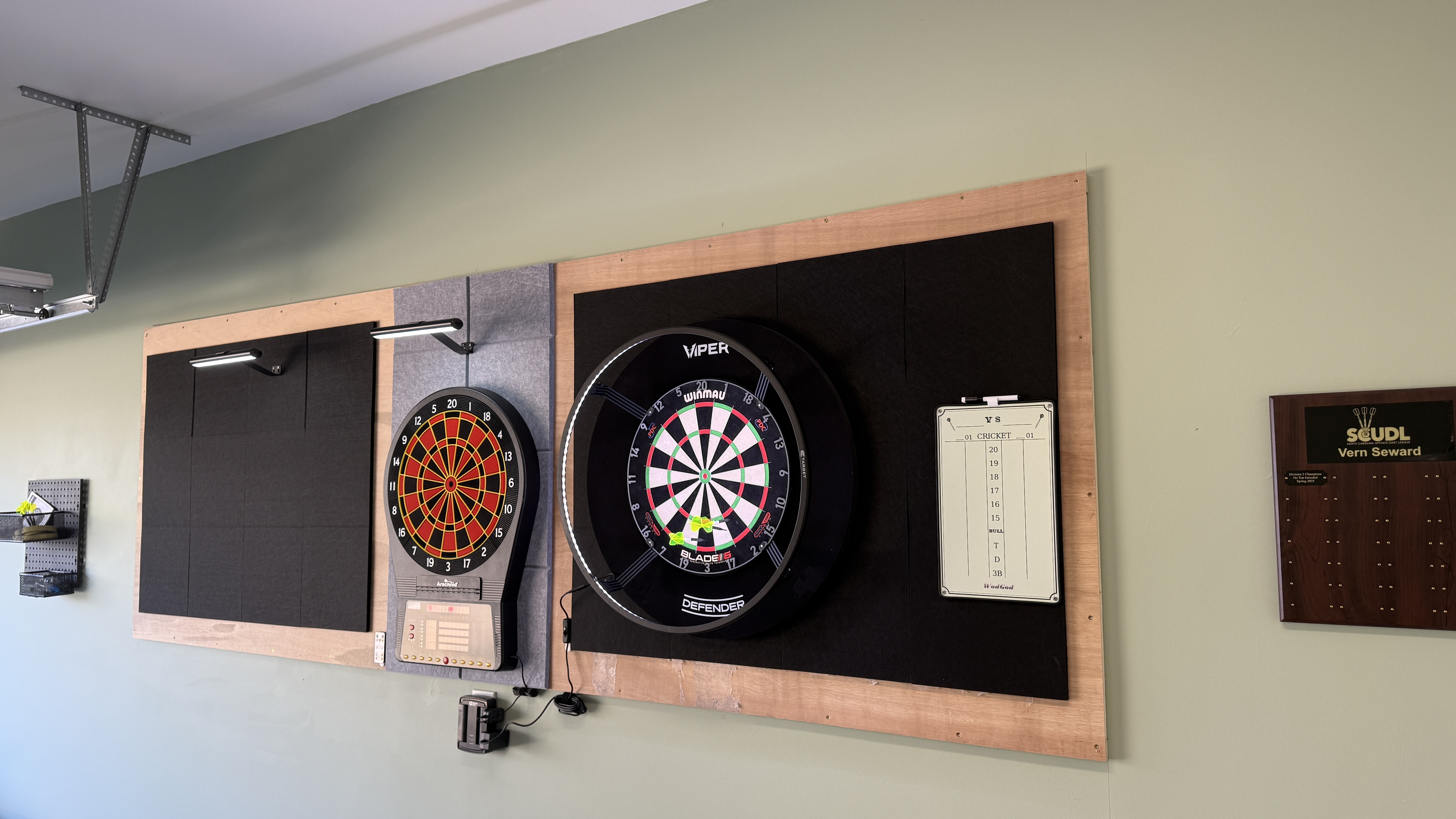
OK, so, it’s a work in progress, but there is progress. Check out these photos…
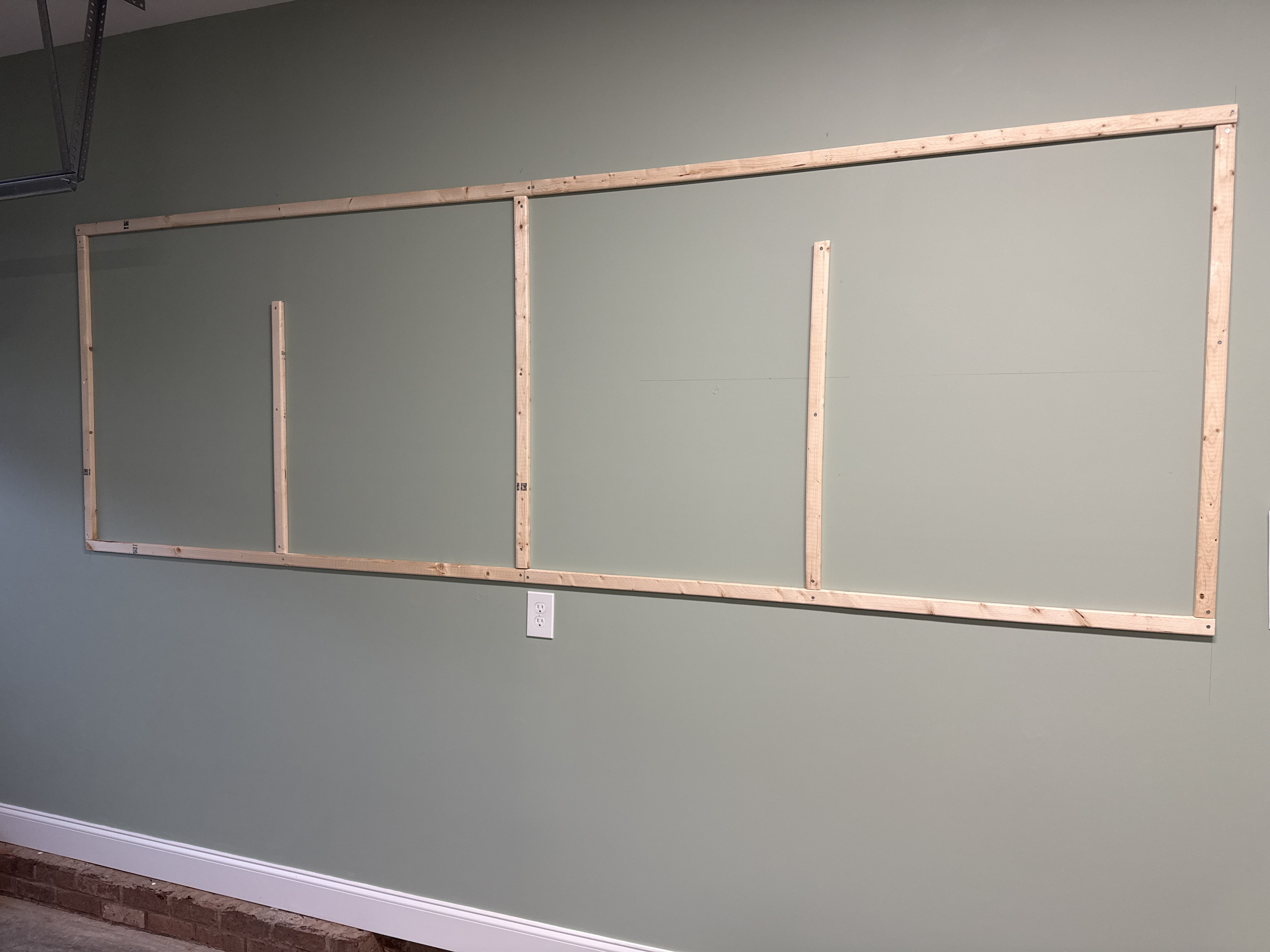
Turns out that grey felt won’t hold a metal tipped dart. Had to take it off.
The electronic board is just a fun addition.
Finished! Well, almost. That place on the left is for a training board.

It turned out pretty good, even after a few missteps. 

So, now that I have a place to practice, I have no excuse not to get better. But, you how people will make a resolution to lose weight and exercise more, and they spend a lot of money and buy fancy exercise equipment and set it all up, then promptly ignore it? 

Yeah. 

Stay tuned.

Vern
Living in Small Spaces: Part 1

Like many others, I’ve been fascinated by the thought of living in a tiny house. I even considered doing so while I planned my move to South Carolina. But after watching shows like Tiny House Nation, I soon realized that it takes a certain mentality and more than a little will power to confine one’s life into 300 square feet. Bedrooms you have to climb ladders and crawl into, bathrooms where the toilet and shower are in the same space, chairs that are more at home in a camper than a living room, nope! That’s all fine for a short period, but I am neither mentally prepared or have the will power to live in such a small space for the rest of my days.

I’ve done it before and it was not pleasant.

When I arrived in Arandis, Namibia during my stint in the Peace Corps, I fully expected to live in a tiny grass hut. Such was my preconception of Namibia and Africa in general. I knew there were modern cities in Africa. Windhoek, Namibia’s capital, looks like any European metropolis, complete with the traffic and noise. But I didn’t think I’d be working in Windhoek. This was the Peace Corps after all. They go to where the need is most, and that tends to be in rural areas. So, I saw grass huts in my future. 

I was surprised to find that my first home while in country was a three bedroom house built of concrete blocks. It had full plumbing, power, a nice kitchen, and a living room with a 65” TV and sectional sofa, and a small front lawn. Hardly a grass hut.

So much for preconceptions!

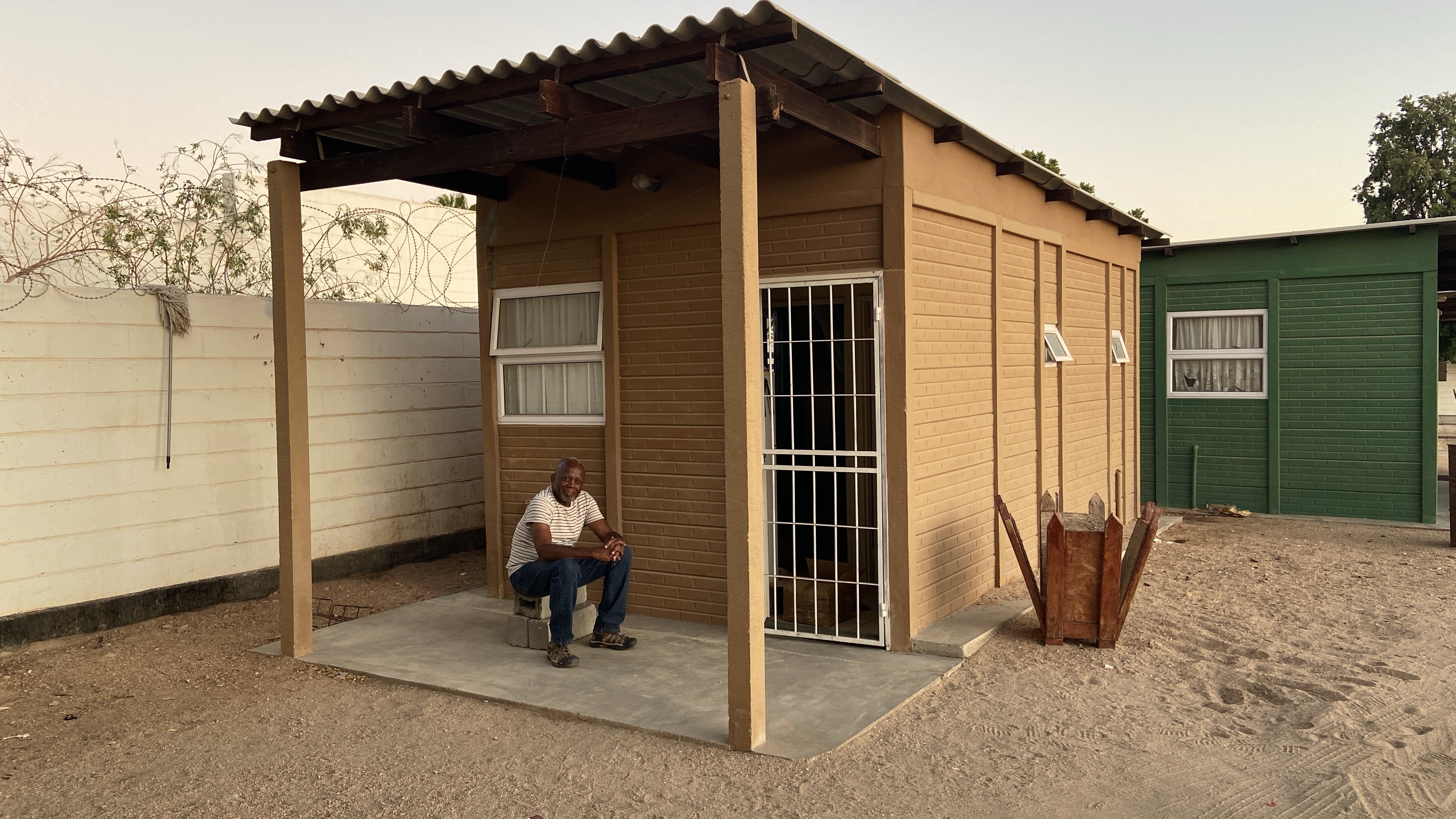
However, by the time I left Namibia, and due to managerial snafus, I was moved to a 500 square foot house, then to a 100 square foot cabin that was originally intended for one person staying overnight. Truthfully, not even one person would want to spend a night in that tiny closet. The place was poorly designed and I barely had enough room for a single bed. Yet I stayed in that cabin for 5 excruciating months. I had an old hot plate for cooking, a fridge the size of a foot stool, and the water from the faucet was not ideal for drinking. I was told that it was temporary, that I was in “transition”. It was hot, smelly and full of mosquitoes. It was not the best 5 months of my life.

Me sitting in front of the tiny hut I spent 5 months in.

When I came back to Florida I rented a 450 square foot cottage. After living in that tiny cabin, 450 square feet felt absolutely palatial! Still, I was in transition; going from my Peace Corps life in Africa to the life I had previously known in Florida. I eventually moved back into my 1450 square foot home and, when I did, I found that I had far more space than I needed. My mind had adjusted to the confining space I was forced to live in.

I had no use for a dining room, one of the smaller bedrooms I used to stage house renovation and repair projects which I could have done in the garage. The other small bedroom remained empty. I pretty much stayed in three room; the kitchen, the living room, and the primary bedroom. Together they were about 800 square feet. I had room to spare!

When I sold my home in Florida my initial intentions were to find a place in South Carolina that was smaller, perhaps around 1000 square feet. I thought that anymore space would be wasted on me. But, sometimes things just don’t pan out like we planned. Instead of downsizing, I’m actually upsizing. The house I intend to buy is a bit more than 1500 square feet. Ah well. It’s still not Buckingham Palace, so there’s that.

Unfortunately, my new home won’t be finished for quite some time. It’ll be at least 10 months before the house is ready. So, I’m in transition once again and, once again, I’m existing in a small space.

I’m renting a studio apartment while my new home gets built. The apartment is 462 square feet. Because space is so limited I find that I need to revisit some of the strategies I used in Namibia and, more so, in the small rental in Florida to optimize storage and make this little spot feel like somewhere I want to be, not escape from. 

With that in mind I’d like to highlight some of those strategies. Maybe you can use some. Maybe you can suggest some. I’m always open to new ideas. So, let’s get crackin!

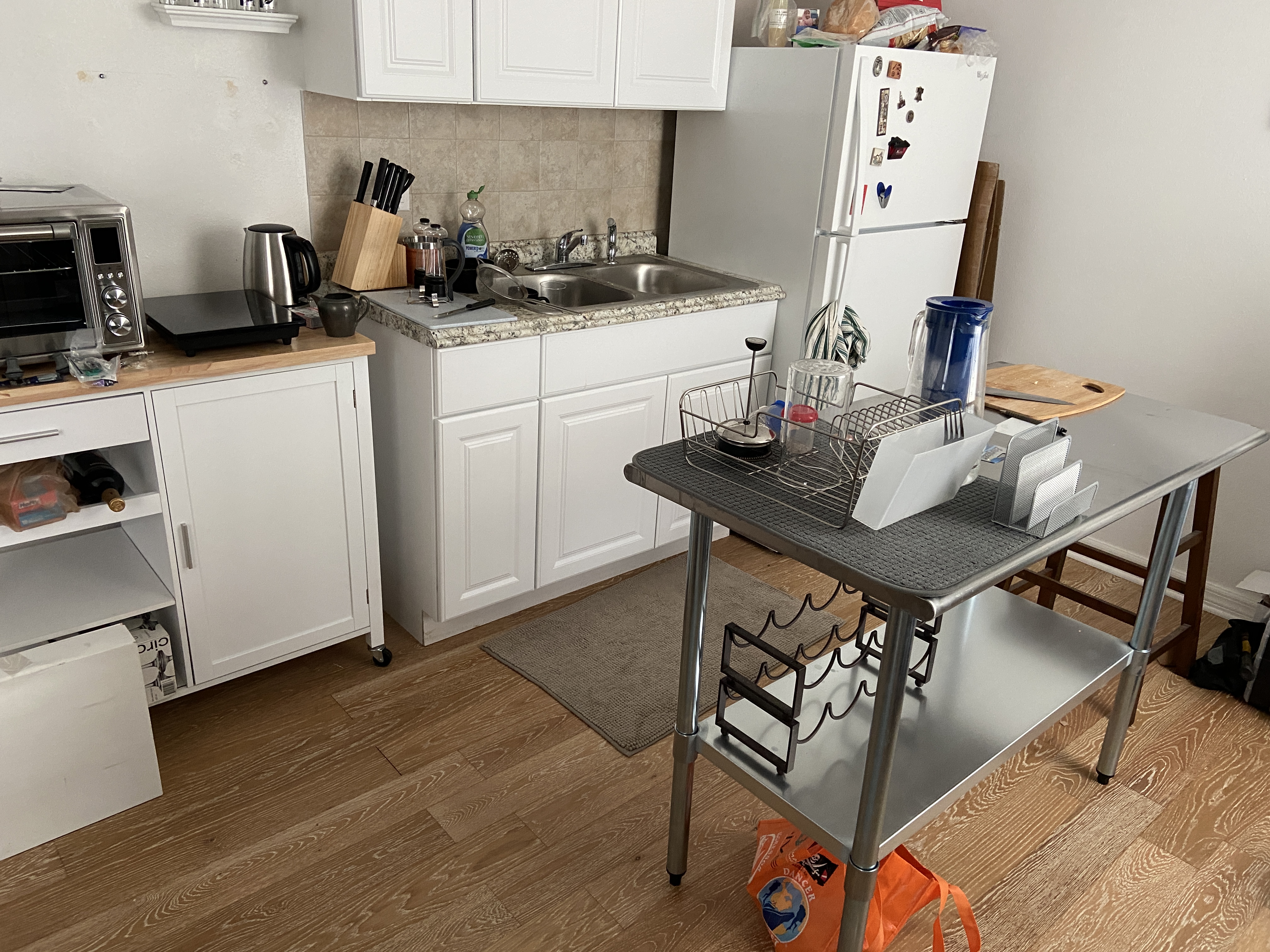
The first thing I want to talk about is a table. Elevated, flat, hard, durable surfaces in a studio apartment is, unsurprisingly, hard to come by. This place has approximately 4 square feet of counter space. It’s nice counter space, made of a composite granite-like material, but it’s barely enough real estate to prep a decent sandwich, much less cook a meal. Obviously a table of some sort is the answer. 

In the small rental back in Florida I had bought and used a very inexpensive stainless steel table. I got the idea from my friend, Sara. She had a nice stainless table she was using as a kitchen island. That table proved to be very versatile. It was easy to clean and maintain. So, I got one too.

While I would highly recommend a stainless steel table, I would strongly suggest that you not get a cheap one like I did. Mine cost about US$100 and it was not very good. The table top was stainless, but barely so, and the rest of the table was of lower grade metal. The lower surface was definitely a poor grade aluminum. The table top was of low grade stainless. Over time I found tiny rust spots on it. Food grade stainless will not rust so the metal in that table was obviously not food grade. 

That cheap steel table did come in handy.

Still, the table served its purpose. I used it for food prep, a workstation desktop, a sound studio station, a dining table, and more. Even so, I was happy to leave it behind. If you decide to get a stainless steel table get one that has food grade stainless as its top surface. It will definitely cost more than a hundred bucks, but it’ll be worth it in the long run.

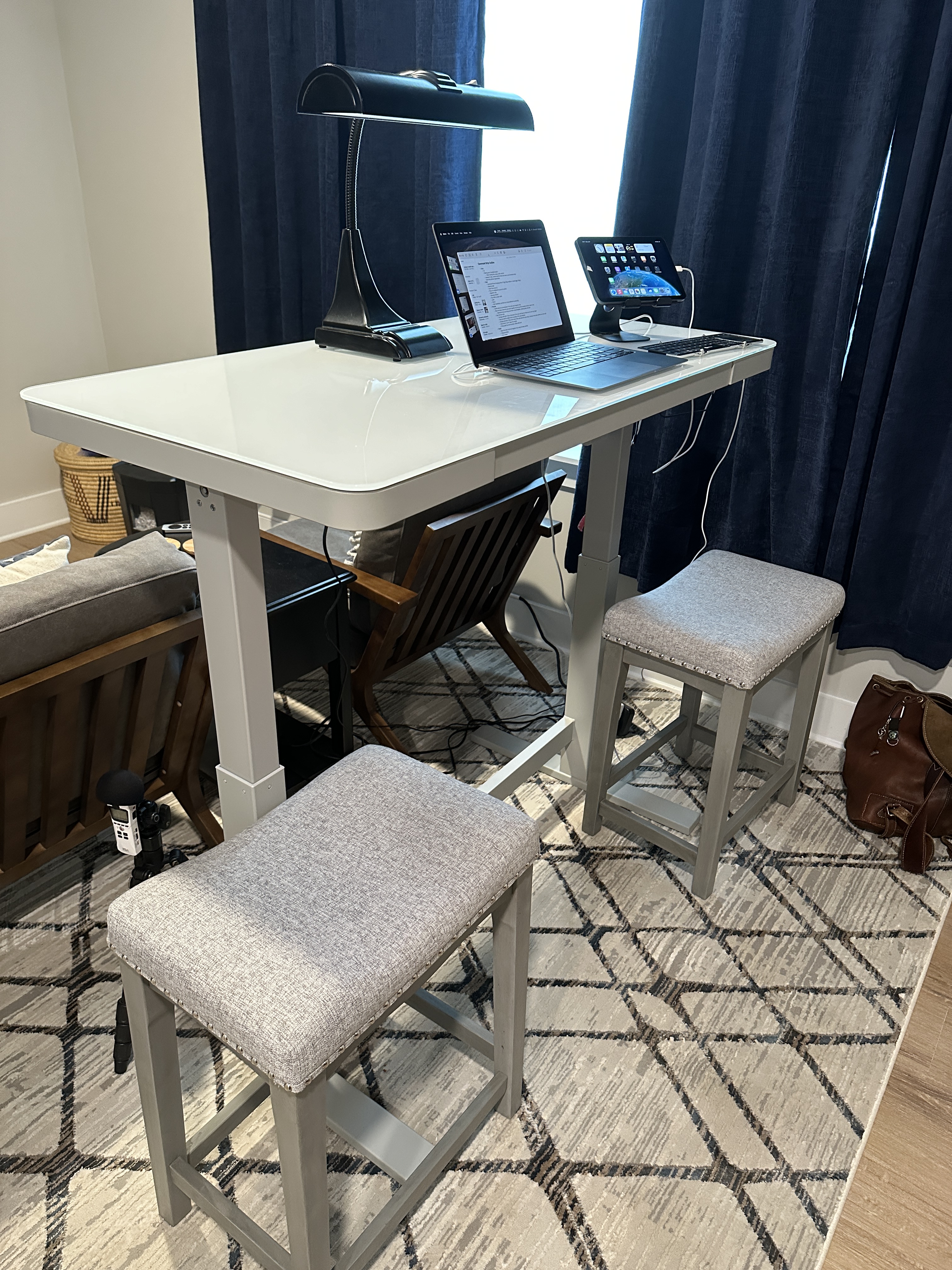
This time around I decided to take a different approach. While shopping in Costco I came upon a robust, adjustable height table with a glass top from a company called Tresanti. Glass is key because it makes the top easy to clean and maintain and it makes the table extremely versatile while looking sharp. 

As I mentioned, the table is height adjustable. Back when I was working I found that standing was a lot better for me than sitting at my computer all day. I had my desk raised and the company I worked for gave me a chair that allowed me to easily sit in a quasi-standing position whenever I needed to. I’ve been standing whenever I’m at my computer ever since. 

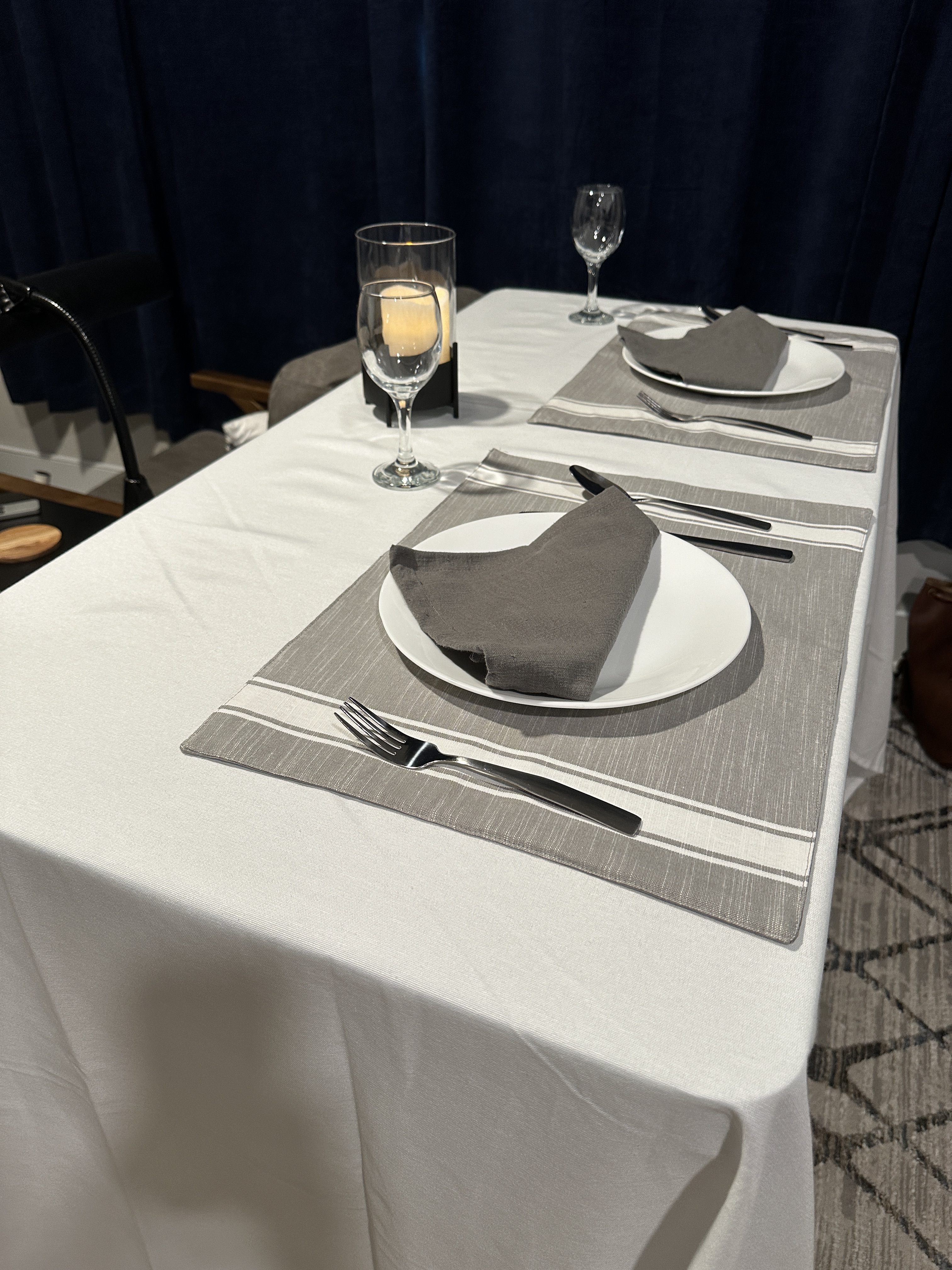
This table, then, is perfect! It’s the right size to sit behind my two comfort chairs, dividing my “living room” from my kitchen/editing studio/whatever else I need the space to be. (More about those chairs in Part 2.) I can dress it up for an intimate, candle lit evening, fit it out to record audio for my next video, or pound out this post for my blog. 

The raised height is great to stand at. And the stools complete it.

The table was a tad spendy, but it will be with me for a long time. 

I bought two fairly inexpensive, decent quality upholstered stools to go with the table. The stools are comfortable and serve as my dining chairs and as extra seating on the rare occasion when I’m entertaining more than two people. Together the table and stools look as if they were made for each other.

From workstation to an intimate table for two.

So, I’ve doubled my elevated surface area, added more seating, and have created a flexible workspace that looks great. And what I’ve bought will find use in the house I’ll eventually move into, so nothing is wasted. 

The second item I’d like to talk briefly about is actually an indulgence of mine that just happened to be useful. 

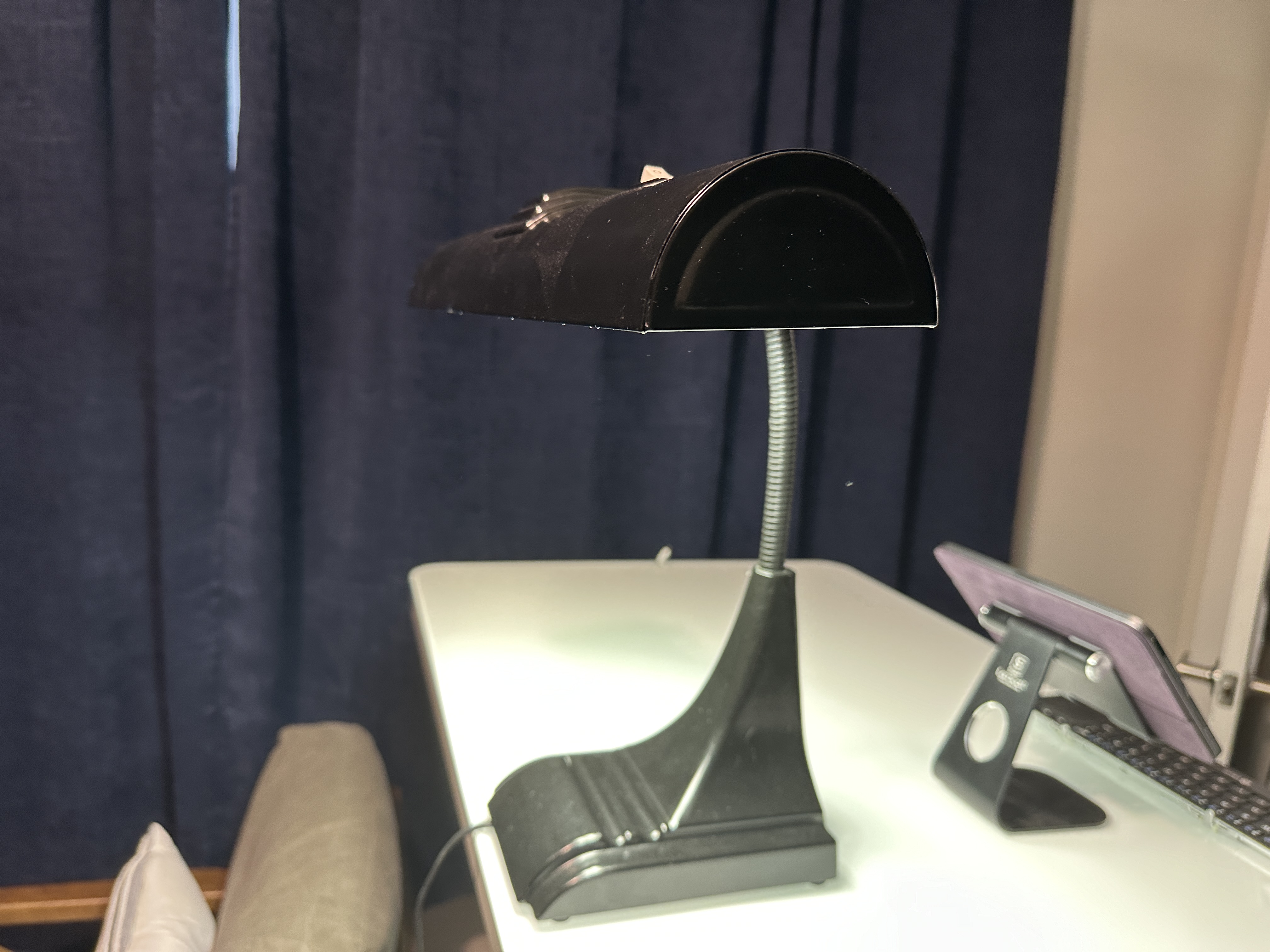
One of the few bits of furniture that I brought with me is a lamp that I found in Goodwill several years ago. I bought it for US$10 not knowing if it would work.

Some of you younger readers won’t recall ever seeing this type of desk lamp. It has a heavy metal base, a bendable snake-like stem, called a goose neck, and a wide, rectangular…, I guess you would call it a globe. It’s the portion of a lamp where the light source, a bulb in most cases, would be. This lamp, however, is fluorescent. It uses two, 16 inch long fluorescent tubes as its light source. These types of lamps were popular years ago, especially in accountants and newspaper editors. 

It may not look it, but this is a great lamp.

What’s special about this lamp, special to me anyway, is its versatility. It’s ideal for reading and any time I need a more focused light source. The thing I like most about the lamp, however, is its looks: clean lines, functional, understated with a hint of Art Nouveau aesthetics. It takes up very little of what precious desktop real estate I do have while providing a much needed function. The cost puts it in line with my new found frugalism and the looks certainly coincide with Mid Century Modern tastes.

A win-win!

More about living in small spaces in part 2. Until then…

Stay tuned.

Vern

Darts

I was never one for team sports. When I was a kid I was too short for basketball, too small for football, and baseballs seem to hit me more than I hit them. Oh, I tried, you’d have to give me an ‘A’ for effort, but my lack of speed, agility, and mass relegated me to always being the last one to get picked for teams, if I got picked at all. I didn’t mind so much. I tended to like one on one sports where one person matches his or her skills against those of another, like tennis, boxing or archery. Unfortunately those types of sports were hard to get into in my west Baltimore neighborhood in the late 1950s. 

I suppose that, since I was rejected by team sports, I rejected them. I never watched them on TV or followed team statistics. I couldn’t care less what team got into whatever playoffs or what player got traded to which team. I paid enough attention to sports to appreciated the skills involved, so if I happen to be sitting in a bar and football highlights are showing, I’ll watch, not caring what team is playing or the eventual score, but to see the actual plays being skillfully executed by professionals. I appreciate what it takes to get to that level of skill.

So, no team sports for me. That is, until I got to be much older. I now play on a dart team and the team is in a local league. How I wound up on this team is a story in itself.

Back when I was still married I was looking for something that my then wife and I could play together and not wind up killing each other. One Christmas I decided to buy an electronic dartboard. It wasn’t the cheapest board around, but it wasn’t the best either. It was functional enough that it captured our interest on evenings when there wan’t much else to do. It also fit right into my ‘one-on-one’ sports mentality.

My current electronic dartboard. It’s very similar to the one I first started playing on.

My ex and I played often and, while I was decent, my ex got to be really good. She had a very strange throw where she would swing her arms like a baseball pitcher winding up to sling a fast ball. She’d then would hurl the dart and, more often than not, she’d hit her target. It became a point of frustration for me with her winning so much, especially since I had practiced using tips I had picked up on YouTube. Seemed no matter how I tried, the woman would beat me time and again. 

Did I mention how frustrating that was? 

Yeah.

Anyway, after my divorce I decided that I wanted to increase my skills. I bought a real bristle board and metal tipped darts and hung the board in the garage of my new house. I envisioned having neighbors over to throw on warm summer evenings while chit-chatting and downing a cooler full of beer. 

The neighbor thing never happened, however. I joined the Peace Corps and rented out my house. But darts wasn’t done with me. There was another Peace Corps volunteer in Arandis, the town I wound up serving in, and he was a darts player and taught some of the locals how to play. He even convinced one of the bar owners to set up a dartboard in an unused room.  

One of my Namibian friends kicking my butt.

So, after work, I would head to that bar, order a bottle to Windhoek Lager, the official beer of Namibia, and set about playing against the locals. Once again, I ran into frustration because the local dart players were good, often better than me. Still, it was fun and I got to hone my dart throwing skills a bit. 

I actually got fairly decent, good enough to win a trophy and N$200 (about US$10). Not long after that, Covid hit and all Peace Corps volunteers were sent home. When I finally moved back into my house in 2022 I decided to get another electronic dart board. This one is pretty decent with lots of different games and I can play against the builtin computer. It’s been fun to mess around with it, but I found that I really missed throwing metal tipped darts

Me with my friend and colleague, Florian, showing off my trophy.

There’s a difference between soft tip darts used with electronic boards and metal tipped darts used on bristle boards. Soft tip darts tend to be lighter and can bounce off the board if you arch your throws. A good metal tipped dart on a good bristle board is far more forgiving, but the target areas are a bit smaller. Also, throwing a well made metal tipped dart onto a well made bristle dart board gives a satisfying, “thunk!” when dart meets board. 

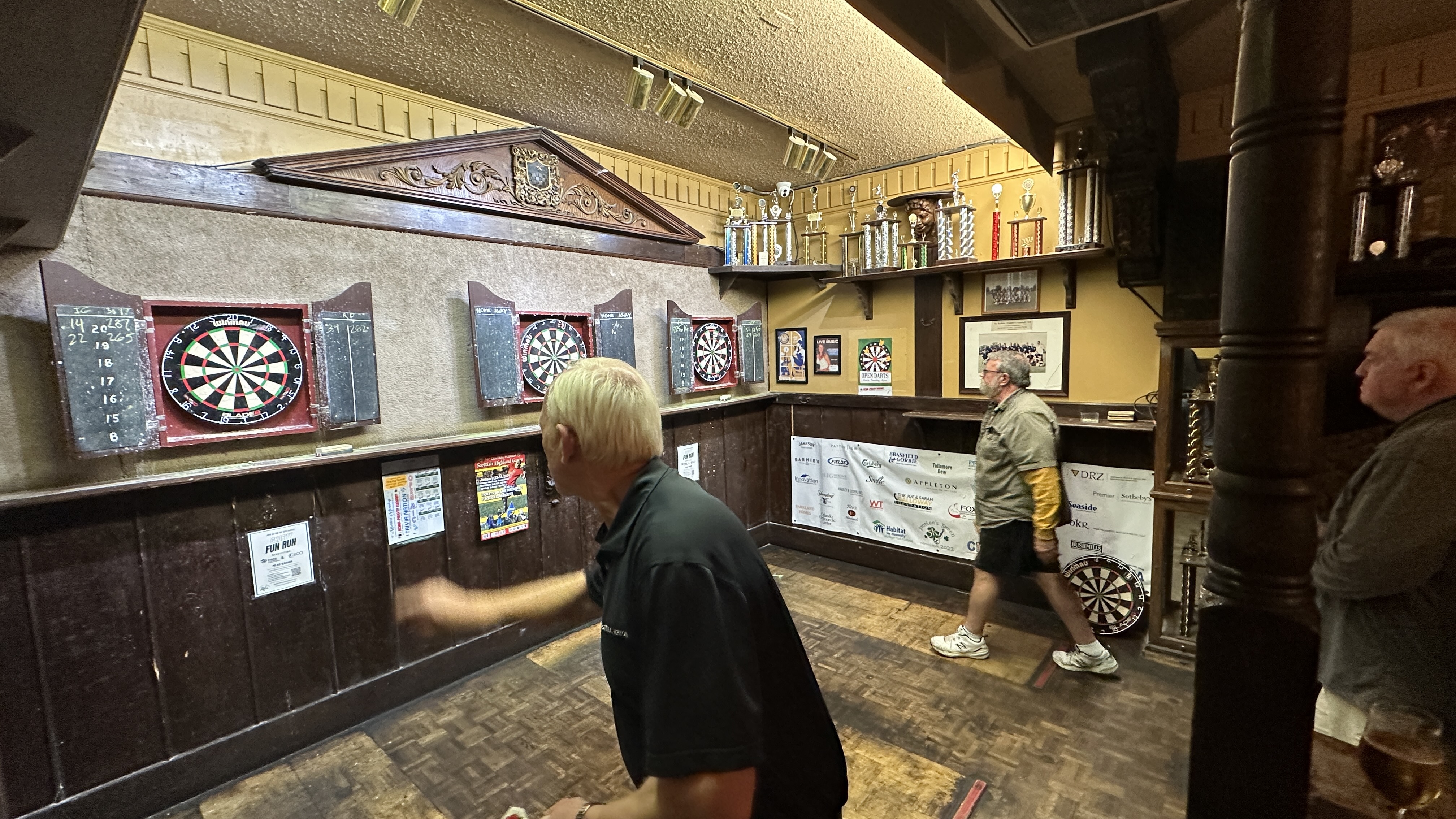
Anyway, back to how I joined a dart team. I was at an Irish pub in Winter Park, Florida called Fiddler’s Green and, lo and behold, they have three bristle dart boards! Many bars and pubs in and around Orlando, if they have dart boards at all, opt for the electronic boards where you have to pay to play. Fiddler’s Green didn’t go that route and their dart boards are often occupied by local kids from Rollins College. The pub even hosts ‘Open Darts’ on Tuesdays where anyone can play and possibly win up to $25 in Fiddler’s Green gift cards. 

After seeing those boards I decided to buy a good set of metal tipped darts and started showing up on Tuesdays to try my hand at winning a gift card or two. As it happened, one Tuesday night the captain of Fiddler’s Green’s league team was playing and I guess I made an impression on him, because he asked me to join the team. At that point I was just a so-so player, hardly consistent in my scoring, and I barely understood the rules of the games the league plays. Still, I decided to give it a go. 

As far as I can tell, there are two dart leagues in the Orlando area; one for soft tipped darts played on electronic boards, one for metal tipped darts. I don’t know much about the soft tipped dart league, but I do know they appear to be pretty active.

An ongoing match at Fiddler’s Green. We did well that night.

We have 17 teams in the metal tipped dart league, which is divided into 4 tiers. During the season the scores a team achieves by winning matches determines the team’s position in the league standings and what tier that team is in at the end of the season. The playoffs are between the teams in each tier. My team won 1st place in tier 2 both seasons of 2022 and have trophies to show for it. We made it into tier 1 last season, but didn’t do well enough to win a trophy.

The first season I played I won as many as I lost, but I found that I enjoyed hanging out with and cheering on my teammates. This is my third season with the team and it’s been a lot of fun. We’ve just finished the second 2023 season and, once again, we’re in tier two. We are third place in the tier going into the playoffs. I don’t think we’ll win a trophy this season either, but I’m gonna give it my best shot, or throw, which seems more appropriate.

I actually have my name on the team’s trophy!

Like any sports, darts requires skills which are only gained through practice, but you don’t have to be a sharp shooter to have a blast. Almost anyone can play. If you can throw a dart and hit the board, game on! 

If you’re new to darts and would like to see how well you might like it, I suggest you start off with soft tipped darts and an electronic board. The board will offer lots of different games with plenty of options. I would avoid the very cheap boards, they are far more trouble than they are worth. Expect to pay between US$50 to US$100 for a decent electronic board. I recommend the Arachnid Cricket Pro 450. It has everything you need to get started playing.

If you’d like more info about metal tipped darts, leave a comment and I’ll get back to you.

I’ll also update this to let you know how my team does in the playoffs, which starts tonight (Jan. 29, 2024). Wish us luck.

Stay tuned.

Update: Last night’s match was fun, but my team didn’t do as well as we’d like. That match was against the top team in our tier. The final score was 3:7.

Several very close games where it could have gone our way, but it was not to be.

I lost my singles cricket match. I just couldn’t get my act together. My doubles cricket match was better. We won that one.

Hopefully we’ll do better next week.

Last Update: We came in third in our tier. Not as good as last season, but better than I had expected. There will be some turnover on the team as well, people leaving to pursue other interests, people joining. In all it was a fun season.

As I said, stay tuned.

Planting Seeds

I enjoy writing though I’m not very good at it. My spelling is horrible. My sentence constructions can be bested my many 10 year olds, and my grammar hasn’t improved since junior high school. Yet I continue. Becoming a writer is what I dreamt of becoming when I was a kid. I’ve yet to realize that dream. It doesn’t mean I shouldn’t try.

Kids dream of all sorts of things they’d be when they become adults. While in Namibia, I had put together a series of lectures I would present to secondary and high school kids that exposed them to things I thought they just would not see otherwise. The lecture series was my way of addressing what I saw as a limit to the imagination natural to young minds. Whenever I asked a Namibian child what he or she wanted to be when they grew up I would get invariably the same answers: a nurse, a teacher, an engineer. All admirable careers, but the answers all lacked vision. What kind of nurse? Did they know they could specialize and become an emergency or operating room nurse? Did they know they could teach yoga, programming, or the art of sword making? Did they have any idea that nearly everything in our modern world requires specialized engineering? 

They did not. 

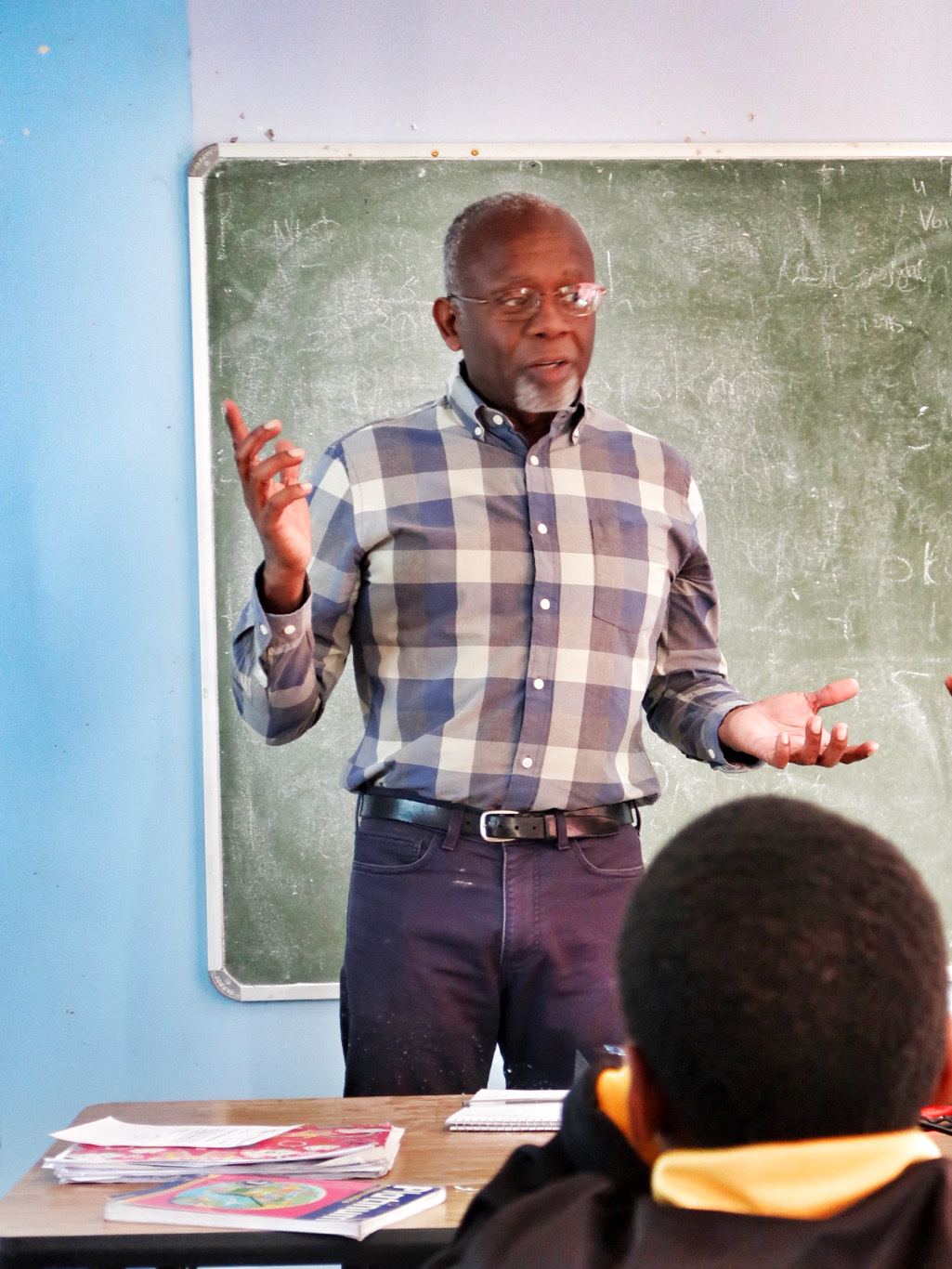
One of my early attempts at lecturing.

My lectures were supposed to expose these young minds to the vastness of human endeavor. I showed them how medicine and engineering produced prosthetics that allowed people to walk, pick up a can of soda, or see again. I showed them people who taught machines how to dance, open doors, and run on two legs like its creators. I showed them devices engineered to take people into the deepest, darkest, coldest places on earth and view, first hand, creatures never seen before by man.

Did it work? 

I don’t know. They were wowed when the watched a Boston Dynamics robot do a backflip and open a door without human assistance. They appeared mesmerized by men and women who seemed to possess comic book-like powers granting them superhuman speed, and strength through engineered prosthetics. They gasped when a diver surprised an octopus that had disguised itself as a rock. The students and teachers applauded loudly an asked for more, but did any of it mean anything?

I like to think that my lectures and presentations were more than hour-long distractions. I earnestly hope that hearing me talk and showing them video snippets of the world beyond their classrooms and auditoriums planted a seed in what I hope were minds still fertile and nourished with imagination and wonder. But I’m a realist, I know I will likely never know if anything I said or showed took root.

I left Namibia is 2020 as COVID became a pandemic. Some of those high schoolers may be freshman now in the University of Namibia or other institutes of higher eduction. Hopefully, by the time they are seniors, they will have decided of a career path and, hopefully, a few may remember the lectures and videos I showed and make a decision based on what they saw and heard.

I suppose what I’m wondering at the moment is what many teachers must wonder at some point in their career: did I make a difference? I am no teacher, but the sentiment is the same and I’ll likely never know if I made a difference, but I believed it was worth the effort. 

Maybe I should keep trying.

Stay tuned.

Vern 

Omajowa: The Mushroom King

It’s just the beginning of the rainy season in northern Namibia. Areas that were baked in the unrelenting Namibian sun for most of the year welcome the deluge that starts in late December and continues through March, dumping meters of water and supplying much of the yearly supply of fresh water to the traditional farms and towns that dot this ancient ancestral home to the Herero, Himba, Damara, Ovambo, Kavango, and Nama peoples.

It’s during this time that these subsistence farmers plant their basic food crop, mahangu, a type of millet that is pounded into a meal and eaten as porridge with almost every meal. They will plant maize and other vegetable and feed crops that will rapidly grow to maturity during the life-giving rains. It is also the time of year when once dry lakes and riverbeds come alive with barber fish, a type of catfish that is released from hibernation by the flood waters.

Omajowas sprouting from a termite mound. (Image courtesy of Atlas Obscura)

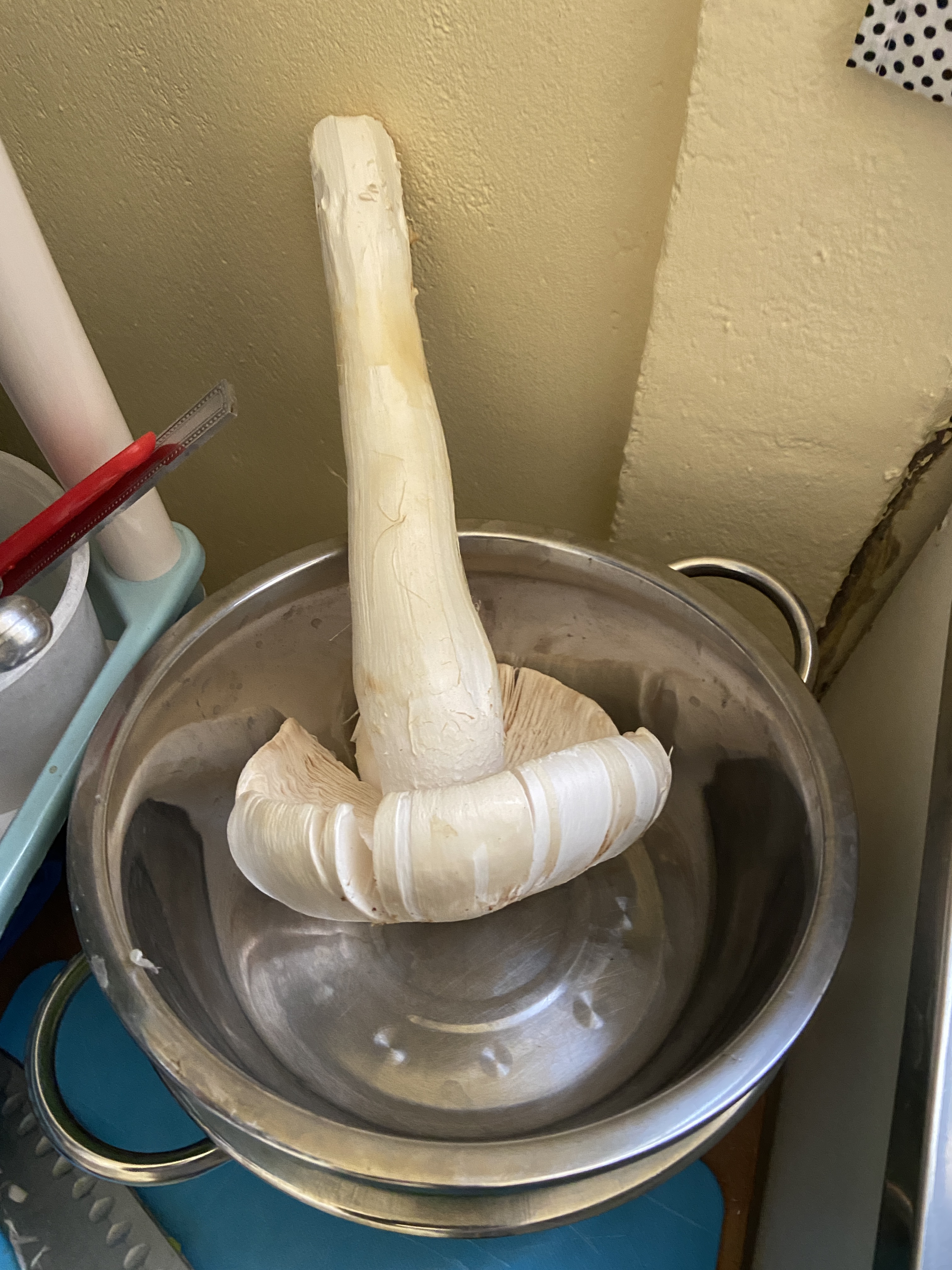
It is during this time of year that you can find omajowa, a variety of mushroom that sprouts from the many termite mounds that punctuate the northern Namibian landscape. What makes these particular mushrooms interesting is the size. From tip to tip they can grow up to a meter long and a fully developed cap can be the size of a dinner plate! 

Yeah, we’re talking BIG MUSHROOMS!

Not only are they big, they are delicious! My first encounter with these big, tasty beauties was in January, 2020. I was traveling to Ondangwa with my host organization, The Rössing Foundation, when we notice some locals flagging cars and waving what looked large white bones. We pulled over and I was instructed to remain quiet. It seems that the haggled price increases dramatically if the sellers hear an American accent. (I wonder why?)

Haggling for omajowas

After several minutes of intense haggling we came away with several enormous, but slightly immature mushrooms. I was told that getting the mushrooms before the caps fully developed insures a more tender and flavorful experience. 

We stayed at a guest house and one of the staff volunteered to prepare the mushrooms for us. She cooked up 4 for us and kept 2 for herself. The result was a big bowl full of what looked like sautéed diced chicken. The flavor was interesting, falling somewhere between chicken and veal or pork and the texture was like chicken breast.

In March, 2020, not long before I along with all PCVs worldwide were sent home due to the COVID-19 Pandemic, I had another opportunity to experience omajowa. During another trip to the north, where my colleagues and I drove through calf-deep water for kilometers in areas that, just a few months before I saw the desiccated remains of livestock that succumb to the drought in the area, I was lucky enough to buy several of these stupendous mushrooms to try my hand at preparing them.

Keep in mind that I’d only seen these immense mushrooms once before and had never cooked them. But, after talking to several friends about how best to prepare them, I figured I’d give it a go.

Step 1: Skin it

These giant fungi have a fibrous epidermis that is edible (I’m told), but not desirable. So ya gotta skin them. Luckily they peel fairly easily, like a big white carrot.

Skinned!

Step 2: Chop It

The stem is round and fibrous and look a lot like scallops. I decided to cut the cap into strips, each about the size of my palm.

Chopped!

Step 3: Season It

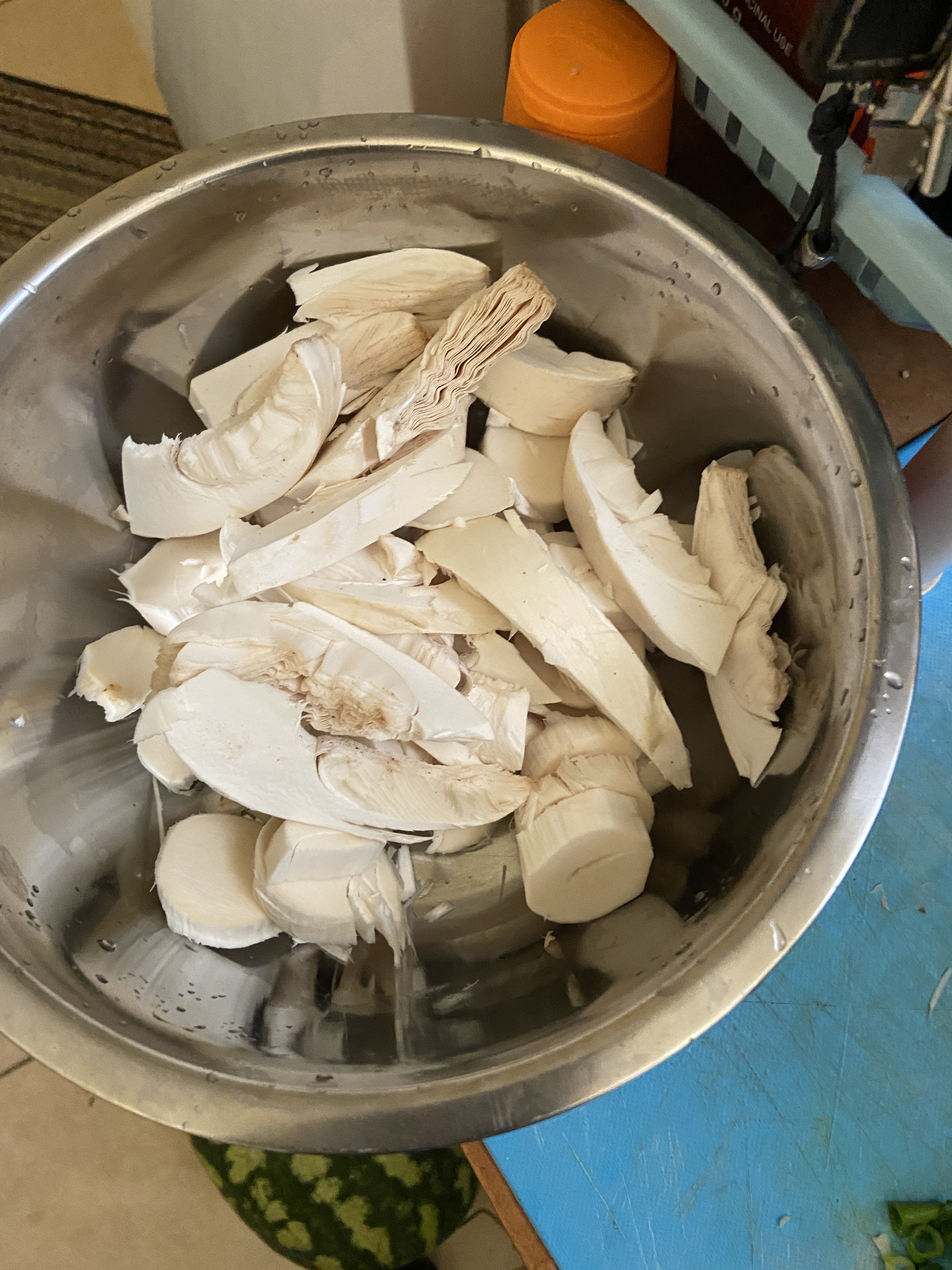
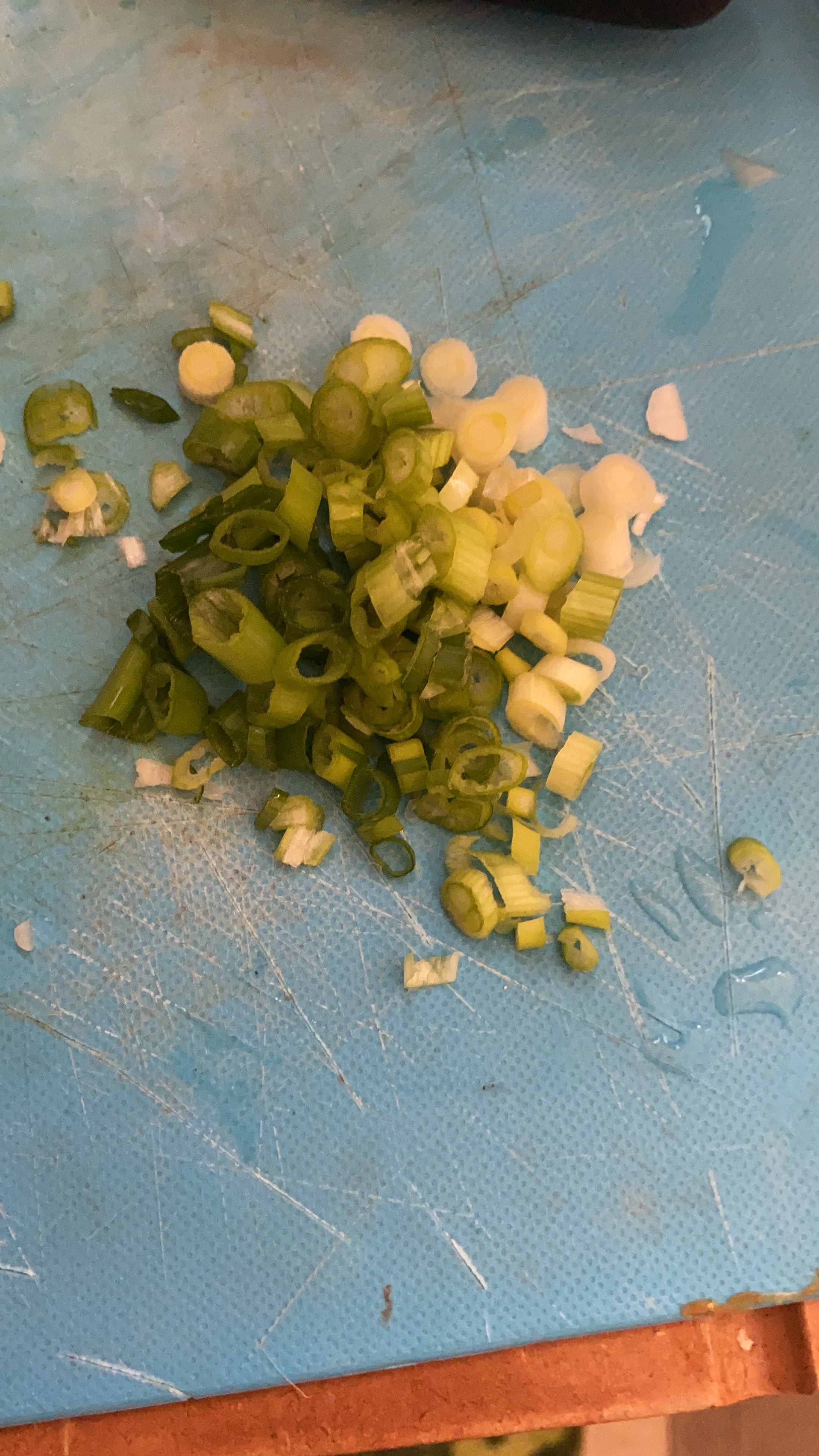
I broke out my small pan, added a dollop of butter, some chopped green onions and garlic, then added the shrooms. Like all mushrooms I’ve prepped in the past, these reduce in size as you cook them. I sautéed until they started to brown on the edges and the meat was tender with a fork. I lightly salted them. That was it!

Seasoned!

Step 4: Enjoy!

One gigantic mushroom was more than enough for me and I had enough to share. It was DELICIOUS! It’s a shame Namibia can’t export these beauties because they would be a huge culinary hit worldwide. 

Enjoyed!!

Portabellas can’t match them. Shitakes are no contest. Whites take a backseat. In fact, every edible mushroom pale in flavor, texture, and most of all, size, compared to Omajowas, The Mushroom King.

Stay tuned.

Vern

Home Again, Home  Again! 

Seems I barely had time to get things done in Namibia before the dreaded COVID-19 virus forced me and Peace Corps Volunteers worldwide to come home. I think I’m luckier than most, I got to see my primary projects to completion and even had time to get a secondary project off the ground. I also was able to be in Namibia for almost 3 years. That, in itself, is something to crow about.

If you’ve read any of my previous posts you’ll know that one of my projects was getting a solar power system setup for a groups of miners and their families. The system provides power to their workshop so that they can run the tools they need to process the stones they mine. The system also provides power to recharge batteries the miners can take back to their homes to power lights and small appliances, it avails ample power for a community refrigerator so that they can buy and store fresh meats and vegetables, and it provides power for security lighting for their market. I was also able to get roadside signs installed to alert travelers of the market well before they reach it, which should increase visitor traffic once tourism starts back up. There are about 50 families that will benefit from the project and I can’t tell you how happy I am that it was completed before I had to leave.  

Unfortunately, COVID-19 happened which pretty much shut down the country. If you think we have it bad imagine you earn your living digging semi-precious stones out of an arid desert. Your family lives there too. Water has to be trucked in. The land is too harsh to garden so you must buy what you need to eat and live from stores 20 or more kilometers away. You can make a living mining these stones, but you are solely dependent on tourists. Now imagine that suddenly there are no more tourists and you begin to see the plight of the miners and so many of their countrymen. I continue to get some reports from colleagues in Namibia and some stories are hard to hear. I remain hopeful that the situation will improve quickly.

As I mentioned, Peace Corps Volunteers worldwide were sent home. I can’t imagine how hard it was for the director of the Peace Corps, Dr. Jospehine Olsen, to make that call, but it was the right call to make. As the seriousness of COVID-19 became increasingly apparent around the world and countries, and more significantly, travel companies began to restrict flights going into and out of known infected areas, travel option became fewer. While we felt relatively safe in Namibia, getting a bit over 120 volunteers home in the event of an emergency was becoming mounting challenge. While many of us wanted to see our efforts in Namibia through to the end, leaving when we did was the best choice. 

It happened quickly. Many of us didn’t get a chance to say goodbye to our friends with whom we’ve lived and worked beside for so long. And there isn’t enough words to express the gratitude to the staff at Peace Corps Namibia for getting the volunteers home safe and sound. It was a huge effort to find flights and out-process 120+ in a matter of a few days, an effort that normally takes several weeks.

Here’s a video I put together of our evacuation. 

So, I’ve been back in the States for 4 weeks now. So much has changed. More on this in my next post, and I promise it will be soon. Until then…

Stay tuned.

Vern