Darting Around

I’ve never been one for sports. I don’t religiously follow teams, though I will watch a game recap. I could never properly perform a basketball layup, throw or catch a football with any finesse, or hit a baseball no matter how hard I tried, so I was always the last one to get picked for a team.

I was turned off from tennis when some bozo said he’d coach me for free, but it turned out he just wanted someone he could blast 200mph serves at. I had even bought a tennis racket with the intention of learning the basics. Besides, I figured women might take notice (more like pity) of a strapping young man trying to whack a fuzzy yellow ball across a net and failing miserably. And, sadly, no women took notice. 

A friend of mine tried and failed to teach me the finer points of golf. While I enjoy smacking the hell out of those little white balls on a driving range, I absolutely suck at playing the game on a course. I figured that if I was going to spend that much time in sand traps, I may as well go to a beach instead.

There are really only two activities that may loosely be considered sports that I am any good at: table tennis (ping pong) and darts.

I picked up table tennis during my stint in the military while stationed in Thailand. I was looking for something to do that didn’t cost money and didn’t involve drinking. I started playing in the NCO (Non-Commissioned Officer) rec rooms on the bases wherever I was stationed, and I got to be fairly good, winning more matches than I lost.

During my time at IBM, I had a manager who also enjoyed ping pong and was quite good at it, though he was half again my age at the time. We discovered that IBM had a table tennis setup in one of the lounges on site, and my manager and I would go and play during our lunch breaks. 

We weren’t in the league of those world class players who stand ten feet away from the table and can make the ball move blindingly fast or seem to hover just above the net, but we had a lot of fun. 

I don’t play anymore, though I’m sure I’ll pick it up again given the opportunity.

I started playing darts after looking for something that my then-wife and I could do together after my daughter went off to college. I bought an electronic dart board. It wasn’t very good and broke not long after we started playing regularly. But we played enough that we were hooked, so I bought better one.

While I got fairly decent at it, my ex got really good, beating me 3 out of 5 games almost every time we played. I think she practiced while I was at work, though she never would admit it. 

She had a very unconventional way of throwing. She would swing her arms like a baseball pitcher winding up for a pitch, then throw the dart, not hard, but with uncanny accuracy. My throwing style at the time was copied from players I’d seen on the internet. They all threw basically the same way; using the forearm and wrist to kind of flick the dart. These guys were pros, but my mimicked throw produced mixed results. You can imagine my frustration at losing to a woman who threw darts like a Yankee pitcher trying for a no-hitter.

Since that time, my dart throwing accuracy has improved. Back in 2019, the organization that hosted me while I was in Namibia, the Rössing Foundation, had put on a sporting event for its employees. Darts was among the activities, and I won the first-place trophy! The first time I’d ever won a trophy for anything!
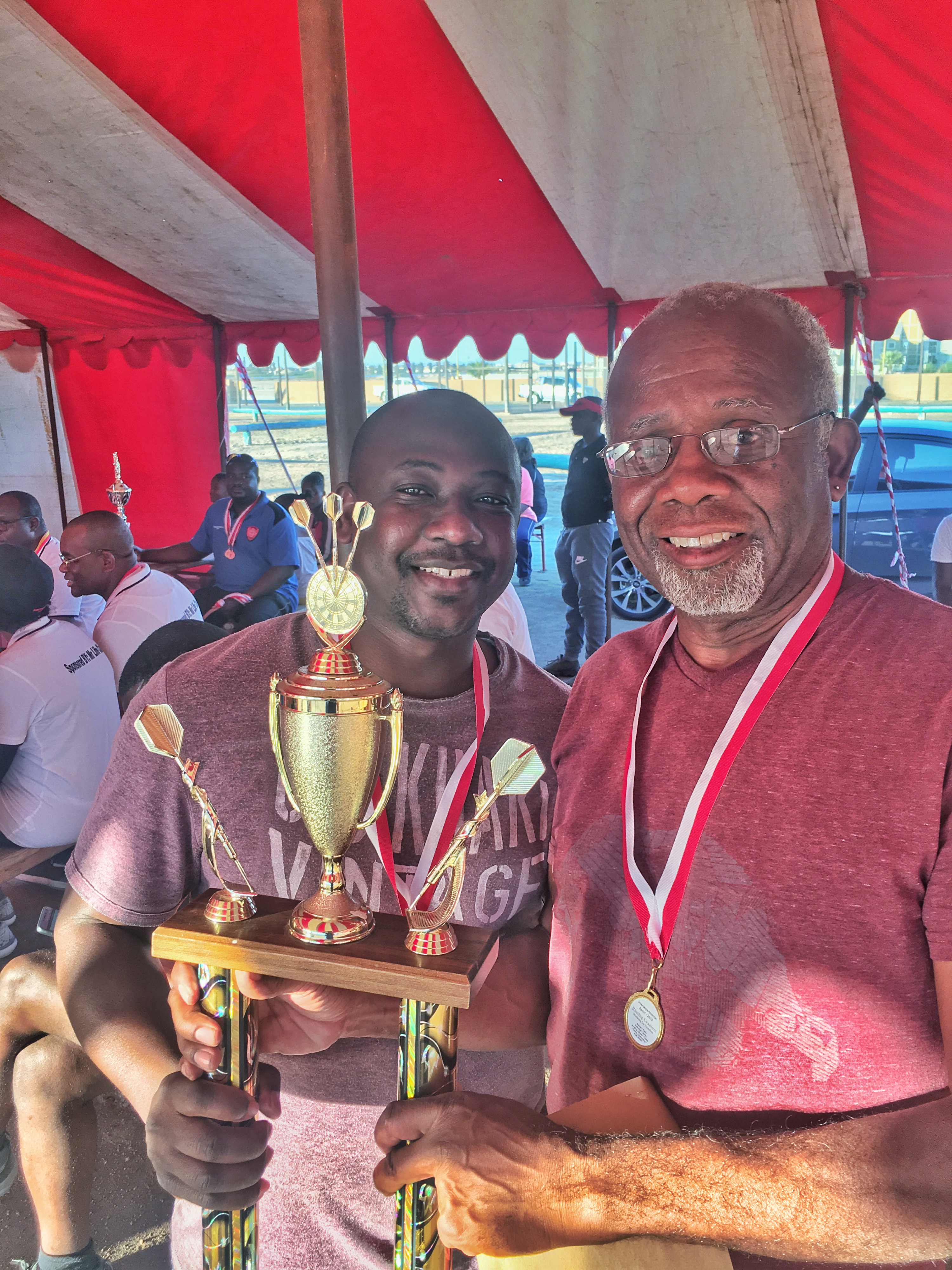
That’s my friend, Florian, on the left.

While I was in Namibia, I found that the locals also enjoyed darts, and I would play them after work at a local bar. It was there, oddly enough, that I learned to associate beer with darts. An association that I enjoy to this day.

My skills had improved since returning from Namibia (so did my beer drinking), enough so that I wound up on a team in the Orlando Darts League. We played out of Fiddler’s Green in Winter Park. I was there for 3 seasons, and the second season I was there, we were first in our division and got a trophy for our efforts!  Every game was enhanced by a pint or two of Guinness. 
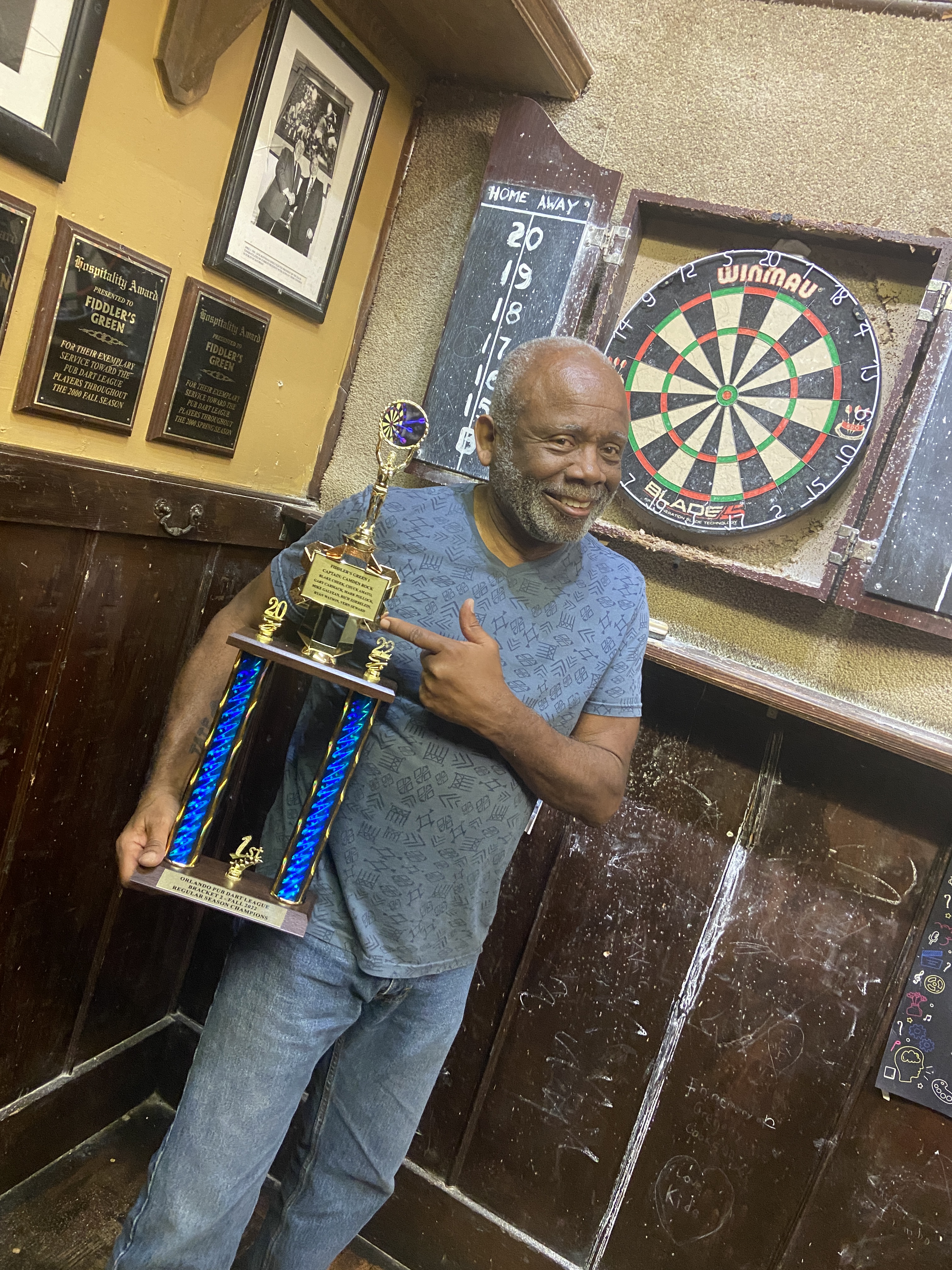
That’s my name I’m pointing to.

Since moving to the Greenville, SC area, however, my dart throwing skills have declined dramatically. I was still good enough to get signed onto a team out of Doc’s Tavern in Greenville, and we actually won first place in our division last season, but we did so without much help from me. This season my team, called ‘No Ton Intended’, moved up to Division 2 and we are getting spanked soundly by nearly every team we’ve played so far. And I don’t think I’ve won a match yet this season, regardless of how many beers I drank.

The plaque was a surprise. Not sure how many of those empty spots I’ll fill in.

I know what the problem is: practice, or rather, the lack of it. Like any skill, throwing a pointy bit of metal at a 1-inch diameter target about 8 feet away and hitting it consistently takes practice. Lots and lots of practice. 

A quick search on the internet reveals that professional darters practice anywhere between 1 hour up to an astounding 12 hours a day!! I’m retired and I enjoy throwing, but 12 hours a day?? 

Nope!

Still, after reviewing my league performance so far this season, it’s obvious that I need to practice. A lot. The problem is that I have nothing to practice on. I’ve moved into my house about 4 months ago, and my focus has been on fitting up the house to make it feel like home. The apartment I had the year before I moved in was so small that I had to go outside to change my mind. (Old joke, but still makes me chuckle.) Places where I could go to practice were inconveniently far away for daily throws. What I need is a dart setup here, in my house somewhere. 

Now, I’m on a mission!

Other tasks around the house have been put on hold until I can establish a dart practice space. I can’t just throw a dartboard on a wall and have at it. A dartboard must be hung at a specific height (5 feet, 8 inches from floor to bullseye) and must be a specific distance from the throw line (7 feet, 8 and 3/4 inches). There must be proper lighting. There should be a backboard behind the dartboard that can catch errant throws without causing damage to the wall. And more. 

An engineering challenge that is not outside the scope of my abilities.

So, after careful consideration ( and a few beers), I’ve decided to build a dart practice setup consisting of, not 1, not 2, but 3 dart boards: a regulation board, a practice board where the high-point target areas are all reduced in size, and an electronic dart board.

I’m going to go all out with this setup. I’m putting it in my garage. The walls will be painted. The floor will be epoxy-coated, and the garage will be kept neat and free of clutter and accumulated stuff. 

That’s the goal anyway. Right now, the floor is bare concrete. The walls are painted, but there’s stuff everywhere. 

I’m working on it!

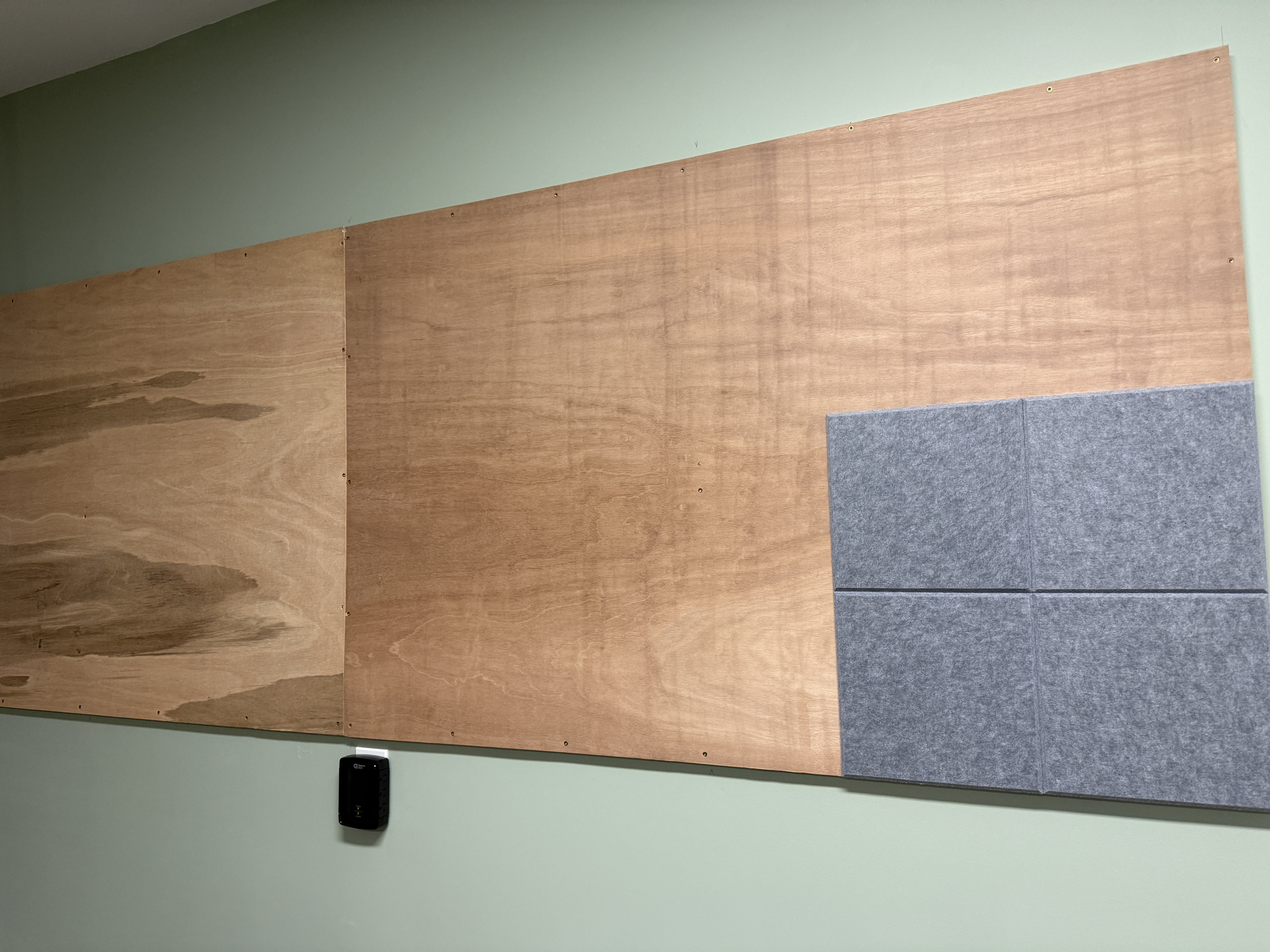
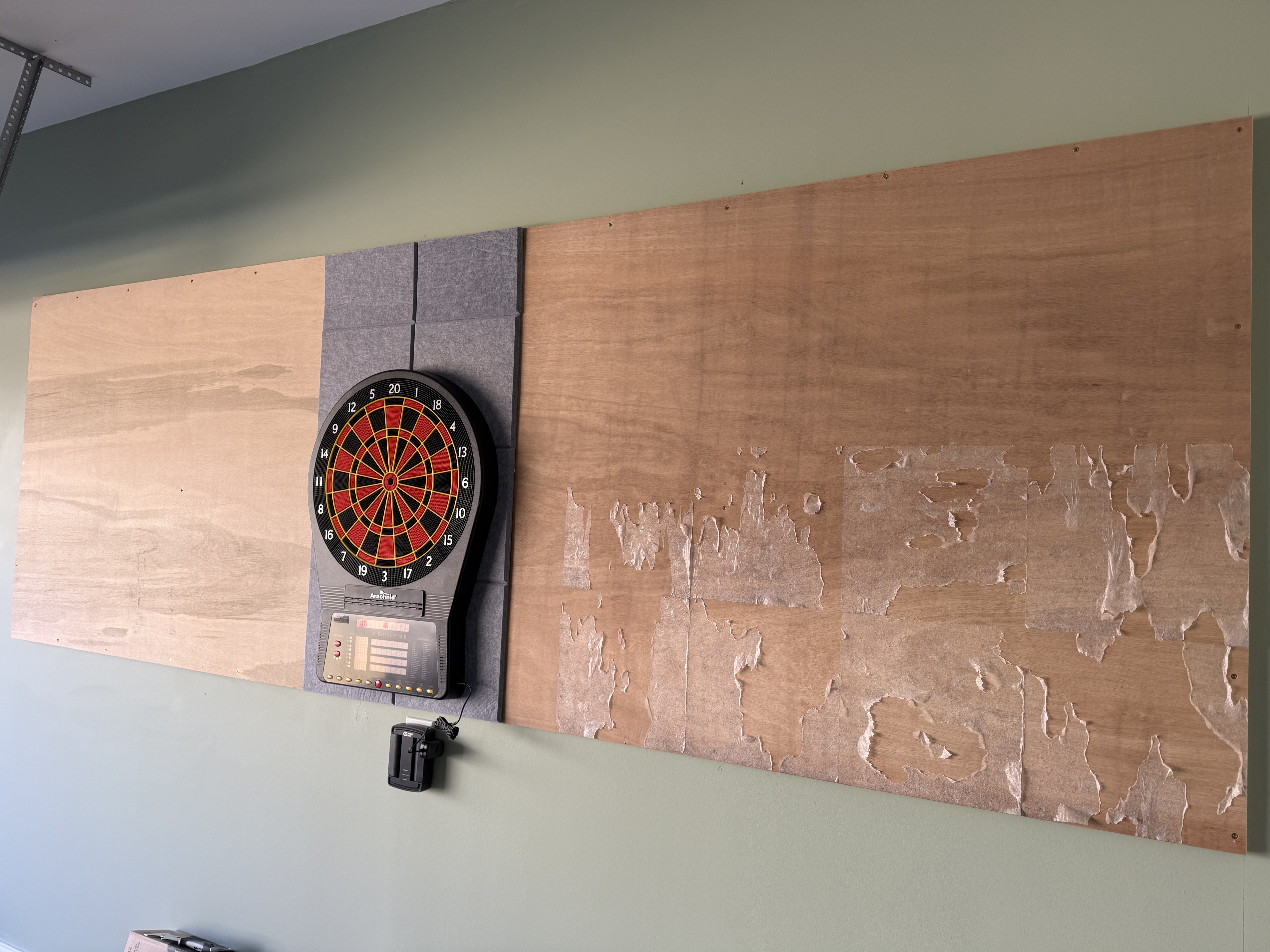
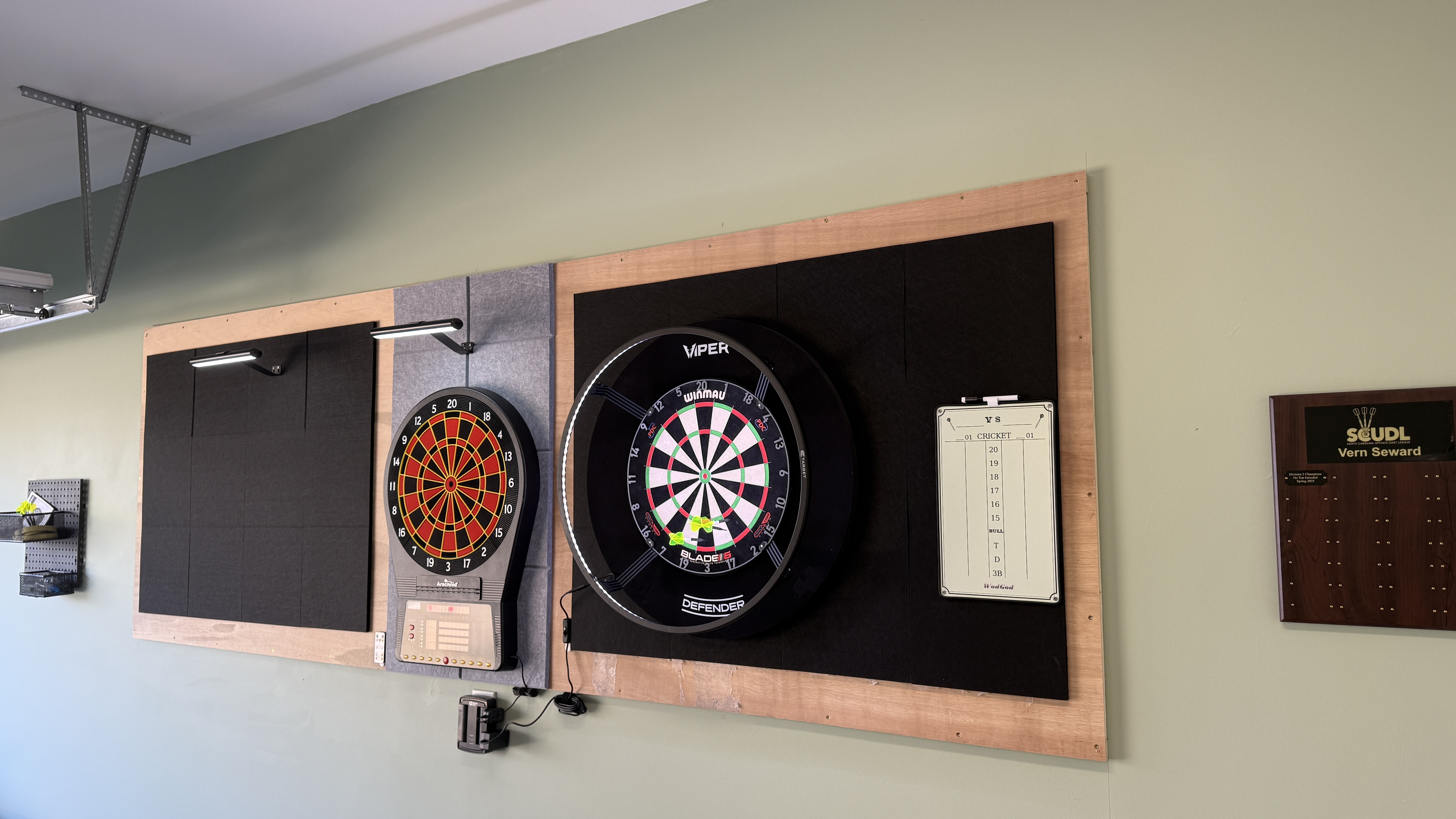
OK, so, it’s a work in progress, but there is progress. Check out these photos…
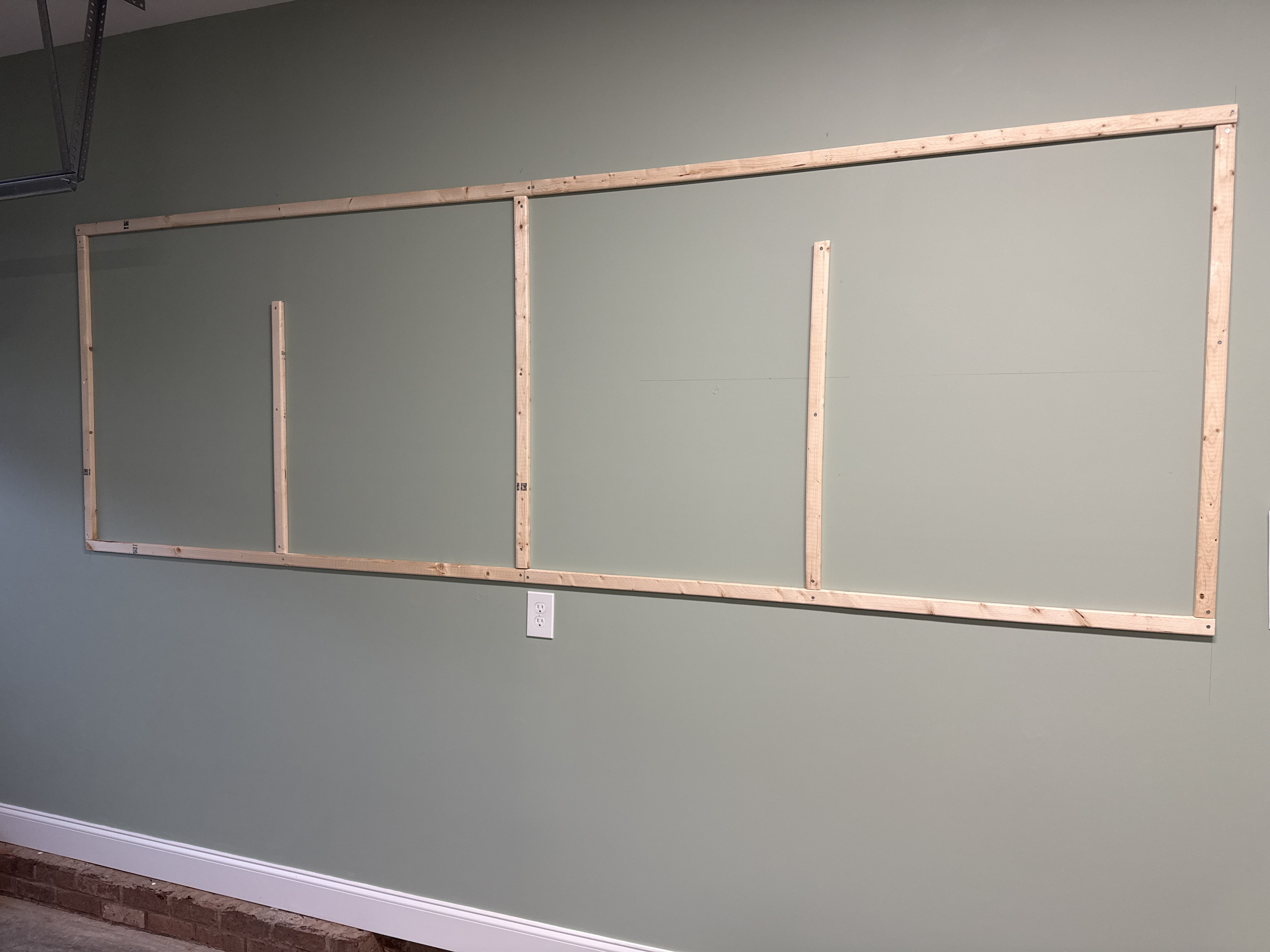
Turns out that grey felt won’t hold a metal tipped dart. Had to take it off.
The electronic board is just a fun addition.
Finished! Well, almost. That place on the left is for a training board.

It turned out pretty good, even after a few missteps. 

So, now that I have a place to practice, I have no excuse not to get better. But, you how people will make a resolution to lose weight and exercise more, and they spend a lot of money and buy fancy exercise equipment and set it all up, then promptly ignore it? 

Yeah. 

Stay tuned.

Vern

Gravity

I left Baltimore when I was 17, leaving behind everyone and everything I had known up to that point. Since then, I’ve never truly felt settled. No matter how far I’ve traveled, how breathtaking the vistas I’ve seen, or how fascinating the people I’ve met, there was always this persistent attraction, like gravity’s pull of a massive star on a small, wayward rock in space, towards the mid-Atlantic region of the U.S. 

I’d joined the Air Force and, like many others in the military regardless of the branch of service they’re in, I moved from place to place when ordered to do so. But military life, while vastly different and far more interesting than my life on the streets of Baltimore, was too restrictive for me. I was honorably discharged after 9 years of service. My wife wanted me to remain in the military for a full two decades and retire. In retrospect, I likely should have, but at the time, staying in was becoming increasingly difficult for me. I felt like I was missing out on a technological revolution, something I believed I needed to be a part of. This was the early 1980s, when computers were just beginning to permeate every aspect of people’s lives. I firmly believed that my career, my future, was intimately dependent on that blossoming technology. So, I left the military, dragging my pregnant wife, my son, and a miniature Schnauzer from North Carolina to California in a tiny Honda, and in search of a new life. 

From that point on, I went wherever an opportunity to advance my career presented itself, and often those opportunities were in places I’d never imagined I’d be. Places with names like Redondo Beach, California; Winooski, Vermont; East Fishkill, New York; Ashdod, Israel; and Oviedo, Florida. Ultimately I wound up in Florida, but regardless of where I landed, there was always that familiar, subtle, but insistent pull, an unfulfilled yearning that, at times, I couldn’t quite articulate and I could never adequately satisfy.

After my children grew up and started their own families, and after my marriage ended, I found myself in a position where I could, if I truly wanted to, allow myself to be drawn by that subtle attraction. I suppose, at that time, I didn’t want to. I had built a life in Florida. I had close relationships and places where I could simply be myself. Yet that yearning persisted, refusing to be suppressed or ignored. 

In 2017, after weathering an emotional storm, I found that I needed to travel and make a positive impact on some cause, to focus on something beyond my personal interests. So, I joined the Peace Corps. That was an incredible and fulfilling adventure, but in 2020, COVID abruptly ended it, leaving me back in Florida with that ever-present yearning, persistently beckoning.

Deciding to leave a place that has been your home for over three decades isn’t easy. I grappled with that question for a very long time. I was aware that, just as when I left Baltimore many years ago, I would be leaving behind so much that had become an integral part of who I am. It takes time to adapt to a new environment, even one that was once familiar to me. I would be trading cherished relationships, familiar places where I’ve always felt welcome, and the comforting warmth that comes with familiarity for strangers, new places, and periods of loneliness. If my decision had been solely based on emotions, I probably would have chosen to stay. However, other factors influenced my choice, and yes, that persistent yearning weighed heavily in my ultimate decision to leave.

Click to see the video.

Now, several months after moving to a place just north of Greenville, S.C., I’ve begun to settle. I don’t need Apple Maps to find my way around anymore. There’s a bar in a restaurant that I stop in from time to time. The barkeep knows me well enough to have a Modelo Negra with lime on the counter by the time I pull up a stool. I’ve met some interesting people in that restaurant too; a retired lawyer who’s lived in the area since 1995, another Florida transplant who shuffles between a tiny house in the hills of Tennessee with an amazing view to D.C. with Greenville as his way station, a comedian who’s promoting a show to support The American Cancer Society, and so many more.

There are real seasons here too; the luminous mating dance of fireflies in the summer, a kaleidoscope of colors in the  autumn, biting cold winds in winter.  

And snow!

Click to see the video.

I hadn’t been in a significant snowfall in more than 20 years and it was wonderful to see. I had a silly grin plastered on my face to whole day while it snowed. I was so inspired by it that I produced a short video. You can see it by clicking on the photos..

As I look forward to spring, I’ve noticed that the yearning that has been my constant companion for so very long is quieter now. While it still lingers, its influence has diminished. Instead of dominating my quiet moments, it now coexists with a more reserved presence. I interpret this as a positive sign, indicating that I’m on the right path, that being here where the trees dress and undress to fit the seasons, and where the landscape undulates like frozen mountainous waves towards the horizon, feels like it’s where I need to be. The yearning’s continued presence, however, suggests that there is still more I need to do.

My sister recently texted me about an event that might finally satisfy that yearning. In May of this year, my paternal family members will gather in southern Virginia for a reunion. I believe the southern Virginia border, westward towards West Virginia, is the epicenter of the attractive force that has been tugging at me for most of my life.

I don’t know much about my father’s family or its history. I do know that both my mother and father originally came from the southwestern region of Virginia, and that there are many who bear the Seward family name who still call that area home. In fact, I had seriously considered settling there myself. 

I intend to go to this reunion in hopes that I can learn more about why I’m so drawn to that place. 

There’s a memory I have, a recollection so old it’s like a faded photograph, that might hold some clues.

When I was very young, maybe 3 or 4 years old, I remember a long trip that my father took me on. I recall seeing lots of trees as he drove for what seemed like hours and hours. When we finally stopped we had pulled into a long dirt driveway, each side was walled by tall green corn stalks. At the end of the driveway stood a modest house. A huge tree stood next to the house.

During one of my visits to Baltimore as an adult my sister told me that the house with the tree exists. The house and the farmland around it belongs to a relative on my father’s side. The memory has left me wondering, and hoping, that that place is what has been pulling at me all these years, that my returning to it will finally sate that yearning and I can find some peace.

I look forward to May.

Stay tuned,

Vern

Hurricane Helene

If you’ve lived in Florida for more than a few years, particularly the Orlando area, you tend to view hurricanes as a fact of life. They form, they blow and dump oceans of water of you, then move on. The flora and fauna of Central Florida has evolved to withstand all but the strongest storms. Palm trees sway and bend in 70-90mph winds, but seldom break. Moss ladened Live Oaks have developed thick trunks and branches that stay low to the ground and tend to survive some the strongest gusts with minimal damage. Even tree that topple will continue to grow if enough of the root is still in the sandy soil.

People living in Central Florida have adapted to hurricanes too. Homes are constructed of concrete blocks or thick concrete based stucco. The best roofs are ceramic tiles, but even regular roofing materials have to meet stringent codes meant to survive winds 50 mph or higher. As a result, tropical storms hardly raise the eyebrows of Central Floridians. Category 1 hurricanes only worry those living close to the coasts. Anything higher than a Category 1 will get people’s attention, but the concern is higher for those in the immediate path. That’s because by the time a storm reaches the Orlando area it has been substantially weakened. A Category 1 with winds of 75 mph at landfall rapidly drops to a tropical storm with gusts of up to 50 mph, if that, by the time it reaches Orlando.  

I’ve lived in Central Florida for over 35 years. The only hurricane I had any real concern about was Charley back in 2004. It hit the west coast of Florida as a Category 4 with winds reaching 145mph. By the time it got to Orlando it had died down to a Category 2 with winds of 106mph. That was still strong enough to do some serious damage to an area unaccustomed to winds that high. Even so, because Central Florians are used to dealing with hurricanes, few lives were lost and the damage was not as severe as it might have been had our buildings been constructed to lower standards.

I recently moved from Central Florida to the UpState region of South Carolina thinking that I would be too far inland and elevated for hurricanes to be a concern. I spoke to a native of the area recently, a grey hair man who owned a large white house with huge columns in the front that reminded me of southern plantation homes, and he said the area might experience a serious storm once every 30-40 years, nothing like a hurricane though. 

Then along came Hurricane Helene. It hit the Big Bend region of Florida packing 140mph winds then ransacked Georgia before headed straight for the UpState Region of South Carolina. By the time it got here its winds had diminished to tropical storm speeds, but this area isn’t used to 24 hours of sustained winds of 40-50mph with gusts hitting 60mph. 

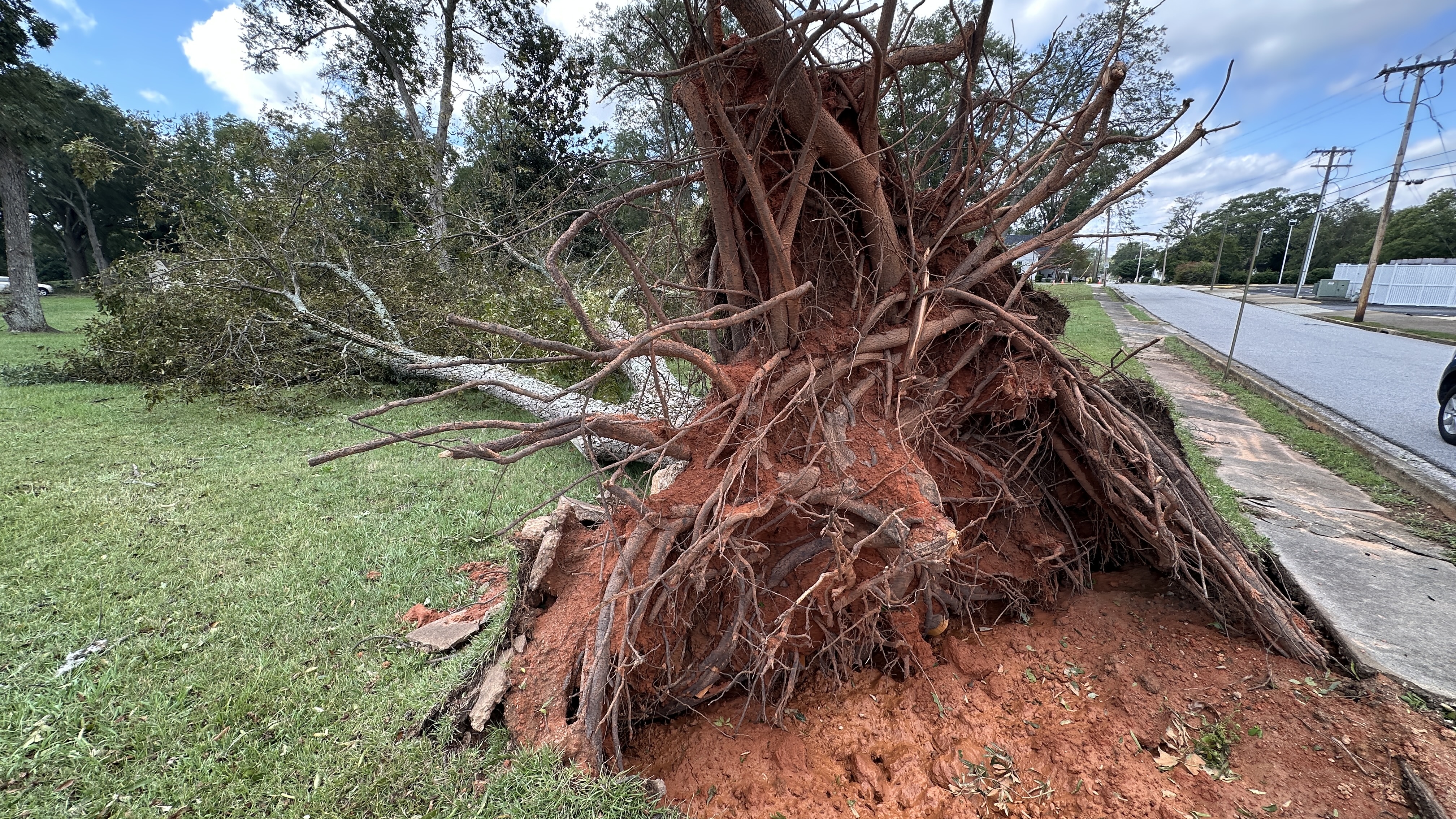
It had been raining steadily for a day and a half in the UpState Region before Helene made landfall. By the time those winds hit the area the red clay that makes up the regolith in the area was soaked. Trees that had stood for 50 years or more toppled like dominoes, taking with them power and communication lines.

I had been sitting at my window watching the wind blown rain pressure wash the parking lot outside my apartment when the power went out early Friday morning. Still, even with the wind harassing the newly planted sapling outside my window, the storm didn’t look to be too bad. But then, I’m used to such storms being from an area that’s used to such storms. 

View from my apartment window on Thursday night.

As with all hurricanes, once they make landfall, Helene, moved quickly through the region, pouring out all of the moisture and energy she had soaked up from the Gulf of Mexico as she went. Reports of widespread flooding, possible tornadoes, mudslides and more began to fill news reports. In my immediate area, however, things didn’t look that bad. There were broken tree limbs and leaves littering the ground and the power was still out at my apartment complex, but the sun chased the remaining clouds away and people were out walking, looking for places to get a cup of coffee and surveying the damage.

I decided to not drive anywhere on Friday. I knew the emergency crews would be out doing what they could restore services. Saturday, however, I did try to drive to the local market, but gave up after traveling not even a mile from my apartment. 

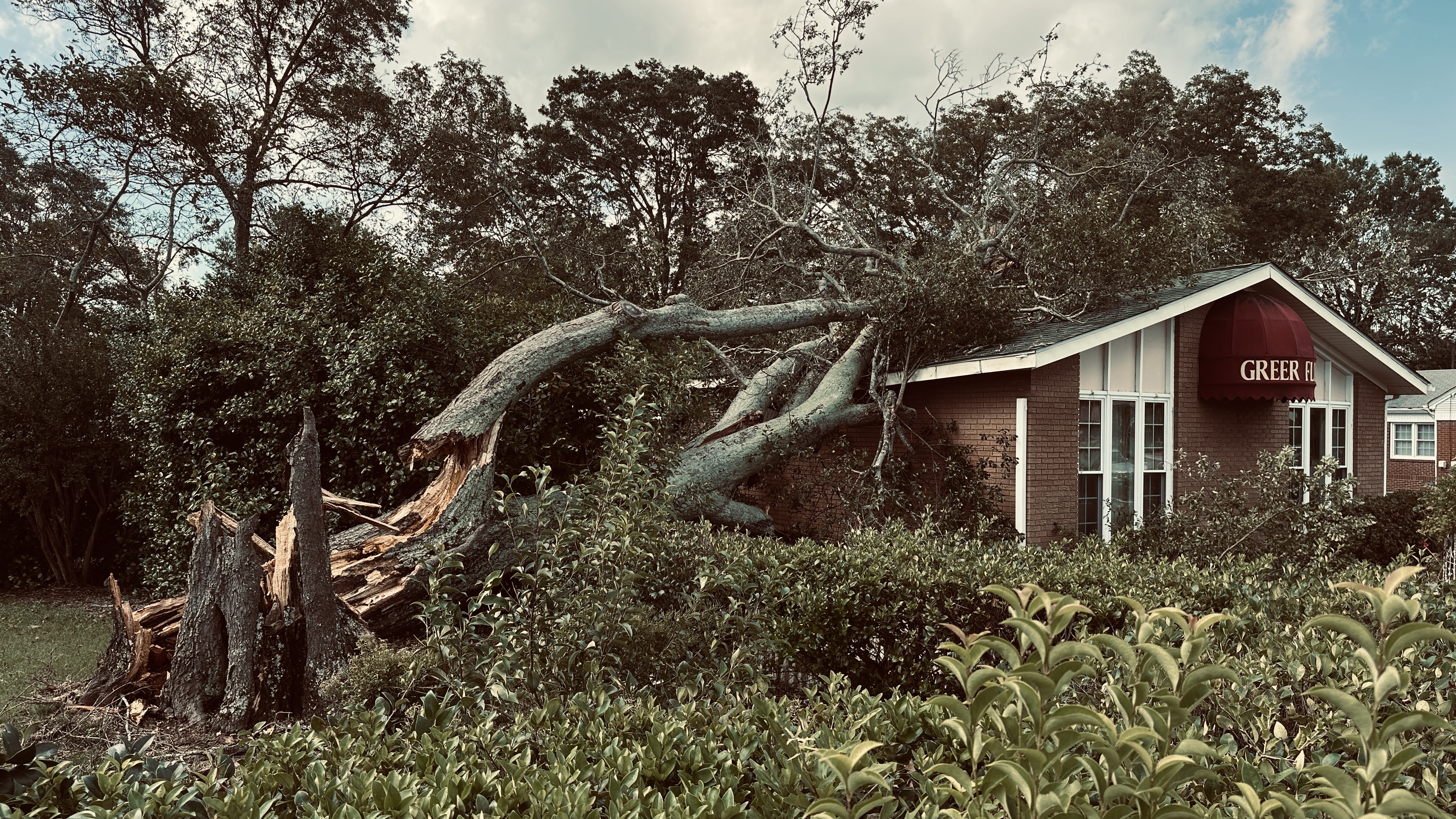
While the power had come back on in my immediate area, many other areas around Greer was without power. Traffic crawled through major intersections with dead traffic signals. I passed houses crushed and side streets blocked by massive trees. Debris was everywhere.

Downed trees everywhere.

I had tried to contact my friends, Brian and Francis, but they had not responded since early Thursday. When they finally did respond on Saturday they told me that they had been dealing with a continuing power and communication outage. They had several fallen trees on their property as well. But they are ex-Floridians too and they were prepared. Not being able to phone family and friends to let them know they were ok was their most serious frustration.

As of now (September 28, 2024) it looks like we’ll be relatively dry for the next several days, which is a good thing. It’ll give the local utilities time to fix what’s broken and shore up what isn’t, and it’ll give folks some great outdoor days for cleaning up the mess Helene left behind.

That’s just in my little corner of the world. Watching the news, I can see that many areas not far from me got it a lot worse. Roads turned to rivers, impassable bridges, mud and debris everywhere. Utility crews from as far away as Missouri have come to help out the local crews in restoring power. Infrastructure crews have their work cut out for them. Many road in the area remain impassable, literally cutting off cities and towns.

Update: Sunday, September 29, 2024

I was getting a bit restless so I thought I’d get out to see how far I could drive today. Figured 3 days after the storm most major roads should be passable. 

I was wrong. I took a local major thoroughfare and I barely got 3 miles from my place. A good 1/3 of the traffic lights along the way were still inoperative. I passed long rows of blown over trees and drove over downed power lines. 

Just bad everywhere.

After that I knew I didn’t need to be out so I turned around.

But progress is being made thanks to the tireless efforts of our utility and infrastructure crews. Even as I was returning, traffic light were coming back to life. These men and women deserve medals.

Hoping you and yours have faired well. 

Be safe.

Stay tuned.

Vern 

Fireflies

Back when I was a kid, growing up in the heart of Baltimore, there were fireflies.

Though they no longer herald summer evenings with flashes of green and gold in the gardens and backyards of west Baltimore, they had continued to exist right at the edge of my memory, fading like all memories do as we age. But I can still recall how seeing fireflies made me feel. Back then, to my young mind, they were the personification of magic. Their tiny cold flashes proved to me that mystery and wonder were real, that just beyond my very human eyes was a world where fantastic creatures lived. A world where unicorns and fairies might yet be real, and if they could be real, so could magic. How, my young mind would ask, could a creature make its body glow at will, turning the light on and off as if to signal each other that all was right in the world, if not by magic? 

I’ve grown and have leaned a lot since then. I know that the light fireflies produce is the product of a chemical reaction, that they use the light to attract a mate, and that there are other creatures that use a similar light producing method, called bioluminescence, to warn off predators or to catch a meal. While that is all very fascinating, the explanation only proved that there isn’t any magic in the world. Not really. And while there is still much to evoke wonder, the loss of magic makes the world a bit less wonderful, even to my adult mind. 

I’ve traveled a lot and have seen some wonderful things, but I didn’t realize how much I had missed that sense of mystery I experienced when I was a child until recently.

If you’ve been following my blog you’ll know that I’ve recently took a giant leap and moved from my home of 30+ years in central Florida to establish a new life in South Carolina. I talk about the whys in my previous posts, but the change has, thus far, been moving along smoothly. Over the course of the next several months I will complete my transition and situate myself in a completely new, yet somehow familiar environment. I have my very good friends, Brian and Francis, to thank for making the move far easier than it could have been. They’ve given me a place to stay while I wrangle with the logistics of the move, and I can’t thank them enough.

It was while I was staying with Brian and Francis that I rediscovered that sense of mystery and magic.

Brian and Francis’ home is in a quasi-rural area and the property is surrounded by trees and other flora and fauna natural to the area. I was sitting on their porch one evening, enjoying the cool breezes and evening bird calls when I thought I saw a flash of light a wooded area just beyond their front lawn. As I focused my attention to the area I saw another flash that was low to the ground. The light lingered for a bit, then faded as it drifted higher. Another light flashed, then another. Pretty soon the area was dotted with strobing green lights as fireflies rose from the ground to find a mate.

In that moment I was like a kid feeling the wonder of magic again. I had to walk out there and be surrounded by them. Even the thought of that experience still makes me smile. 

Watch carefully. Fireflies!

One of the reasons for me moving to western South Carolina is that I wanted to return to a familiar environment, a place that’s a lot like what I knew as a kid. A place where there are four distinct seasons, where proper oaks, maples and walnut trees still hold sway over the landscape. A place where one can still find deep green meadows, rolling hills and babbling brooks. 

A place, unbeknownst to me until now, where one can still find fireflies. A place where magic might yet still exist.

Stay tune

Vern

Frugality: A Matter of Perspective

I recently read an article by Darnell Mayberry, whose finance focused articles can be found on Cleveland.com and The Plain Dealer, in which he discusses his newfound frugality mindset. Mr. Mayberry recalls how his grandparent’s tightfisted nature was a call for childhood secret missions to the corner store for sweets instead of whatever the grandparents offered that was stored, unappetizingly, in the garage. Now, much older and, apparently, much wiser, Mr. Mayberry is focusing on obtaining and nurturing a mindset similar to his grandparent’s where spending less is forefront. (And, hopefully, does not involve snacks kept in a garage.)

To that end Mr. Mayberry has stopped frivolous spending on unneeded items, has reduced his consumption of alcohol and cigarettes (certainly a good thing), and has even gone so far as to stop carrying cash and will occasionally, and purposefully, leave his credit card at home.

Mr. Mayberry says he’s at the start of his journey, but he is determined to become more frugal while avoiding the stereotype of becoming a stingy old miser.

I feel ya, Darnell.  

I firmly believe that our association with money is shaped by our childhood experiences with it, mindsets that sometimes needs readjusting. In my case it was the lack of money and my family’s inability to afford even the basic necessities of life (food, clothing, sometimes water and heat) that has long shaped my spending habits, both for good and ill. To help with my family’s financial situation, I started ‘hustling’ at a young age. 

Hustling can mean different things to different people, but basically it means to do whatever you can to earn a buck. Obviously that can mean doing dishonest things, but in my case, my hustles were honest, I bagged groceries at a local market and loaded them into cars for tips. I usually got about 25 cents for the full service. In the early 60’s, 25 cents went a long ways and on good Saturdays I could go home with $15 to $30 dollars! Not bad for a day’s work. 

What hustling doesn’t teach you is the true value of money. In my young mind, money was necessary to live and I could get money by hustling. So, whenever I needed extra cash I’d figure out a way to get it. That often meant getting jobs doing whatever. Almost nothing was beneath me. I’ve chauffeured pizzas, flipped burgers, sold electronics, worked on a sod farm, and more to fill the gaps in what I earned versus what I spent. It occurred to me, even back then, that there had to be a better way, that focusing on spending less was also a viable option for minimizing my financial woes. But I was dealing with other issues in life at the time and  hustling was often the most expedient way to address my financial needs. It was what I knew and it worked.

Like Darnell Mayberry, I’m older and somewhat wiser now. I know that there are better ways to deal with finances. For instance; if I need to buy a large-ticket item like a TV or couch, I will search endlessly to understand the pros and cons of the item then decide on and purchase the best I can afford. This is something that an astute student of poverty learns. People of meager means will often buy the least expensive item, which are often poorly made. They wind up having to buy the same item again and again and, in the long run, wind up spending more.

Buying something that may cost more initially, but is made well, is actually the best and most frugal solution. To a person of meager means spending more in the short term to avoid spending a lot more in the long term can seem counterintuitive. Other extenuating factors may influence the decision to buy cheaply. Sometimes it just can’t be helped. An immediate need must be addressed so you do what you have to do to address it. Still, the concept of buying better to avoid buying again is a solid one.

The road to a frugal lifestyle is still relatively new to me, and, like Mr. Mayberry, I’m just beginning to walk that road. This path is chosen more out of necessity rather than adhering to advice and lessons learned over the years. 

My move to South Carolina, for instance, was prompted by the fact that my limited and very fixed income could not sustain my current lifestyle in Florida. It’s not that I live extravagantly, far from it. But what I do enjoy doing, being around friends, eating out on occasion, traveling, and maintaining my home was becoming cost prohibitive. Taxes and insurance have and to continue to increased to the point where even living the life of a miser would eventually be unsustainable. I needed to do something. Moving to a more financially friendly environment is the first step. I also need to adopt a more realistic approach to how I handle what income I do have. So, I’ve started looking around for ideas, which is how I stumbled upon Mr. Mayberry’s article, and how his perspective and mine seemed to sync.

So, what is my current view of frugality and how will it affect my life moving forward?

I’m glad you asked.

As I mentioned earlier, and as Mr. Mayberry has said, living like a miser should not be the goal. Clutching every penny is not a mindset that is even remotely appealing to me. I just need to see money as a very limited resource, one that, if carefully monitored and used, can keep me going until the road I’m on ends. To carry the road analogy further; I need to travel in “economy mode” not “sport mode”. That doesn’t mean I can’t enjoy the journey, it just means I need to waste less while moving along. Or, as Mr. Mayberry puts it, “Rather than buying any old thing based on emotion and price, I’m now letting utility and value be my guiding principles.”

But it isn’t just “utility and value” that should guide me because they, by themeselves, are boring. I believe that there also needs to be a sense of purpose, or maybe style, something that makes the journey interesting, even fun. Neither style or purpose fully relates what I think is needed, but it points me in the right direction.

A good opportunity to explore this will be when I find a house to buy after my move to South Carolina. Currently I have no furniture. There’s a reason for that which I won’t go into, but the lack of furniture was on purpose, it allows me to really look at what style I want to be surrounded by. After doing a lot of research I’ve found that I’m most attracted to a style called Mid Century Modern, which is typified by functional furnishings with clean lines, natural materials and solid colors.   

Mid Century Modern Living Room. (Photo courtesy of home-designing.com)

While focusing on utility and value, but with an eye on style and comfort, I intend to turn my future abode into a Mid Century Modern home. I also  intend to document the process here, but all that is a bit premature. There’s a lot that needs to happen before I get to that stage. I just thought it would be a good idea to explore this here, to set the stage, as it were.

More to come. Stay tuned.

Vern

Pieces and Parts

I left home when I was 17. It seems I’ve been traveling ever since. 

The truth is that, while I am prone to moving around, I’ve been in one place for the largest portion of my life. That place is Orlando, Florida. I’ve been here close to 30 years! As I think about it, I find that it’s hard for me to reconcile the fact that so much time has passed, and so much has changed.

When I came to Orlando I was married, working on building my career in IT, and saw being here as another adventure. Things pretty much worked out along those lines. Fast forward 25+ years and I am now divorced, retired, and getting ready for another adventure. I’m moving to South Carolina.

Some may see this new chapter as an ill-considered decision, but a lot of thought went into it. I knew I would leave Florida eventually, well before I knew where I would wind up. I was born and raised in Baltimore, Maryland. To paraphrase a lyric from Simon and Garfunkel’s ‘The Boxer’; four seasons, deciduous trees, hilly landscapes, and cooler weather are a breed in me, a need in me. There are other factors that pushed me into deciding to move, but, if I’m honest with myself, I knew it was always going to happen.

When I first started looking around for places I might land my first consideration was in the Appalachians, specifically south-western Virginia. My parents and my grandparents came from that area and I thought it might not be a bad idea to get back to my roots, learn more about my family’s history. While in the Peace Corps I had thought that maybe I should expand my search. While I love nature and being outdoors, I am an urban kid at heart and there are only small to medium sized towns in that part of the country. 

I then considered Johnson City, Tennessee. It’s certainly big enough with a nice size university in town, guaranteeing a level of diversity and urban flavor that I like while being close to many state and national parks. And that area has a thriving music scene fed by its proximity to Bristol, Tennessee and Nashville. 

But I had a chance to stay with some friends who live near Greenville, South Carolina. Each time I visited my friends showed me more of what Greenville had to offer, which turns out to be quite a lot. Like Johnson City, Greenville is close to one of our country’s original music generating cities. The area chock full of talented artists and musicians. It’s near many state and national parks and only a few hours from beaches, for when I feel the need to see the ocean. The weather is mild, varied and, most of all, the area has four distinct seasons. And I can afford to live there. What’s not to like?

Even though Orlando has never felt like home to me it is a place that I’ve come to love. If you spend 25+ years in a place there’s bound to be something about it that becomes a part of who you are. That’s really what happened to me. I’ve enjoyed the beaches here, and the storms. When the weather is nice it can be really nice. Most of all, I’ve enjoyed the people I’ve met while here. Most of them I knew from my job, but lately, many are people I’ve met who share a common love of music, among other things. These are people I can truly call my friends. As I pack up my belongings and prepare to leave the house I’ve owned for 10 years, my heart aches as the many, many memories drift through my mind.

One of my friends wrote a poem to commemorate my leaving. It so inspired me to write one too. So, to my many wonderful friends, a poem:

Pieces
By Vern Seward

I like to think that I’m a wandering man
Never satisfied to stay
To leave my footprints in foreign sands
And relish foreign days.

But truth be told, where ever I go,
Whatever sights I behold
I leave behind a part of me,
A little bit of my soul.

And yet my soul is not undone,
It’s bigger than before
For each bit that I leave behind
Is replaced by even more.

For in whatever place I be
It’s the people whom I meet
That makes each place a memory,
That makes my soul complete.

And when I leave for other sights,
For places yet to discover,
I take the bits of soul they gave,
Which helps mine to recover.

Now, to those I leave behind
Please know that I take with me
The bits of you that are so fine,
Pieces that will sustain me.

Be well.

Stay tuned.

Vern