
If you’ve lived in Florida for more than a few years, particularly the Orlando area, you tend to view hurricanes as a fact of life. They form, they blow and dump oceans of water of you, then move on. The flora and fauna of Central Florida has evolved to withstand all but the strongest storms. Palm trees sway and bend in 70-90mph winds, but seldom break. Moss ladened Live Oaks have developed thick trunks and branches that stay low to the ground and tend to survive some the strongest gusts with minimal damage. Even tree that topple will continue to grow if enough of the root is still in the sandy soil.
People living in Central Florida have adapted to hurricanes too. Homes are constructed of concrete blocks or thick concrete based stucco. The best roofs are ceramic tiles, but even regular roofing materials have to meet stringent codes meant to survive winds 50 mph or higher. As a result, tropical storms hardly raise the eyebrows of Central Floridians. Category 1 hurricanes only worry those living close to the coasts. Anything higher than a Category 1 will get people’s attention, but the concern is higher for those in the immediate path. That’s because by the time a storm reaches the Orlando area it has been substantially weakened. A Category 1 with winds of 75 mph at landfall rapidly drops to a tropical storm with gusts of up to 50 mph, if that, by the time it reaches Orlando.
I’ve lived in Central Florida for over 35 years. The only hurricane I had any real concern about was Charley back in 2004. It hit the west coast of Florida as a Category 4 with winds reaching 145mph. By the time it got to Orlando it had died down to a Category 2 with winds of 106mph. That was still strong enough to do some serious damage to an area unaccustomed to winds that high. Even so, because Central Florians are used to dealing with hurricanes, few lives were lost and the damage was not as severe as it might have been had our buildings been constructed to lower standards.
I recently moved from Central Florida to the UpState region of South Carolina thinking that I would be too far inland and elevated for hurricanes to be a concern. I spoke to a native of the area recently, a grey hair man who owned a large white house with huge columns in the front that reminded me of southern plantation homes, and he said the area might experience a serious storm once every 30-40 years, nothing like a hurricane though.
Then along came Hurricane Helene. It hit the Big Bend region of Florida packing 140mph winds then ransacked Georgia before headed straight for the UpState Region of South Carolina. By the time it got here its winds had diminished to tropical storm speeds, but this area isn’t used to 24 hours of sustained winds of 40-50mph with gusts hitting 60mph.
It had been raining steadily for a day and a half in the UpState Region before Helene made landfall. By the time those winds hit the area the red clay that makes up the regolith in the area was soaked. Trees that had stood for 50 years or more toppled like dominoes, taking with them power and communication lines.
I had been sitting at my window watching the wind blown rain pressure wash the parking lot outside my apartment when the power went out early Friday morning. Still, even with the wind harassing the newly planted sapling outside my window, the storm didn’t look to be too bad. But then, I’m used to such storms being from an area that’s used to such storms.
As with all hurricanes, once they make landfall, Helene, moved quickly through the region, pouring out all of the moisture and energy she had soaked up from the Gulf of Mexico as she went. Reports of widespread flooding, possible tornadoes, mudslides and more began to fill news reports. In my immediate area, however, things didn’t look that bad. There were broken tree limbs and leaves littering the ground and the power was still out at my apartment complex, but the sun chased the remaining clouds away and people were out walking, looking for places to get a cup of coffee and surveying the damage.
I decided to not drive anywhere on Friday. I knew the emergency crews would be out doing what they could restore services. Saturday, however, I did try to drive to the local market, but gave up after traveling not even a mile from my apartment.
While the power had come back on in my immediate area, many other areas around Greer was without power. Traffic crawled through major intersections with dead traffic signals. I passed houses crushed and side streets blocked by massive trees. Debris was everywhere.

I had tried to contact my friends, Brian and Francis, but they had not responded since early Thursday. When they finally did respond on Saturday they told me that they had been dealing with a continuing power and communication outage. They had several fallen trees on their property as well. But they are ex-Floridians too and they were prepared. Not being able to phone family and friends to let them know they were ok was their most serious frustration.
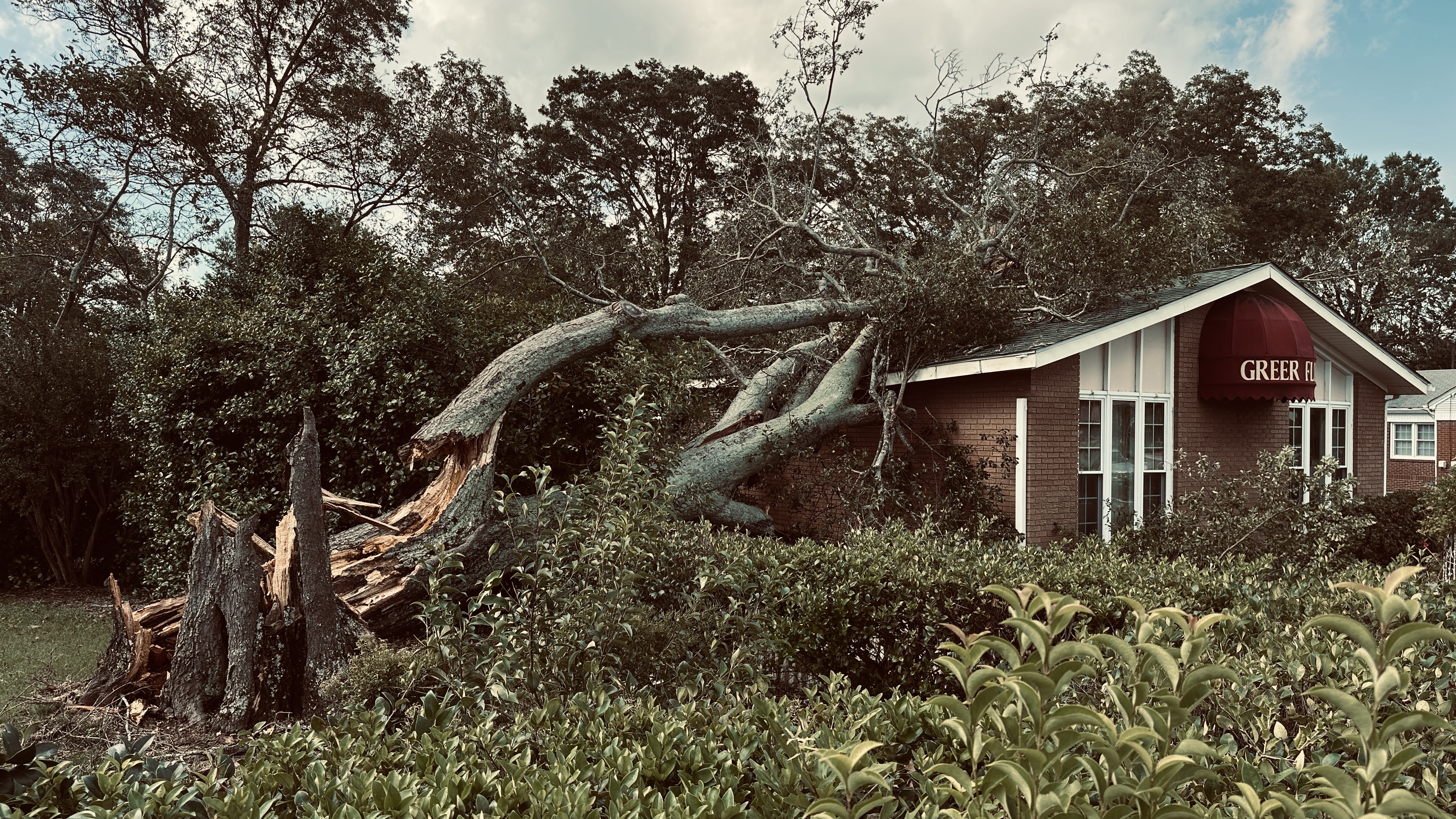
As of now (September 28, 2024) it looks like we’ll be relatively dry for the next several days, which is a good thing. It’ll give the local utilities time to fix what’s broken and shore up what isn’t, and it’ll give folks some great outdoor days for cleaning up the mess Helene left behind.
That’s just in my little corner of the world. Watching the news, I can see that many areas not far from me got it a lot worse. Roads turned to rivers, impassable bridges, mud and debris everywhere. Utility crews from as far away as Missouri have come to help out the local crews in restoring power. Infrastructure crews have their work cut out for them. Many road in the area remain impassable, literally cutting off cities and towns.
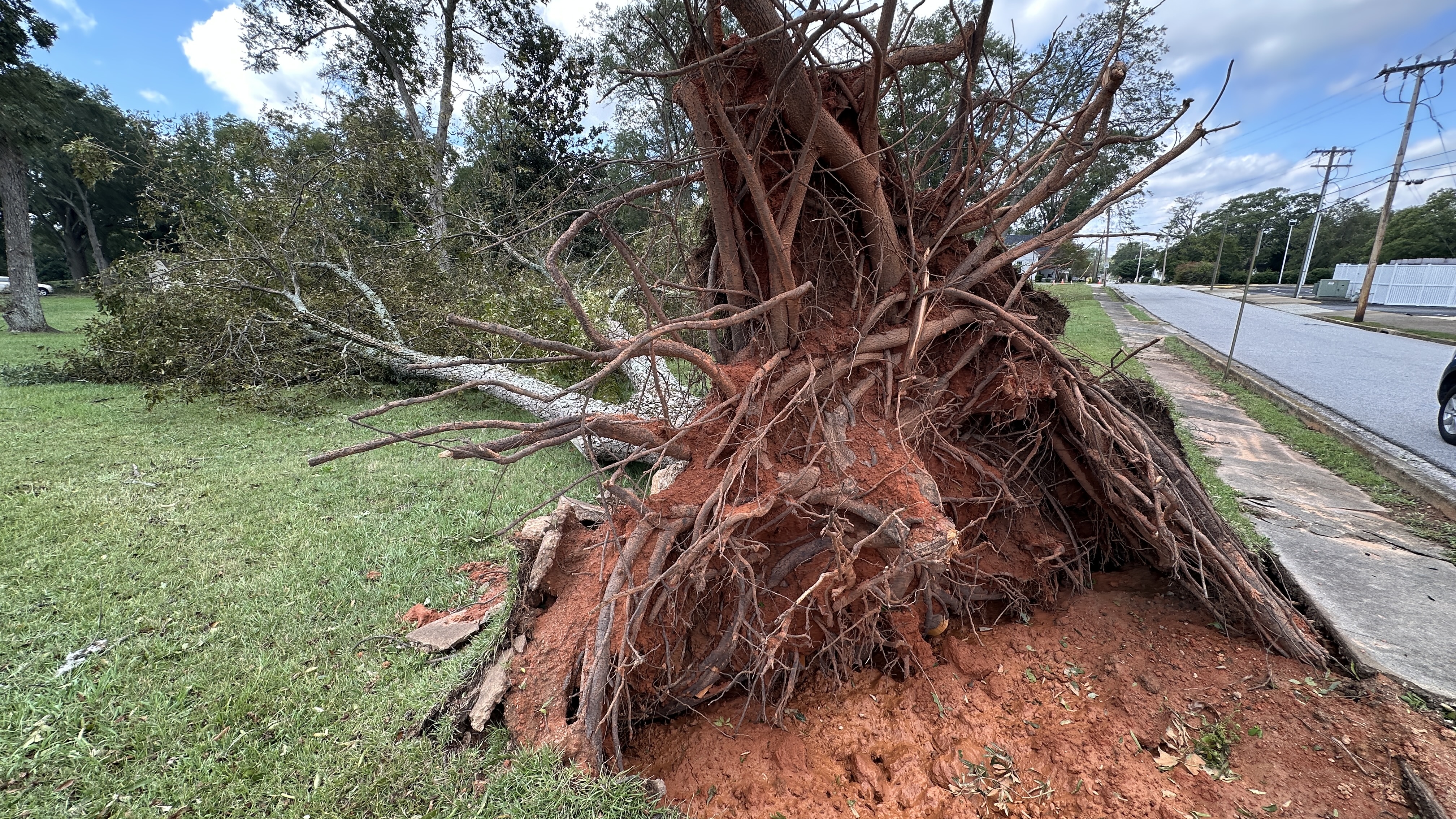
Update: Sunday, September 29, 2024
I was getting a bit restless so I thought I’d get out to see how far I could drive today. Figured 3 days after the storm most major roads should be passable.
I was wrong. I took a local major thoroughfare and I barely got 3 miles from my place. A good 1/3 of the traffic lights along the way were still inoperative. I passed long rows of blown over trees and drove over downed power lines.
After that I knew I didn’t need to be out so I turned around.
But progress is being made thanks to the tireless efforts of our utility and infrastructure crews. Even as I was returning, traffic light were coming back to life. These men and women deserve medals.
Hoping you and yours have faired well.
Be safe.
Stay tuned.
Vern
 GoGeezer