I recently read an article by Darnell Mayberry, whose finance focused articles can be found on Cleveland.com and The Plain Dealer, in which he discusses his newfound frugality mindset. Mr. Mayberry recalls how his grandparent’s tightfisted nature was a call for childhood secret missions to the corner store for sweets instead of whatever the grandparents offered that was stored, unappetizingly, in the garage. Now, much older and, apparently, much wiser, Mr. Mayberry is focusing on obtaining and nurturing a mindset similar to his grandparent’s where spending less is forefront. (And, hopefully, does not involve snacks kept in a garage.)
To that end Mr. Mayberry has stopped frivolous spending on unneeded items, has reduced his consumption of alcohol and cigarettes (certainly a good thing), and has even gone so far as to stop carrying cash and will occasionally, and purposefully, leave his credit card at home.
Mr. Mayberry says he’s at the start of his journey, but he is determined to become more frugal while avoiding the stereotype of becoming a stingy old miser.
I feel ya, Darnell.
I firmly believe that our association with money is shaped by our childhood experiences with it, mindsets that sometimes needs readjusting. In my case it was the lack of money and my family’s inability to afford even the basic necessities of life (food, clothing, sometimes water and heat) that has long shaped my spending habits, both for good and ill. To help with my family’s financial situation, I started ‘hustling’ at a young age.
Hustling can mean different things to different people, but basically it means to do whatever you can to earn a buck. Obviously that can mean doing dishonest things, but in my case, my hustles were honest, I bagged groceries at a local market and loaded them into cars for tips. I usually got about 25 cents for the full service. In the early 60’s, 25 cents went a long ways and on good Saturdays I could go home with $15 to $30 dollars! Not bad for a day’s work.
What hustling doesn’t teach you is the true value of money. In my young mind, money was necessary to live and I could get money by hustling. So, whenever I needed extra cash I’d figure out a way to get it. That often meant getting jobs doing whatever. Almost nothing was beneath me. I’ve chauffeured pizzas, flipped burgers, sold electronics, worked on a sod farm, and more to fill the gaps in what I earned versus what I spent. It occurred to me, even back then, that there had to be a better way, that focusing on spending less was also a viable option for minimizing my financial woes. But I was dealing with other issues in life at the time and hustling was often the most expedient way to address my financial needs. It was what I knew and it worked.
Like Darnell Mayberry, I’m older and somewhat wiser now. I know that there are better ways to deal with finances. For instance; if I need to buy a large-ticket item like a TV or couch, I will search endlessly to understand the pros and cons of the item then decide on and purchase the best I can afford. This is something that an astute student of poverty learns. People of meager means will often buy the least expensive item, which are often poorly made. They wind up having to buy the same item again and again and, in the long run, wind up spending more.
Buying something that may cost more initially, but is made well, is actually the best and most frugal solution. To a person of meager means spending more in the short term to avoid spending a lot more in the long term can seem counterintuitive. Other extenuating factors may influence the decision to buy cheaply. Sometimes it just can’t be helped. An immediate need must be addressed so you do what you have to do to address it. Still, the concept of buying better to avoid buying again is a solid one.
The road to a frugal lifestyle is still relatively new to me, and, like Mr. Mayberry, I’m just beginning to walk that road. This path is chosen more out of necessity rather than adhering to advice and lessons learned over the years.
My move to South Carolina, for instance, was prompted by the fact that my limited and very fixed income could not sustain my current lifestyle in Florida. It’s not that I live extravagantly, far from it. But what I do enjoy doing, being around friends, eating out on occasion, traveling, and maintaining my home was becoming cost prohibitive. Taxes and insurance have and to continue to increased to the point where even living the life of a miser would eventually be unsustainable. I needed to do something. Moving to a more financially friendly environment is the first step. I also need to adopt a more realistic approach to how I handle what income I do have. So, I’ve started looking around for ideas, which is how I stumbled upon Mr. Mayberry’s article, and how his perspective and mine seemed to sync.
So, what is my current view of frugality and how will it affect my life moving forward?
I’m glad you asked.
As I mentioned earlier, and as Mr. Mayberry has said, living like a miser should not be the goal. Clutching every penny is not a mindset that is even remotely appealing to me. I just need to see money as a very limited resource, one that, if carefully monitored and used, can keep me going until the road I’m on ends. To carry the road analogy further; I need to travel in “economy mode” not “sport mode”. That doesn’t mean I can’t enjoy the journey, it just means I need to waste less while moving along. Or, as Mr. Mayberry puts it, “Rather than buying any old thing based on emotion and price, I’m now letting utility and value be my guiding principles.”
But it isn’t just “utility and value” that should guide me because they, by themeselves, are boring. I believe that there also needs to be a sense of purpose, or maybe style, something that makes the journey interesting, even fun. Neither style or purpose fully relates what I think is needed, but it points me in the right direction.
A good opportunity to explore this will be when I find a house to buy after my move to South Carolina. Currently I have no furniture. There’s a reason for that which I won’t go into, but the lack of furniture was on purpose, it allows me to really look at what style I want to be surrounded by. After doing a lot of research I’ve found that I’m most attracted to a style called Mid Century Modern, which is typified by functional furnishings with clean lines, natural materials and solid colors.
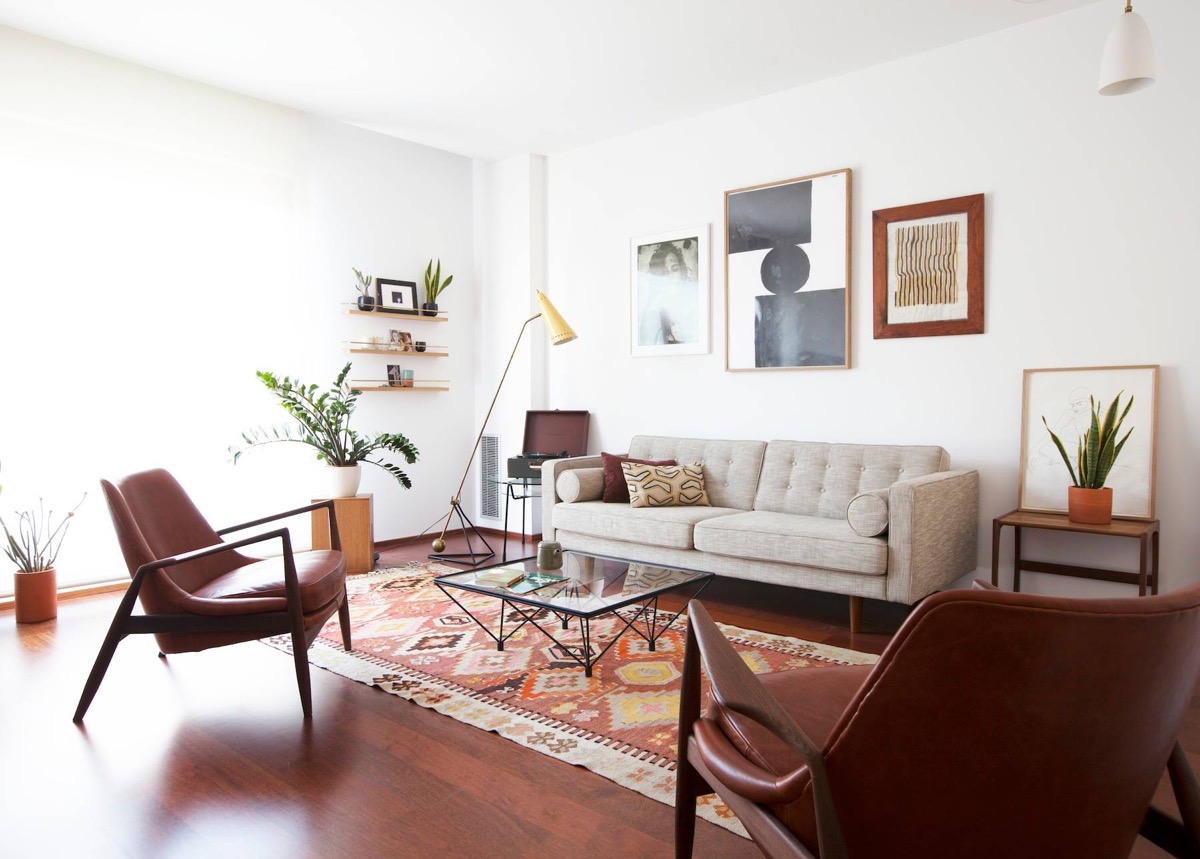
While focusing on utility and value, but with an eye on style and comfort, I intend to turn my future abode into a Mid Century Modern home. I also intend to document the process here, but all that is a bit premature. There’s a lot that needs to happen before I get to that stage. I just thought it would be a good idea to explore this here, to set the stage, as it were.
More to come. Stay tuned.
Vern


Leave a Reply