Namibia: Pitch Black

In my last post I talked about how dry The Namib Desert is. I didn’t fib, The Namib is, indeed, one of the driest places on earth, and dust is literally everywhere. But dry is a relative term.

Winters in Florida are ‘dry’, but there it means we get rainfall maybe a few times a month and the average relative humidity hovers around 40% instead of raining five or more times a week with humidity hanging above 80% in the Summer months.

In the Namib humidity can get as low as 10%, but that really depends on where you are. Coastal regions will get fog so thick that clothes left outside to dry can come back wetter than when you first hung them. When the conditions are just right the dry desert wind stops and moisture soaked breezes from the Atlantic will push inland, sometimes up to 100km, blanketing parched sand and rock with an almost viscous layer of fog. This may occur 2-3 times a month with moisture ladened air, not enough to form fog, wafting in a bit more often. It’s hard to predict when it will happen.

Nights in the Erongo Region are usually crystal clear. It’s amazing that there aren’t more optical telescopes here because the skies at night are so full of stars it looks unreal. The Milky Way is easily visible, there are so many stars that constellations are tough to make out.

Yesterday I thought it would be a good idea to climb Mt. Arandis and stay until after dark to get some night shots of the skies. I bought a nice little tripod for my Canon GX-7 Mark II, a head lamp, a snack and some water and set out, timing my climb so that I could also catch the sun as it settled in the west.

I did this alone. (Do NOT try this at home boys and girls!! I did tell people where I was going and was in near constant contact the whole time, but it is still not a wise thing to do.)

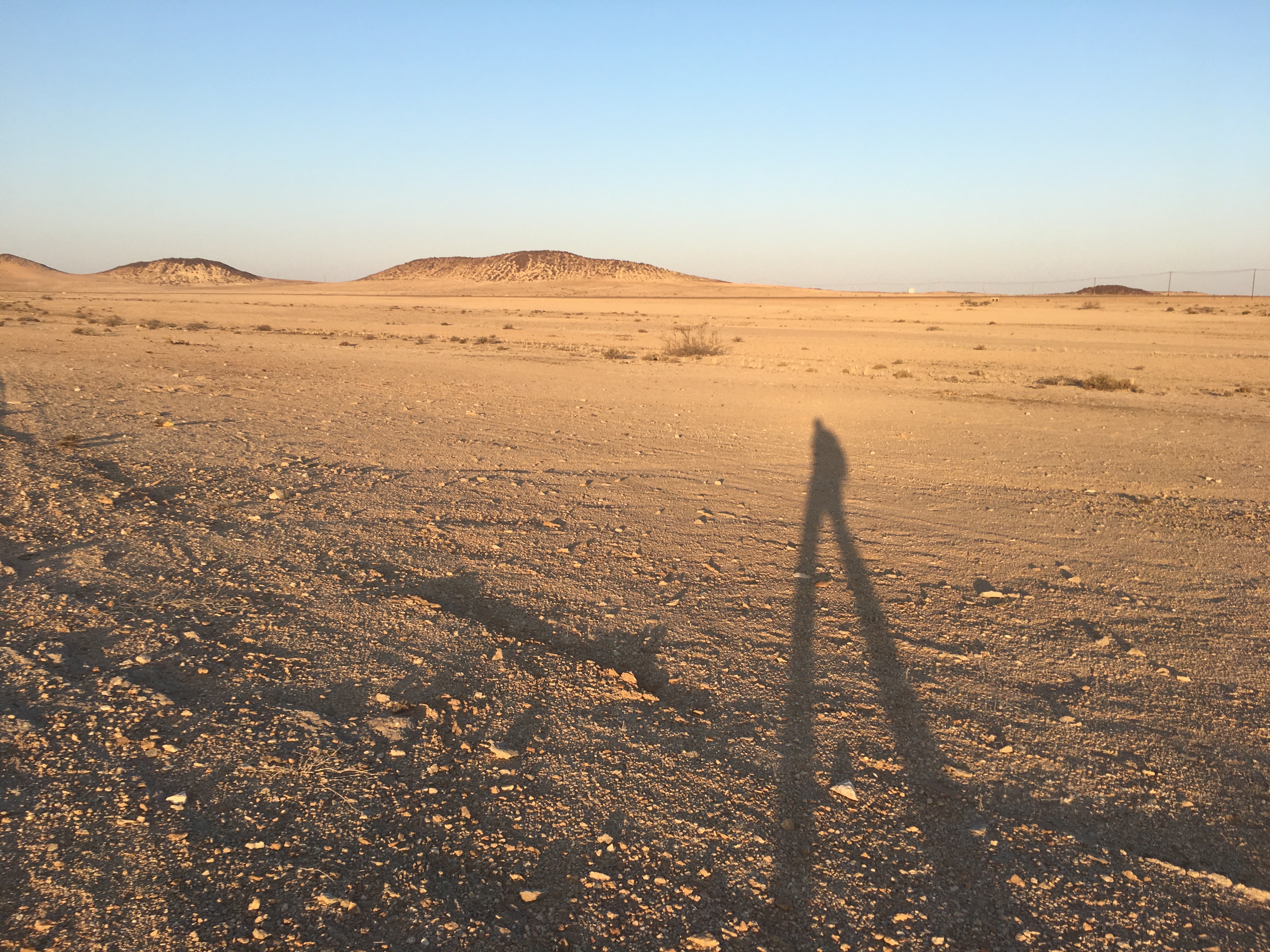
Long shadow in the setting desert sun


I’d climbed the small mountain before so I knew the paths and felt confident I could pick my way down in the dark with the help of my head lamp.

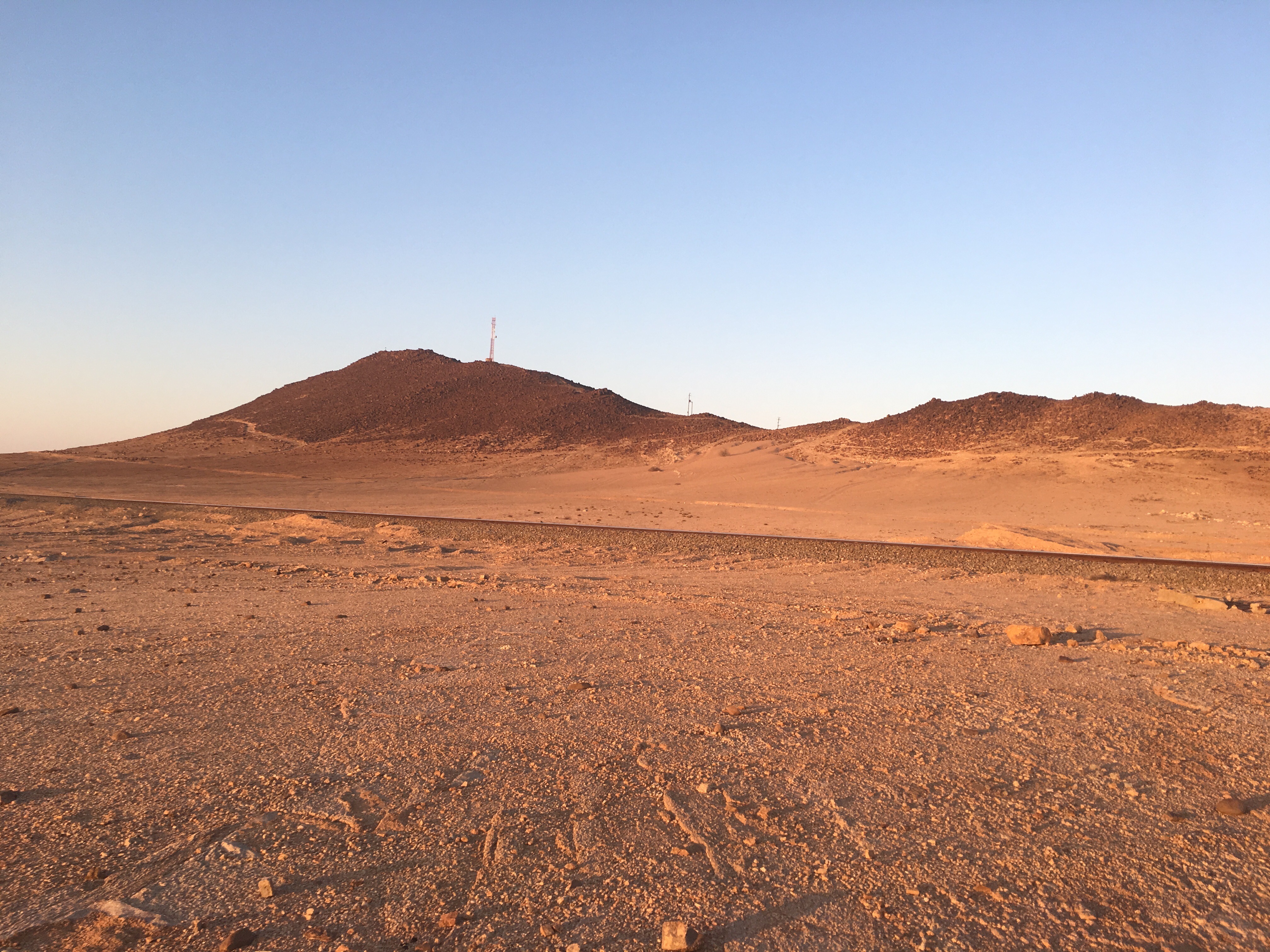
My destination


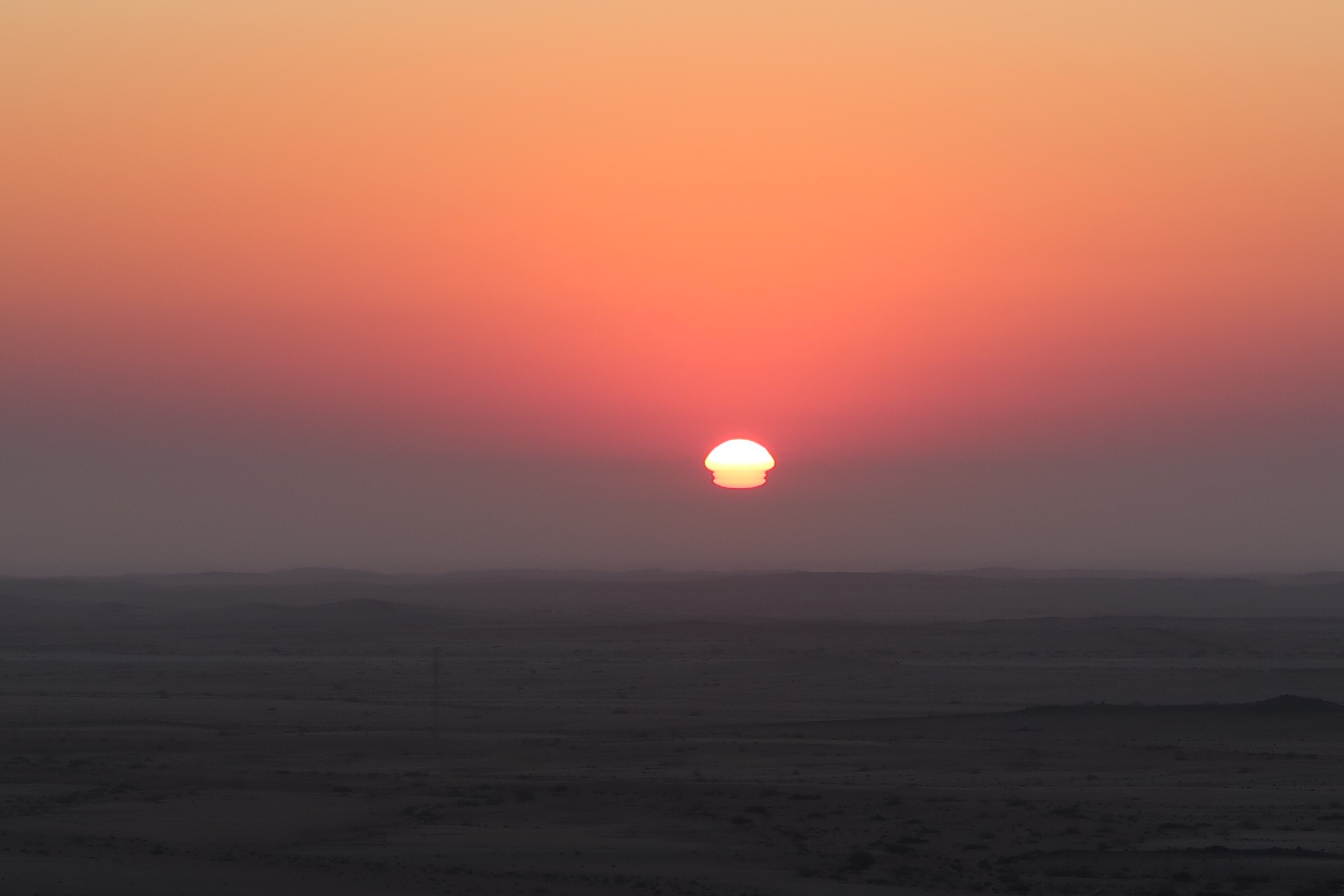
As I ascended I noticed that, of all nights, last night was one of those misty-but-not-quite-a-fog nights. I could see the heavy air as the orange sun settled behind it. I wasn’t sure that I’d be able to see many stars or even the Milky Way given that the peak I was on was only 600 feet above the desert floor, but I stayed and took photos. Here are a few.

The sun setting behind a thick mist from the Atlantic

B2 Highway and part of Arandis after sunset

Misty Arandis


In that last shot you can see how thick the air was over Arandis, clear just a few hundred feet up.

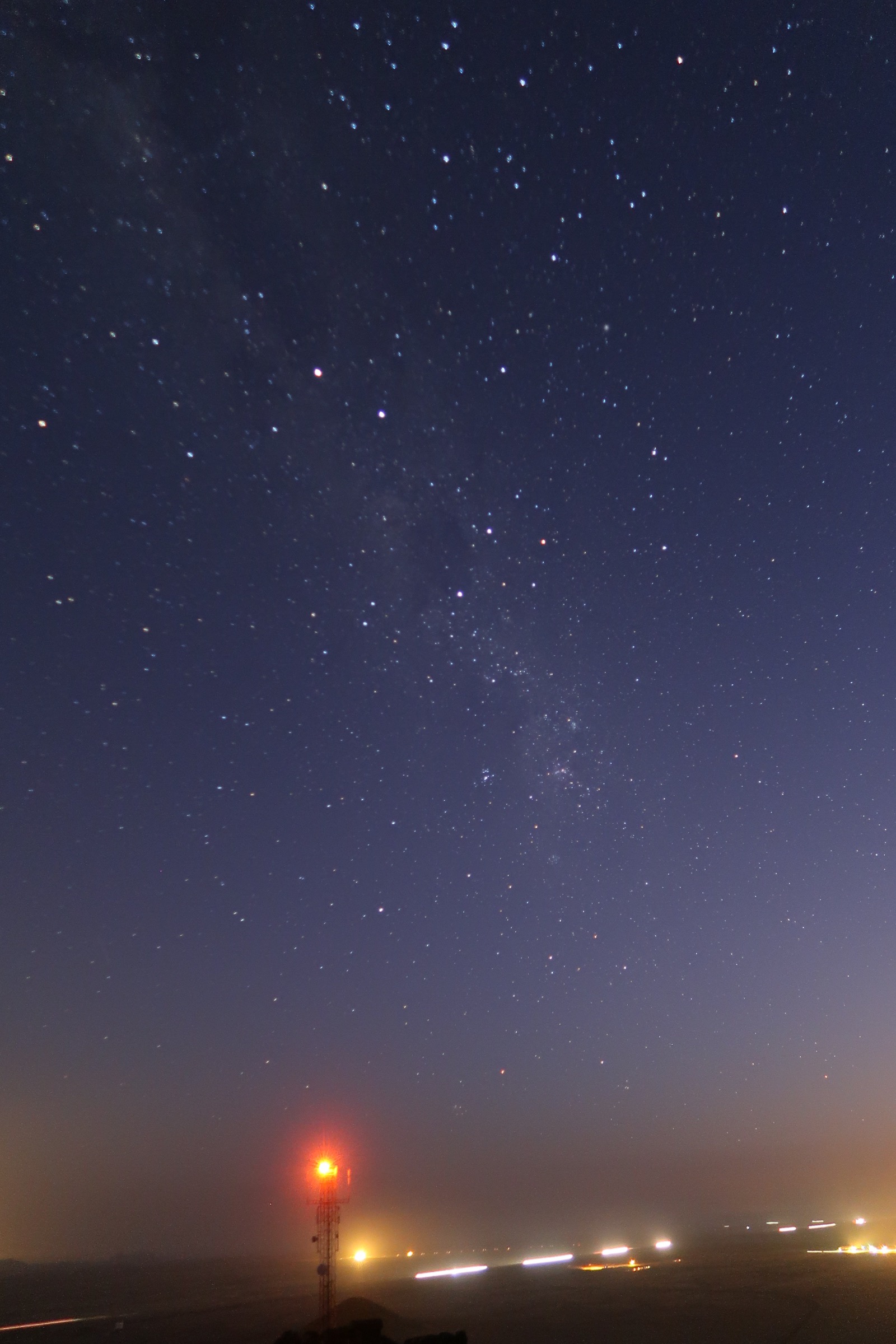
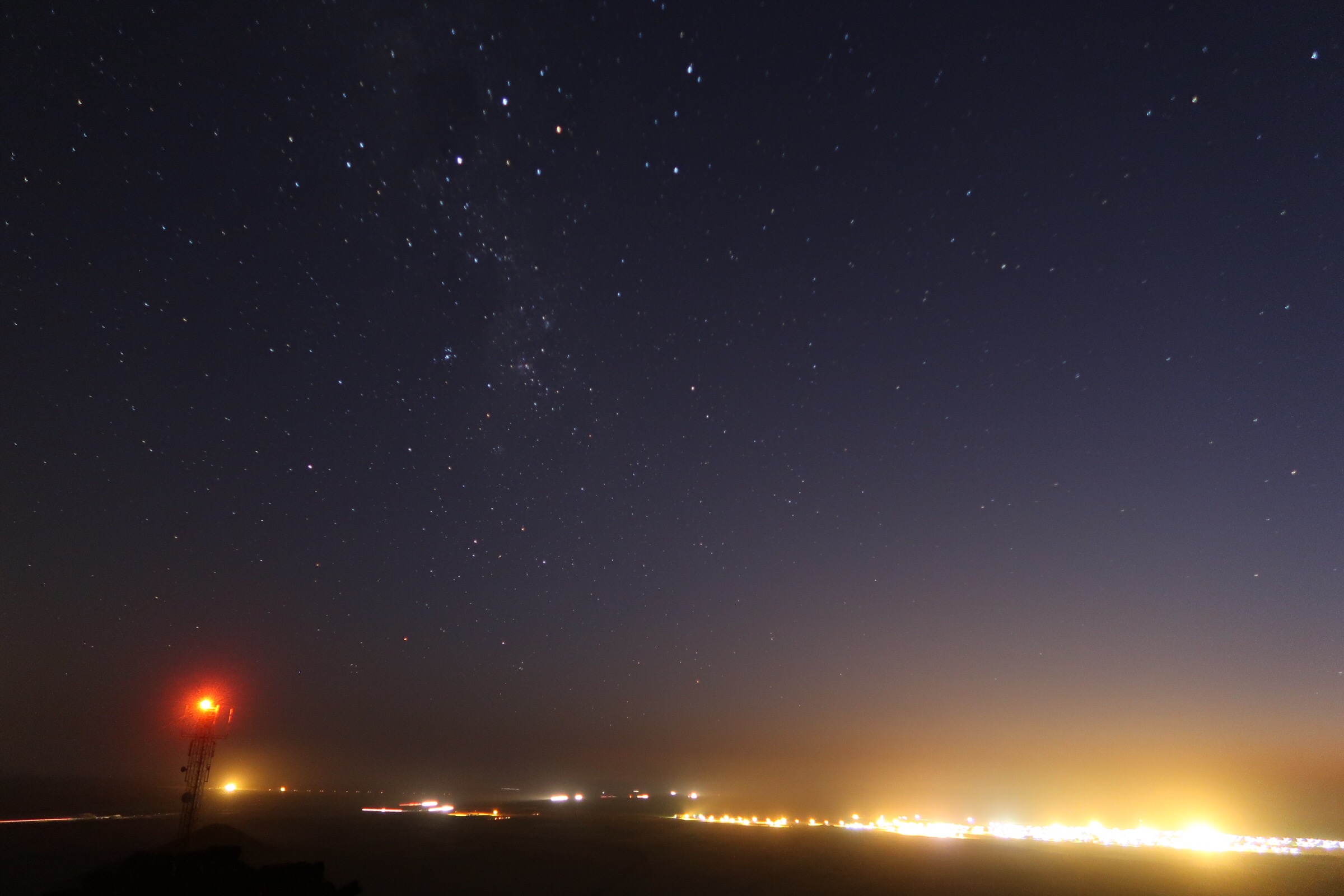
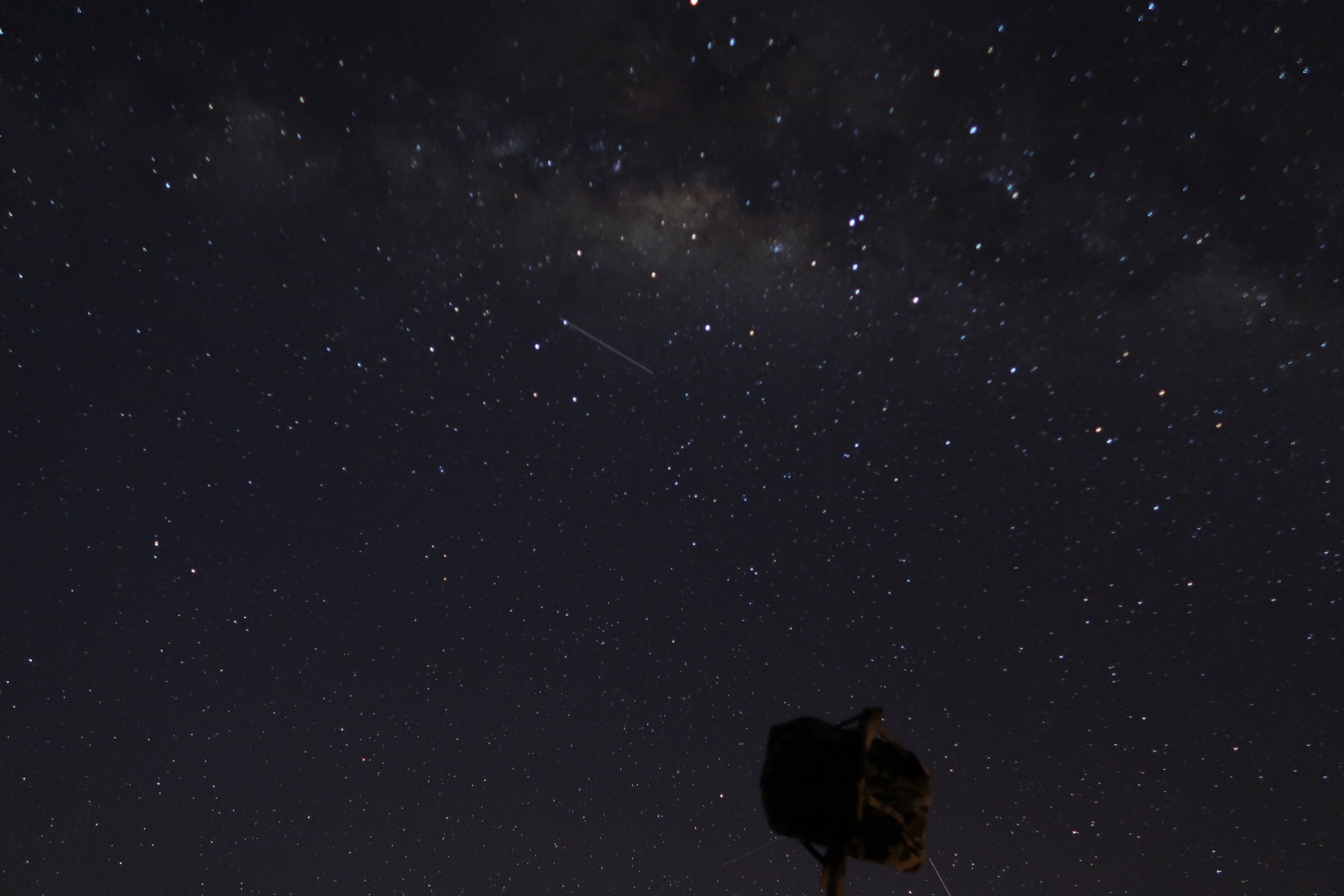
As it grew darker I became aware that things look a lot different with just a small spotlight for illumination. I stayed anyway, waiting until it was dark enough to see the Milky Way. I got lucky and was able to capture a shooting star.

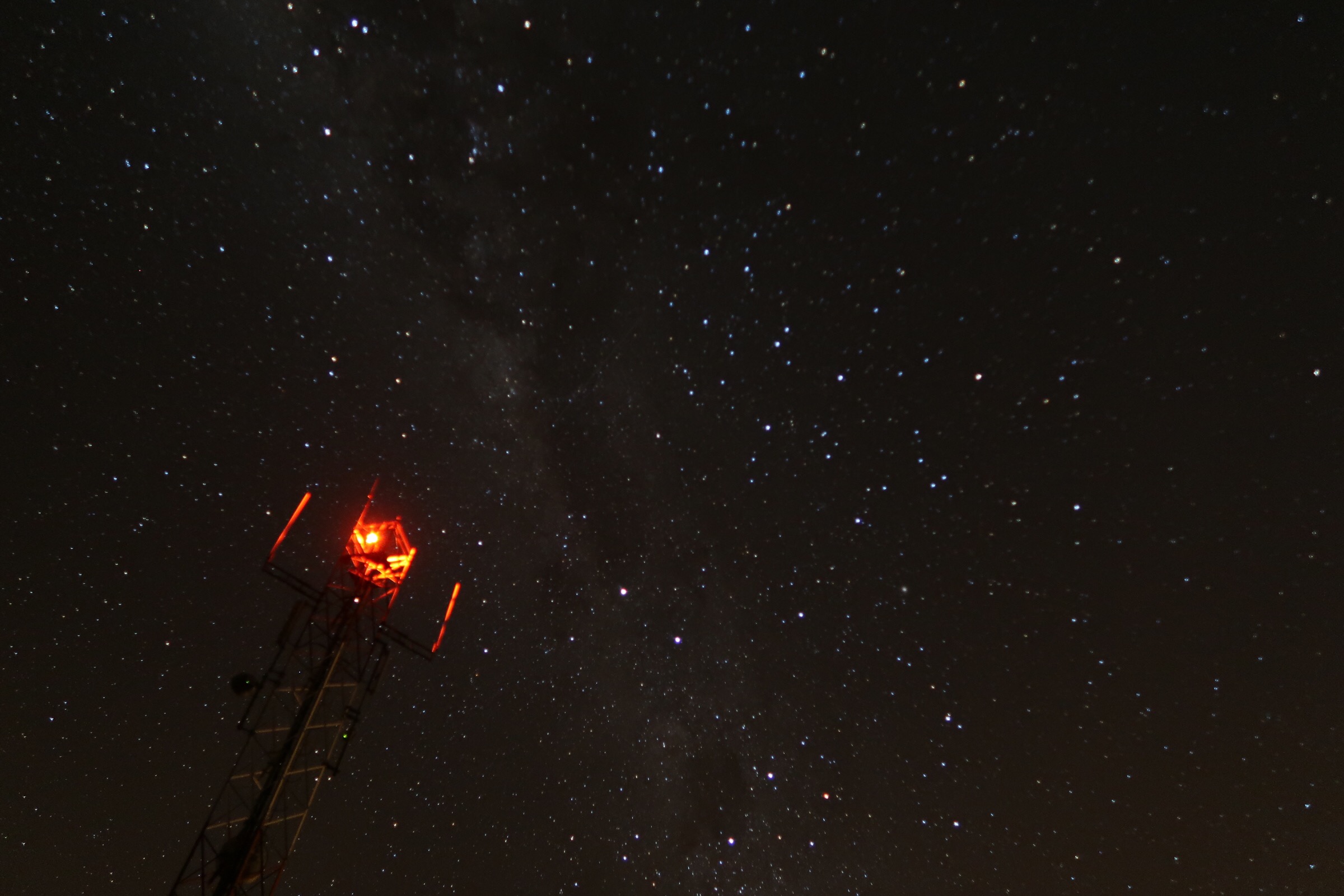
Milky Way and shooting stars

“It’s full of stars!!”

OK, photos taken, now I have to climb down in the dark with no defined path to guide me. It was slow going and the wind can make you hear all sorts of things, stoking the imagination.

I made it down without incident, but still had a 40 minute walk in the open desert with nothing but my little head lamp to guide me. I kept wishing I had bought a brighter light…, and a shotgun.

I focused on the red light of a mobile phone tower in the distance, a familiar landmark. My pace was a quick one and all the while I kept feeling like I was a extra in the SciFi movie, Pitch Black, waiting for the spot in the script where one of the monsters would swoop in out of the darkness and make a meal of me, and not even Vin Diesel could save me.

I’m happy to report that no monsters, lions, or even an ill tempered gecko bothered me. While the shots are not perfect they aren’t bad and are worth the adrenaline rush.

I may try it again, and maybe the next time it’ll be drier, and I’ll have a brighter light…, and a maybe a baseball bat. Just in case.

Stay tuned,

Vern

Namibia: Dust to Dust

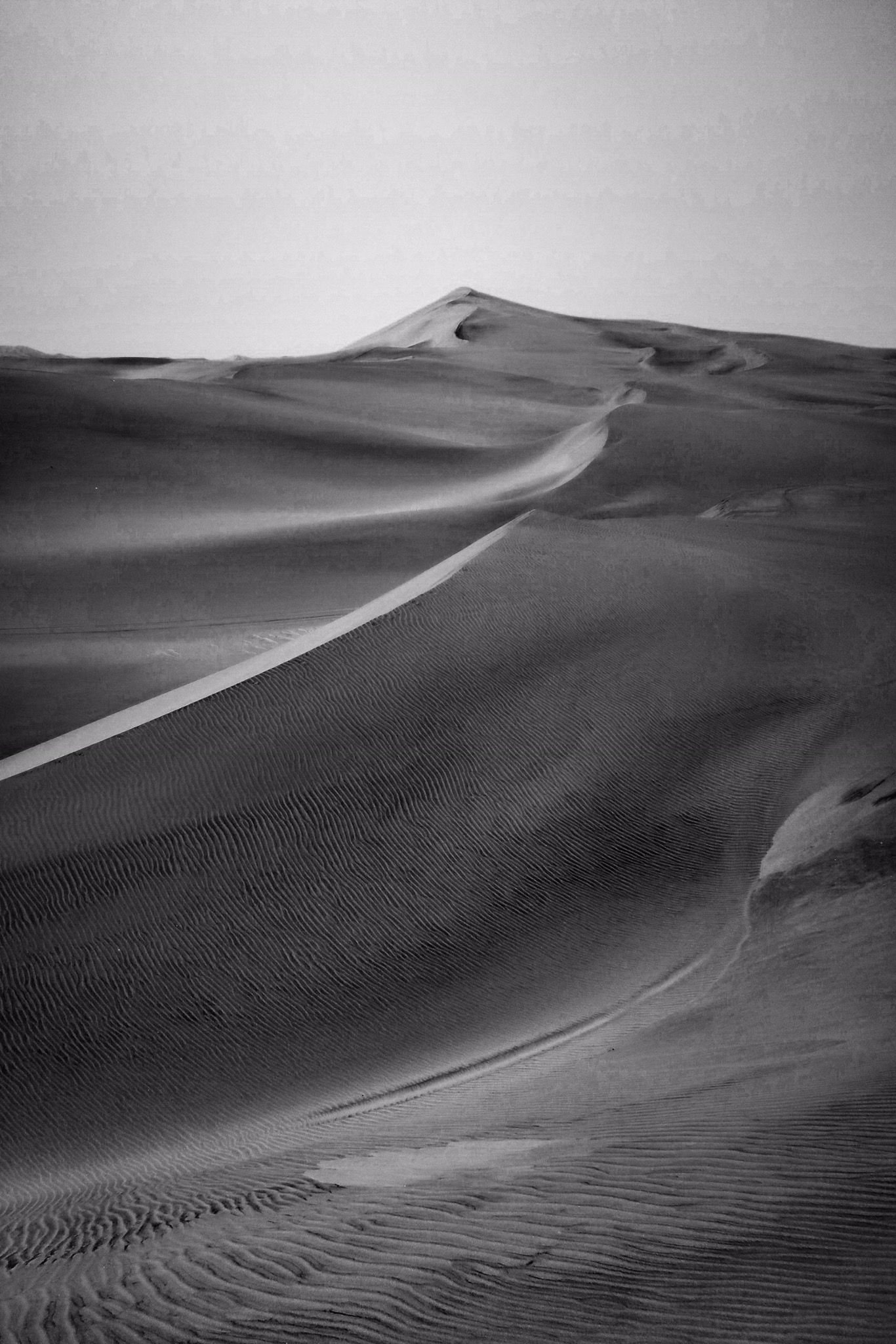
Namibia gets its name from one of its largest and iconic geographical features, the Namib Desert. As one would expect, the Namib is dry, very dry. Average rainfall is less than a tenth of an inch a year. It’s been a desert for an estimated 60 million years, making it one of the oldest deserts in the world. To the east of the Namib is another desert, The Kalahari. To the west is the Atlantic Ocean and desert’s winds blow mostly from east to west, limiting any advancement of moisture from the ocean to inland regions, making the air extremely dry and dusty.

Dust is everywhere and gets into everything. You breath it, drink it, eat it. It permeates your clothing, your hair, and gets into your eyes. There is no escaping it. Dust is part of the environment, like moisture is in a rainforest.

When a westerner first comes to Namibia and sees a boy covered in dust we think that child is that way because he’s poor and can’t afford clean water and soap. His clothes are ragged because his parents can’t afford to dress him in anything newer, cleaner.

While that may be true for some what we fail to realize is that these people live in this very dry, very dusty environment and they have adapted. That child is dusty because that’s where he lives. His clothes are ragged because new clothes would soon be in the same shape in this unforgiving environment. Newer clothes are saved for school, church, or special occasions. We fail to see that while he is running barefoot through the dust he is laughing and playing like any other child anyplace else in the world. If we looked closer we’d see that he is well fed, has a place to sleep, and has a family that cares for him. His needs are all met and he is not suffering, but prospering. It is the dust that clouds our perception of him.

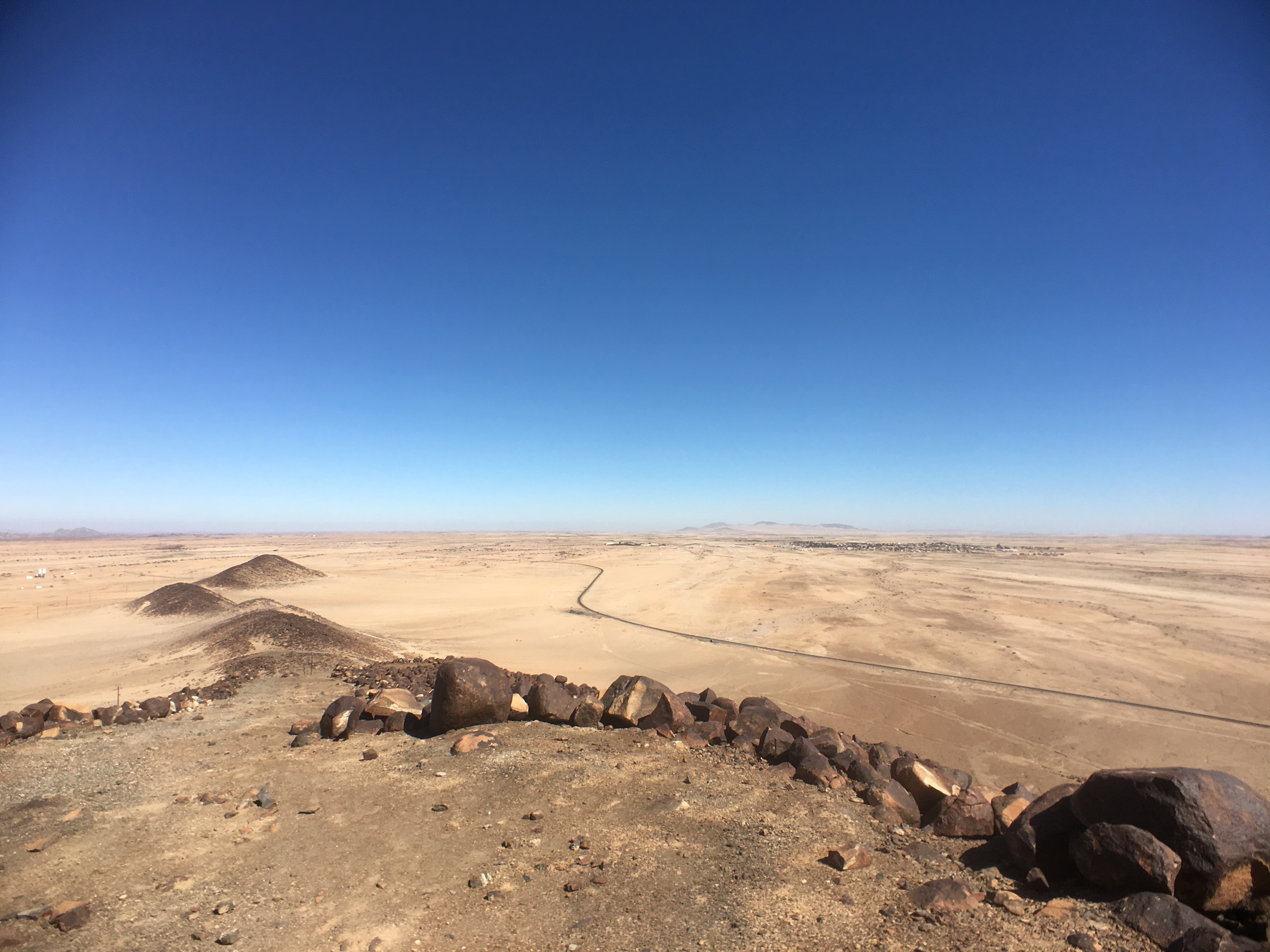
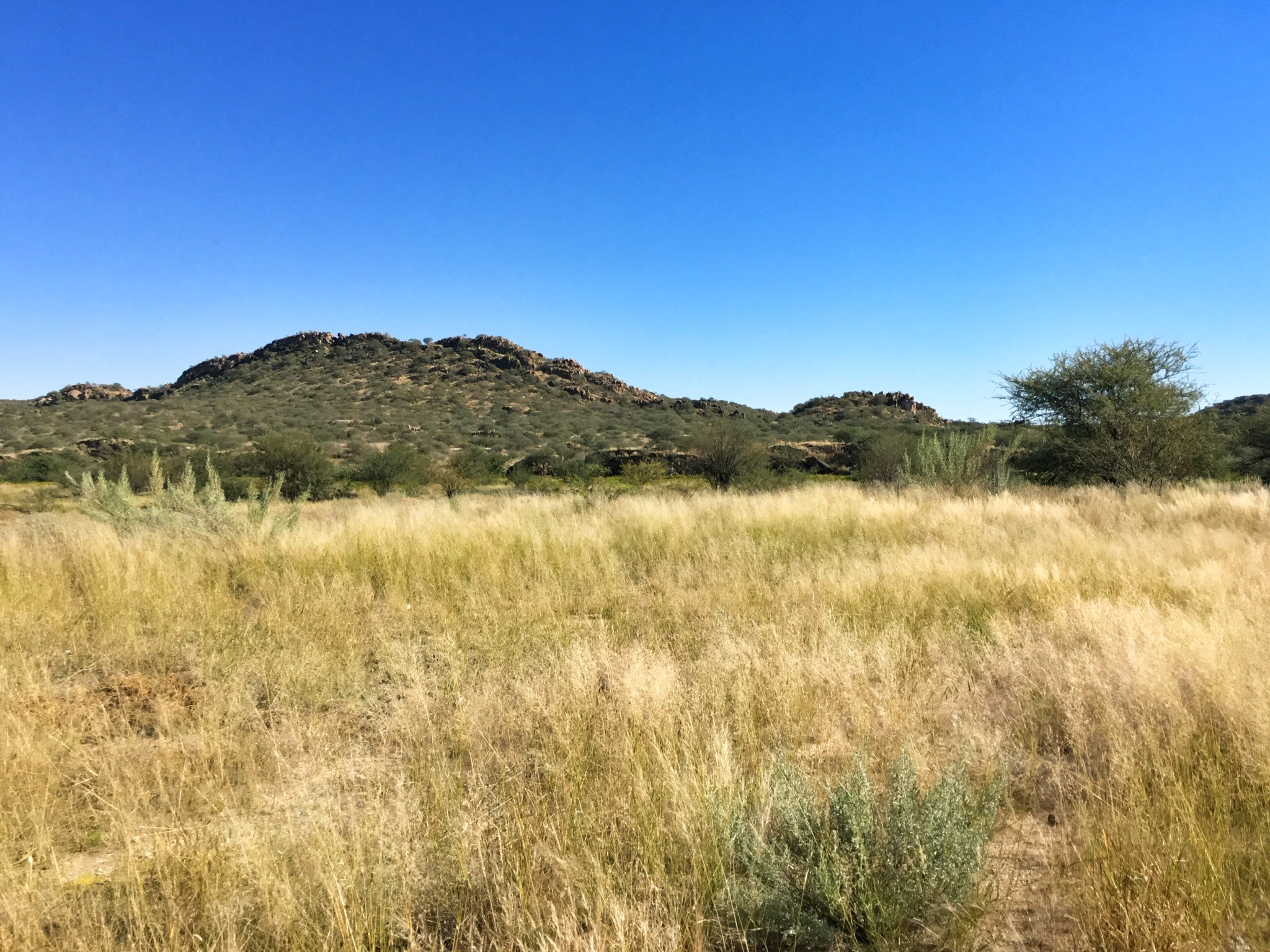
View of the Namib from atop Mt. Arandis


The wind blows and with it comes more dust. It comes through the cracks around the doors and windows and settles on everything in my house. I sweep out and mop my house once a week and I’m always surprised at how much dust I have in my dustpan. I wipe down surfaces and the cloth and it always comes away brown.

Dust.

On Sundays I do laundry. I don’t have a washing machine, but I’m luckier than some because I have a bathtub and I can hand scrub my laundry there.

It’s winter here in Namibia, a period that’s even drier than the rest of the year, if that’s even possible. The days can be warm and the nights very cool. I wear jeans and khakis a lot and, as you’ve might have guessed by now, they get very dusty. When I wash them after a week’s wear the water is always a dirty brown. Shirts fair better, it’s the collars and cuffs that get a brown stain.

A great thing about the desert, anything you hang out to dry, regardless of how wet it is, dries quickly. Dripping wet jeans are bone dry in an hour. Shirts take about 20 minutes. Underwear are dry in 15 minutes! Nearly everything is wash and wear here.

Least you think that the boy I described earlier walks around with years of dust layered on him you’ll be relieved to learn that children here often bathe at least once a week, on Sundays from what I can tell. Two Sundays ago I set out to climb Mt. Arandis. While in route I came upon about 7 kids, between 3 and 5 years old, lying wet and nearly naked (they had on wet underwear) in the middle of the street. The morning was cooler than most, but the sun had been up a while and had warmed the asphalt. The kids were drying themselves after a bath. They were lying next to each other chatting and giggling, some with eyes closed, apparently enjoying what must feel similar to the sensation we get when we snuggle in towels and sheets fresh from a dryer on a cool day.

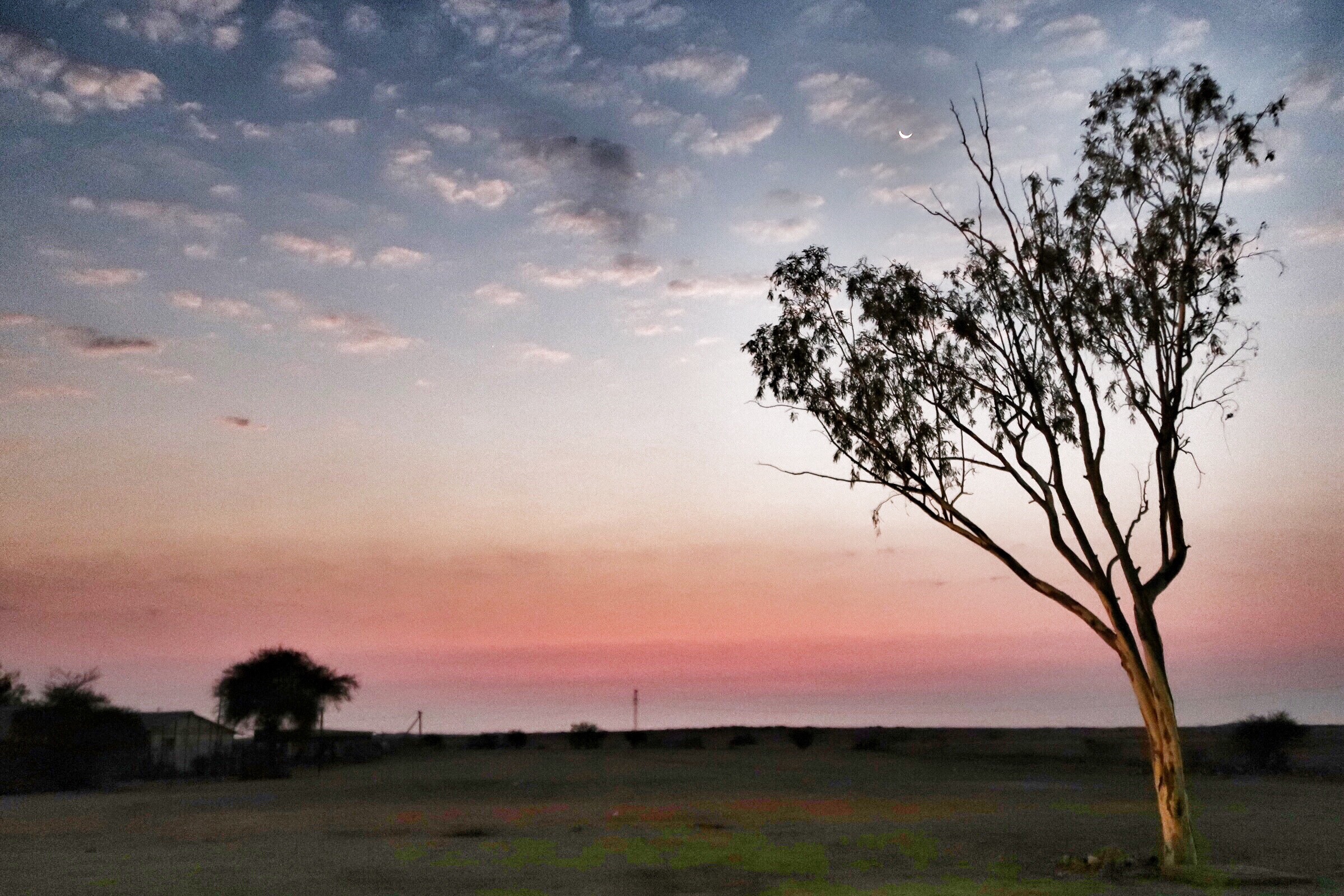
You may wonder if lying in the street defeats the purpose of bathing. The answer is clearly, no. Remember, there is no escaping dust. If you stand completely still you’ll quickly wind up with a layer of it. Bathing cleans and refreshes, but there is always dust. They’ve learned to live with it. I’m beginning to. I mop my floors and wash my clothes and accept that my efforts are only temporary. I now look pass the dust and see the bright smile and shining eyes of the child beneath. I see the Namib as a living environment that exhales sand and dust made of mountains nearly as old as the Earth itself. I breathe it all in deeply and I look out into the desert and watch as the dust tinted light of the setting sun paints the sand red, and I smile.

Sunset on the Namib


More to come.

Stay tuned.

Vern
Namibia: Up North and Here

Again I must apologize for being slow on my post updates. Whenever I think there will be a span of free time for me to sit and write I discover it’s just not so. Such is the case this passed two weeks.

I have been:
– Trying to get my home for the next two years in some kind of order
– Meeting people in my community
– Trying to understand my new assignment duties
– Trying desperately not to be overwhelmed by the magnitude of the needs I must address over the next 24 months

And the list goes on and on. And, as if I don’t have enough to do already, I went and joined the PC Namibia Media Committee. Our job is to tell the world the Peace Corps story through a variety of traditional and current social media. My first assignment was in northern Namibia where we interviewed Krystal, a PCV living and working in the Ohangwena Region.

What an eye-opening experience.

Some PCVs join The Corps thinking they’ll live in a mud hut, eat bugs for breakfast, learn strange native customs all while teaching their hosts and the surrounding community some fundamental skill. Maybe that was true back in the 60’s, but today it’s harder to realize that romanticized idea of PC life. We do teach and render aid, but more often than not PCVs, especially those in the Economic Development arm of the Peace Corps, will find themselves assigned to urban areas where often the need is greater.

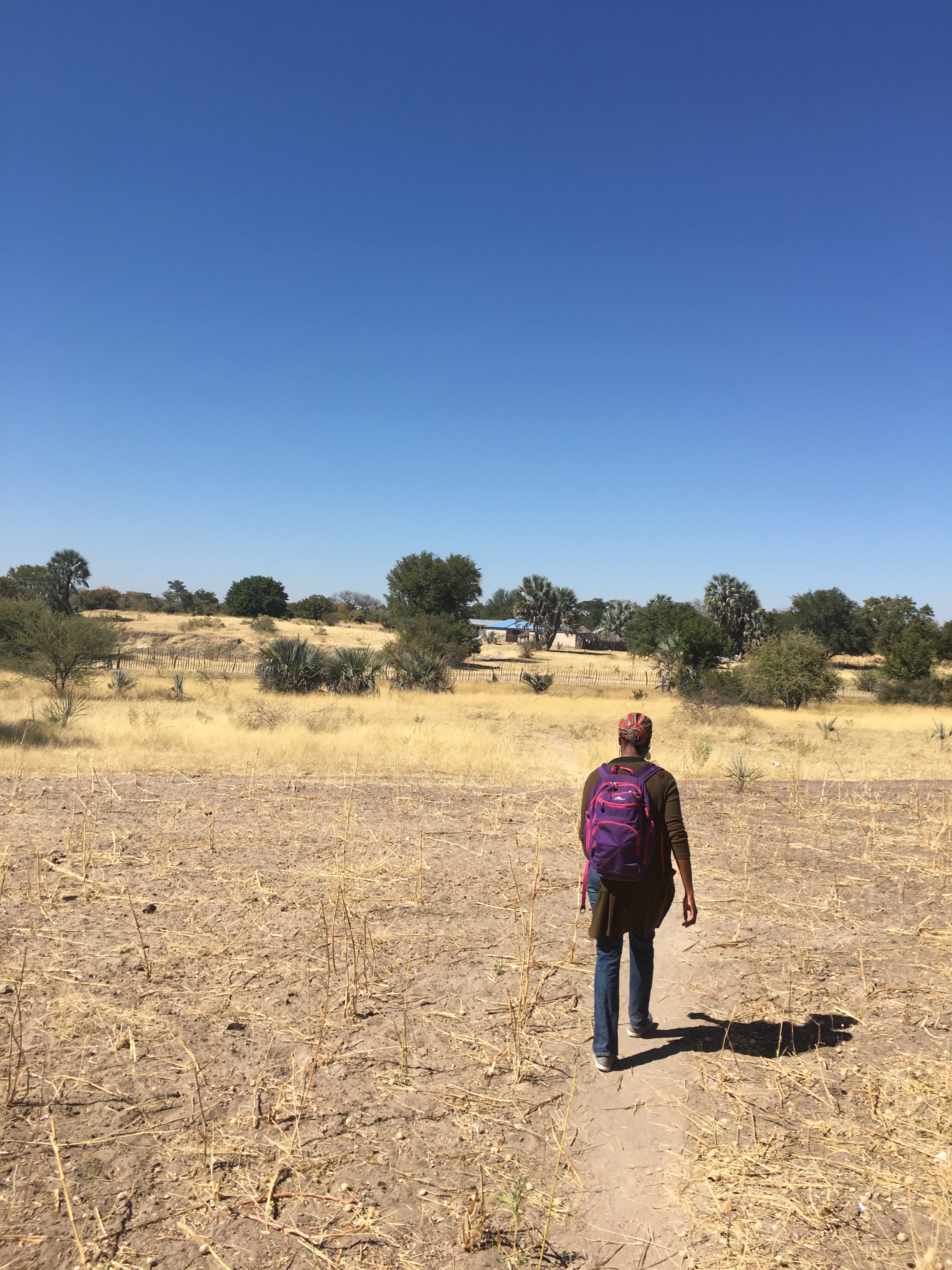
Krystal heading home

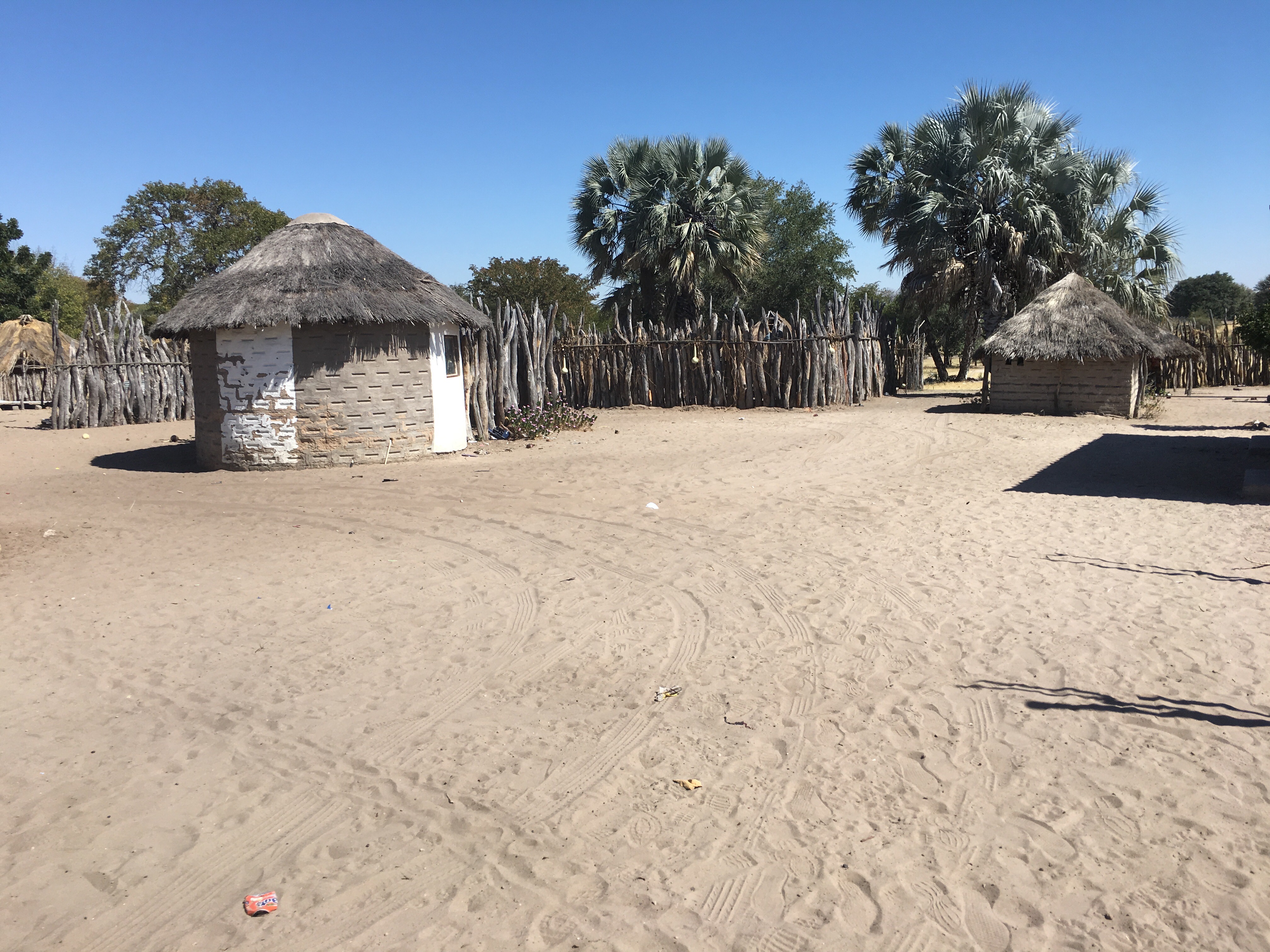
Krystal, on the other hand and to a large extent, is living that idealized life. For the passed year or so she’s been working as a health care volunteer in the Ohangwena Region and while her hut isn’t mud and has a concrete floor as per PC requirements, her roof is thatched and she live in an Ovambo homestead. The homestead is basically a collection of small buildings surrounded by a wooded wall. It’s like small forted community where the citizenry are all related. The walls serves as a pen for smaller domestic animals and living space for family members whose ranks can swell to 15 or more, depending on the time of year or family event. The kitchen is traditionally outside. Older relatives may have their own hut, or live in the main house, which is larger and may contain a food prep area, bathrooms and gathering space.

Inside an Ovambo Homestead


Krystal has her own hut which is spacious enough for a large bed, closet, at least 2 desks and still have plenty of room to move around. I was envious. It can be dusty, goats and chickens wander by your door from time to time, you are far from any modern convenience, but the experience is pure, and it can feel genuine. By comparison, I have an air conditioned office with a computer running Windows 10, and an alarm system in my concrete block house. To be able to experience just a bit of what Krystal does, even for a few days, was just what I needed.

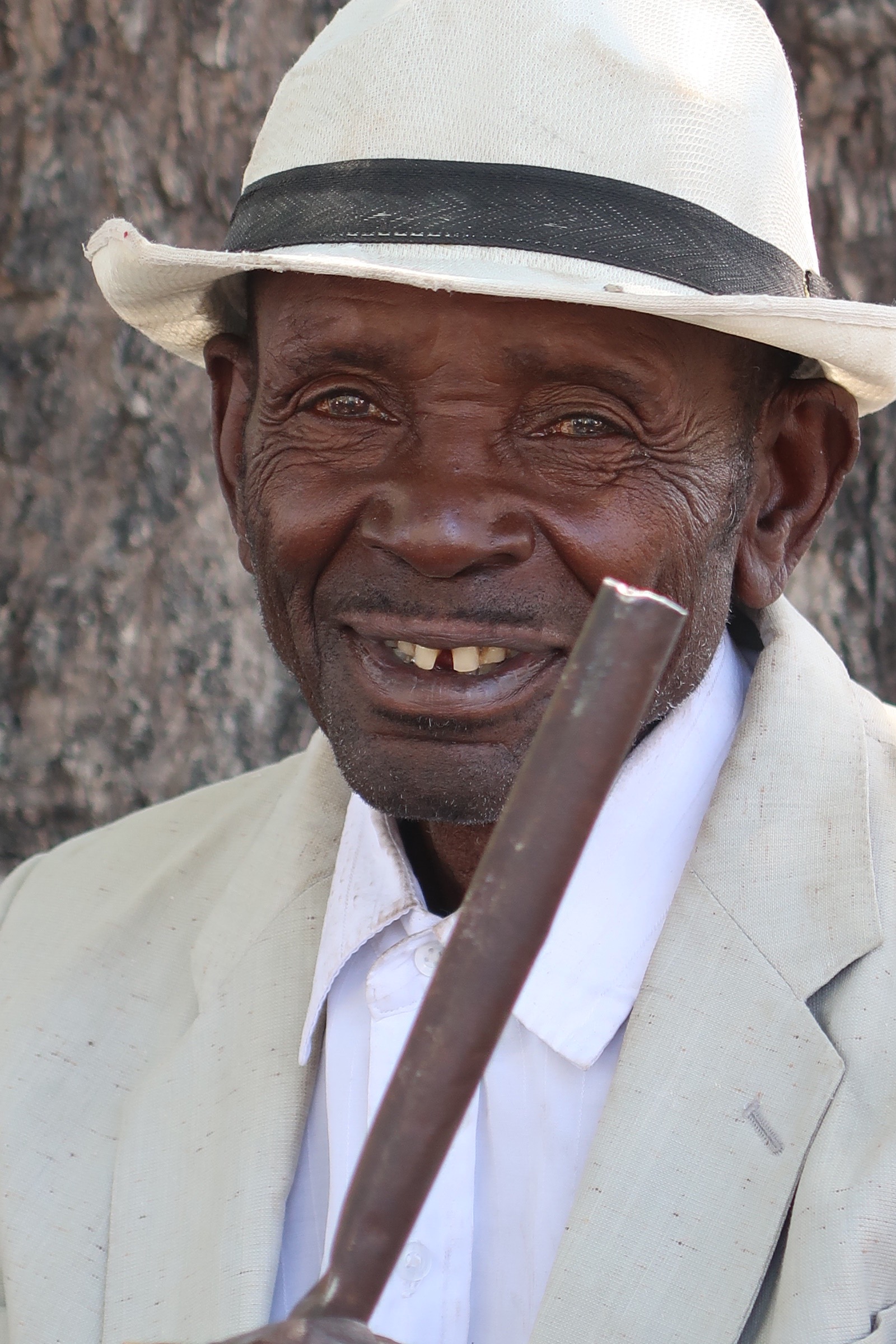
A dapper tatè (fatherly old man)


My experience didn’t stop there. One of the tasks I had was to take still shots of the environment; the people and the day to day activities they pursue. I did get some really nice photos too. I’m sprinkling a few here.

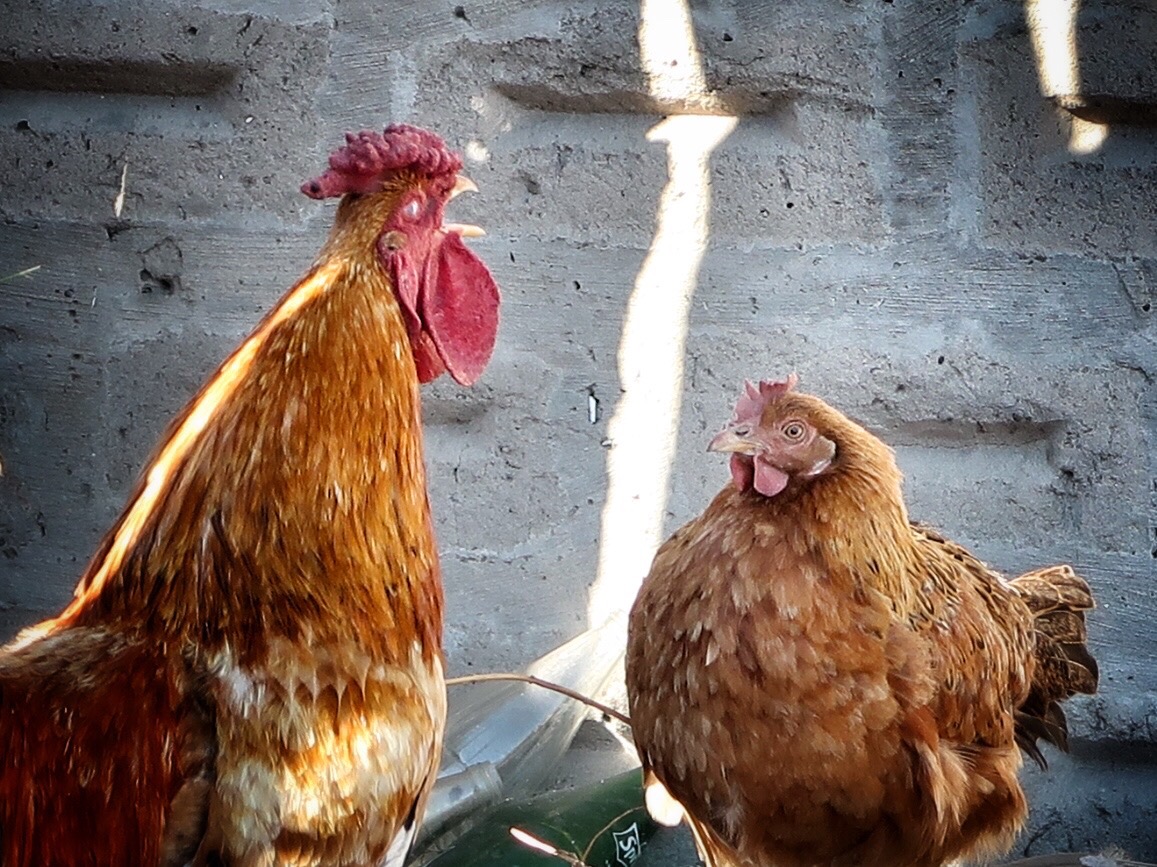
Something to crow about


It’s a rich environment, full of sights and sounds that are both foreign and familiar. Cows, goats, chickens, and even donkeys graze alongside the road unfazed by the roar cars and trucks zooming by. When they decide to cross, they do and traffic slows to avoid them. The landscape in this region reminds me of north Florida. It’s flat, dotted with palms and other trees, and here and there were pools of water, or places where water was and will be once the rains begin in Summer. (I know it may seem counterintuitive to some, but it’s Winter here. Similar to Winters in Florida, it’s relatively dry and sunny. In northern Namibia Summer brings rains, and crops and livestock flourish. As I understand it, the area becomes lush with vegetation, dry river beds come raging back to life, and the whole area is transformed into a seasonal Eden. I hope to see this for myself while I’m in Namibia.)

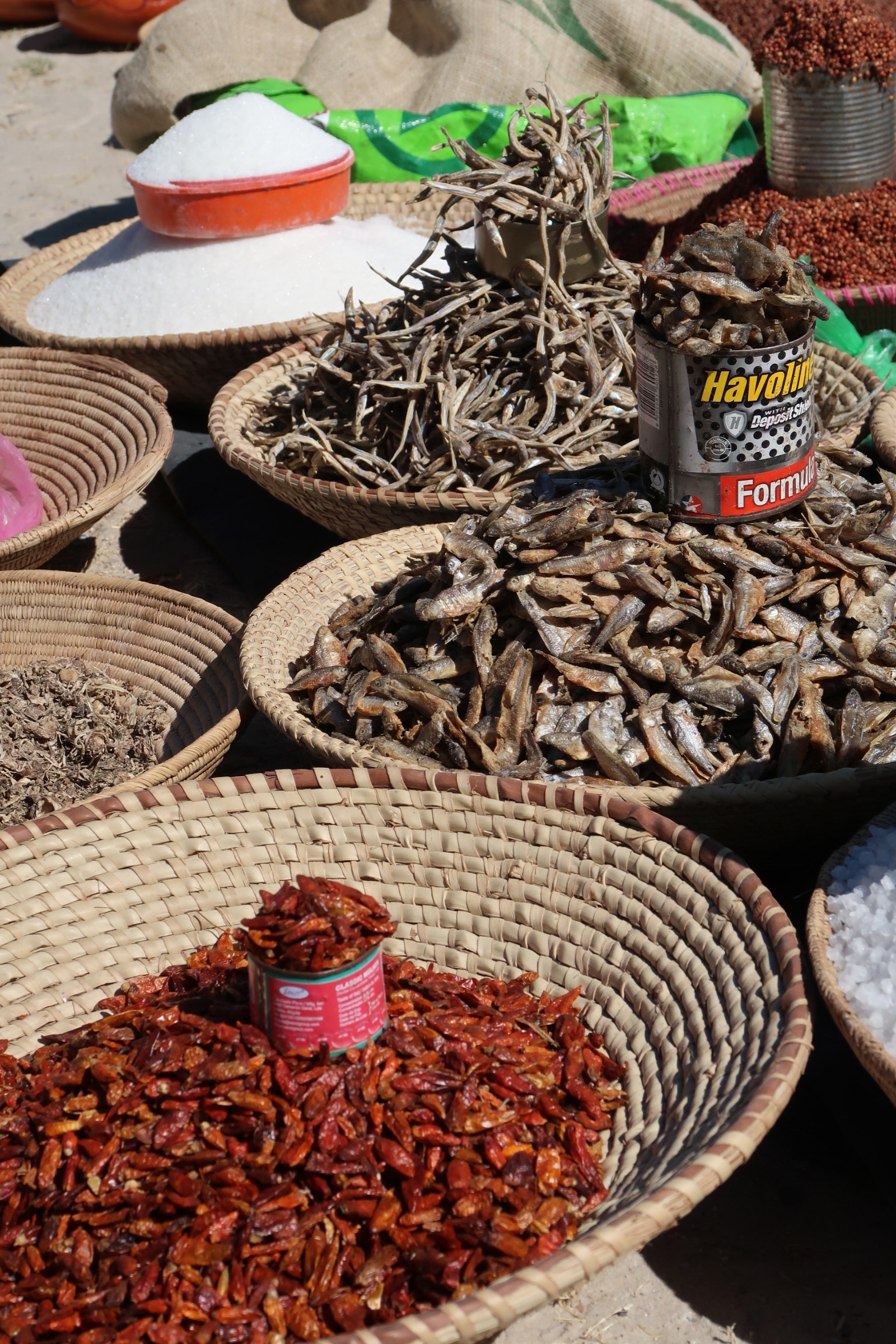
Market Day Delights


As part of the media committee I get to travel to many places in Namibia for projects, so I’ll get to see parts of the country other PCVs may not. But I’m also finding beauty here in the desert.

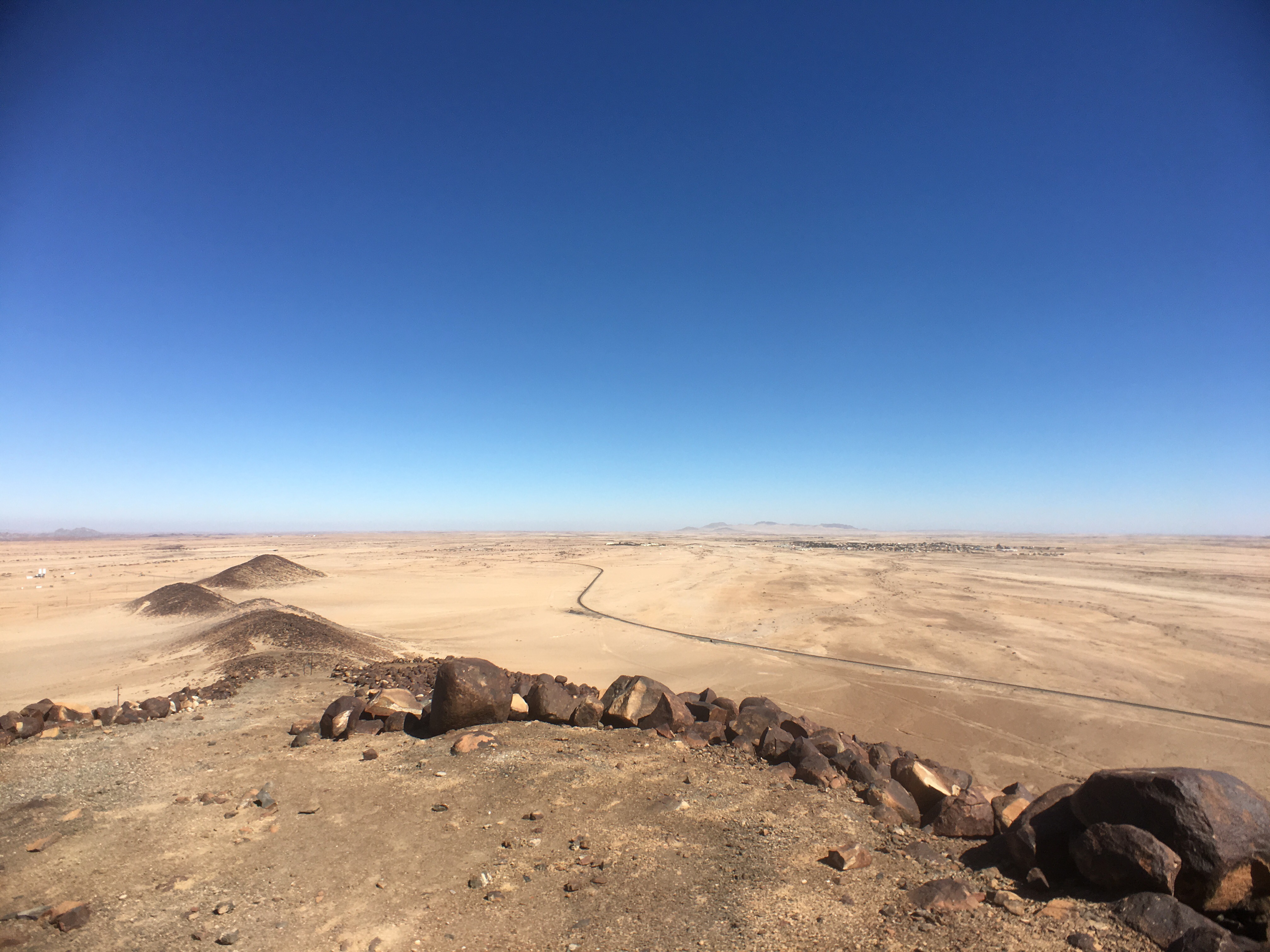
For instance, the weekend before I traveled north I decided to climb a local mountain, Mt. Arandis. It’s small in comparison to other peaks in the area, but this one is relatively accessible. The peak is a mere 2460 ft above sea level, but once at the top the view is spectacular. Local beauty.

View from atop Mt. Arandis.


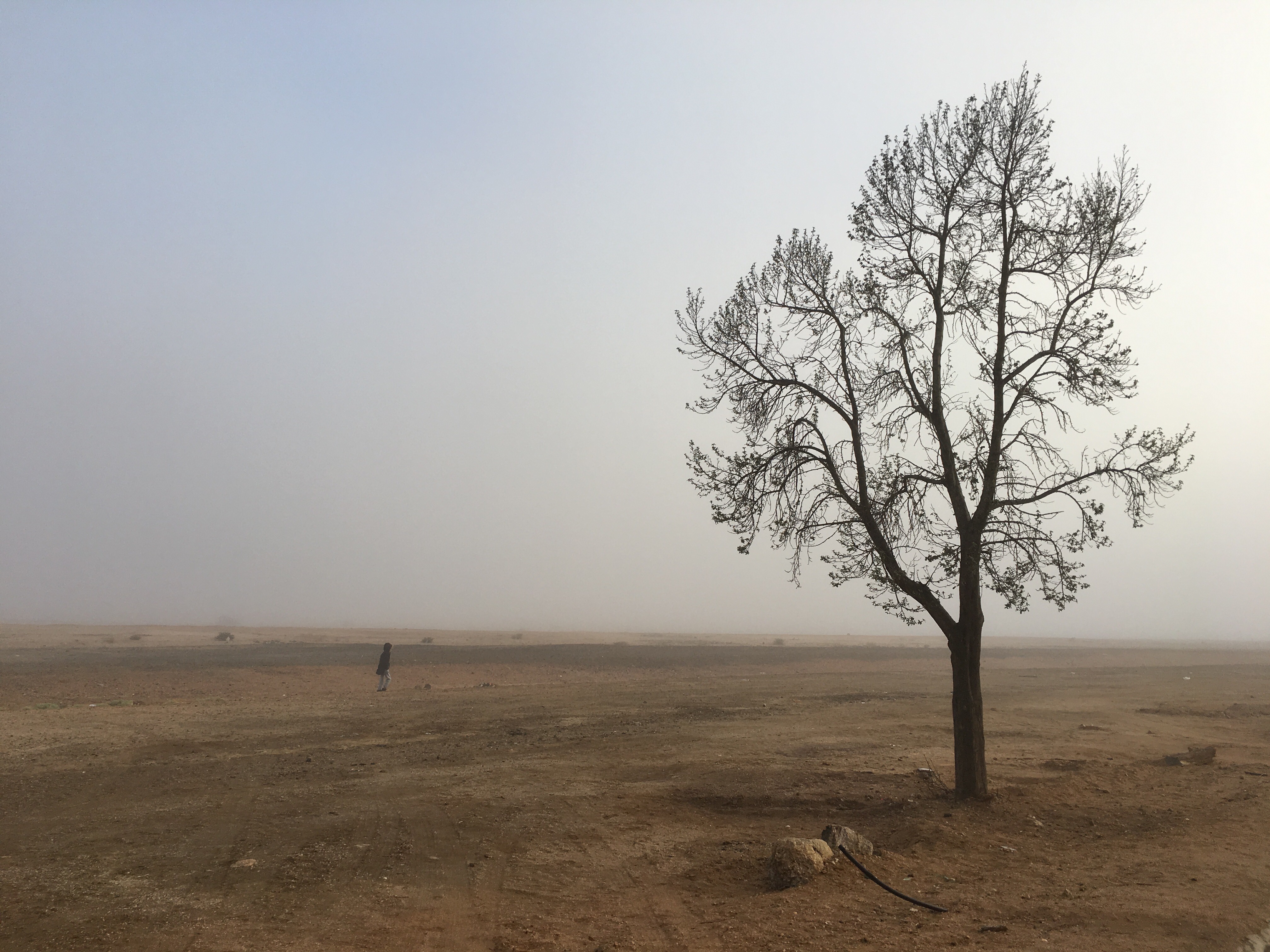
And in another instance, the night I got back from up north fog rolled in from the Atlantic, which is about 60km from here. The mist makes everything look mysterious. The starkness of the desert is hidden and what you can see, even the familiar, looks strange and otherworldly. More local beauty.

Student heading to school in morning fog


There’s so much I can talk about, but I need to address other things, so I’ll pause this for now. More to come soon.

Stay tuned.

Vern
Namibia: Observations #2

People like Bill Gates and Warren Buffet are beyond rich. That doesn’t make them bad people and we shouldn’t hold anything against them or their wealth, but the amount of money they have can make the word ‘rich’ seem like an obscenity. Gates and Buffet are generous, through foundations and other organizations they give back to the world that gave them their wealth in grand and purposeful ways.

Merriam-Webster defines counterpoint as, “the combination of two or more independent melodies into a single harmonic texture…” There are counterpoints to the Gates and Buffets of the world, and I recently discovered one here in Namibia.

My language instructor, Martha Bezuidenhout (lovingly called Auntie Martha), recently told me a story of a time in her childhood when her family was rich.

This was back during Apartheid and her father worked on a dairy farm. Circumstances occurred where her father needed to buy a cow to support his family’s need for milk (more on that story in an upcoming post), so he asked his employer if he could buy one of the cows on the farm. His employer agreed and in the following years Martha’s father was able to expand his cattle holdings into a nice sized herd and was able to sell cream to others, thus further supplementing the family’s income. When a cow was butchered they just gave away any meat they didn’t use themselves to others in the community. Because her family owned cows and had a small plot of land on which to grow crops her family always had food, even enough to share with those less fortunate. As Auntie said with a gleam in her eyes as she smiled at the memory, “We were so rich!”

Auntie Martha


To Auntie Martha the term ‘rich’ meant to not know hunger, and to be able to help reduce hunger in her village. The memory of her father’s industriousness and ability to provide for his family, his wealth, is an important part of who Martha is. Her father’s wealth, small compared to a well paid technician in a Fortune 500 company in America, was enough to define and shape a person who went on to become a teacher and, in turn, positively affected the lives of hundreds, if not thousands of students.

And now she has positively affected me with her warmth, patience, insight, and intelligence.

Martha Bezuidenhout is not rich monetarily, her wealth lies in a lifetime of knowledge and experience, and her ability and need to share that wealth enriches the lives of all she comes in contact with. She and those like her are the counterpoints to the Gates and Buffets, who, together and in their own way, give to make the harmonic texture of our world richer.

Stay tuned. 

Vern
Namibia: Observations #1

I’ve spent 1 week in my new assignment site which means I’ve been almost on my own for as long. My supervisor and the PCV I’m replacing, Elizabeth, and the other PCV in town, Chris, introduced me to far more people than my poor old brain can remember. But someone once said the joy is in the effort, so I’m trying very hard to remember at least the important people, like the vice mayor and the many town council members. But I need to also remember Ooma, the little energetic woman who cleans the council offices, and Silas, the junior library librarian.

There are things here that don’t require an effort to remember because I see it so often. That will be the premise behind my “Observations” posts. In them I’ll describe the people, scenes, and whatever I encounter routinely. Small things that may not warrant a mention otherwise.

For instance…

There’s a guy who’s business is washing cars. There’s a spigot near a parking lot. Every morning (I do mean every morning) I see him lug an old patched up garden hose, buckets, a shop vac and other car cleaning paraphernalia to the lot. He then sweeps out the area of dust and debris, sets up the hose, buckets and so on, then waits for customers. And he gets them. There aren’t many cars in Arandis, at least not by American standards. Most folks can’t afford them, but those who can line up to get their car cleaned, both inside and out. He doesn’t speak much English and my Afrikaans is still too poor to engage in a meaningful conversation, but I’ve introduced myself to him and I’ve made up my mind to help him improve his business if he’ll allow it.

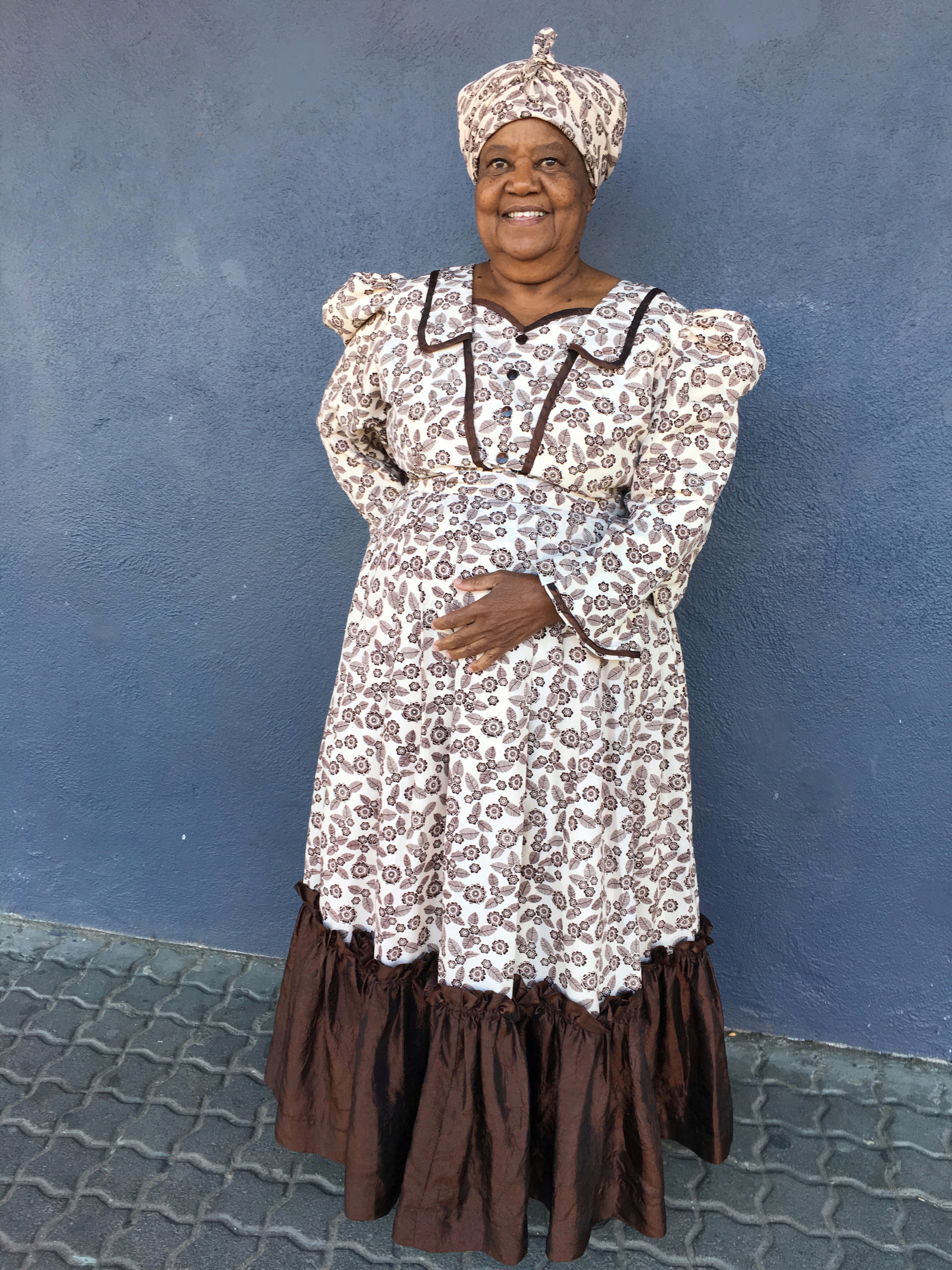
There’s a beautiful elderly woman dressed head to toe in traditional clothes that’s a carry over from colonial times when native woman were required to wear the body covering style of the day so as not to excite the men. She wears this and a wool scarf even thought it’s 80 degrees (F) and I’m sweating in a t-short and shorts. I see her most mornings. She walks many of the smaller kids to school. They are not her kids, nor are they related to her. She does it to be sure they are safe. No, I don’t remember her name either, but she’s talkative and very nice. She has a native given name which I cannot can’t pronounce even if I could remember it, but I will see her again and I will remember her name.

There’s also an extremely intelligent woman who is the assistant to the town council CEO. Her name is Emsee (pronounced M-See). I’ve had the pleasure of running into her several times and always marvel at how well she speaks English. She uses phrases like, “Come again?” and, “Too cool!” Because most Namibians I’ve met so far can speak English, but with a heavy accent, hearing Emsee express herself always catches me by surprise.

Namibians take pride in their mastery of languages, and they should. Even those who have left school early can speak at least 2 languages, and most speak at least 3; their mother language, Afrikaans, and English, which is taught very early in school. Even before they are school age, many Namibian children watch kids shows on TV and those shows are routinely delivered in English. So it’s normal for a kid as young as 3 to be able to at least understand the basics of 3 languages.

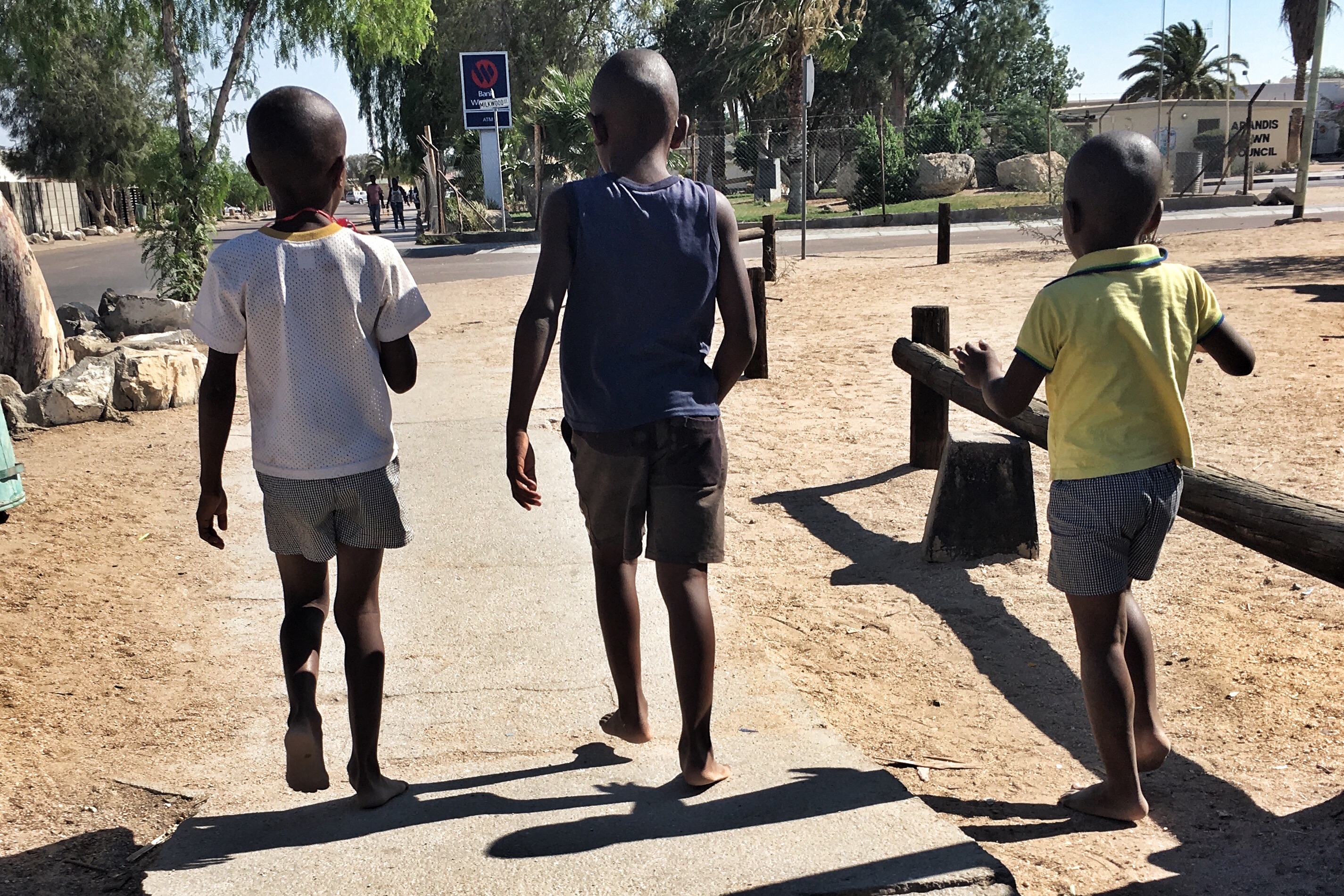
Speaking of kids, many little kids here go barefooted. This in a rocky, dusty environment where broken glass is common. It’s amazing to watch. Not only do they seem to not feel the heat from the sand or pavement, or the pointed pebbles, and rocks embedded in the ground, their feet seems to be cut free. They actually run like that. I have to believe it’s something akin to fire-walking where people psych themselves into strolling on red hot embers and come away unburned (usually). It’s another mystery I must unravel while here.

Who needs shoes??


That’s it for this posts. The Observations posts will be intentionally short. I’ll include photos where and when I can.

By the way, now that I’m more settled and have a bit more time on my hands, feel free to comment and ask questions. I’ll try answer what I can.

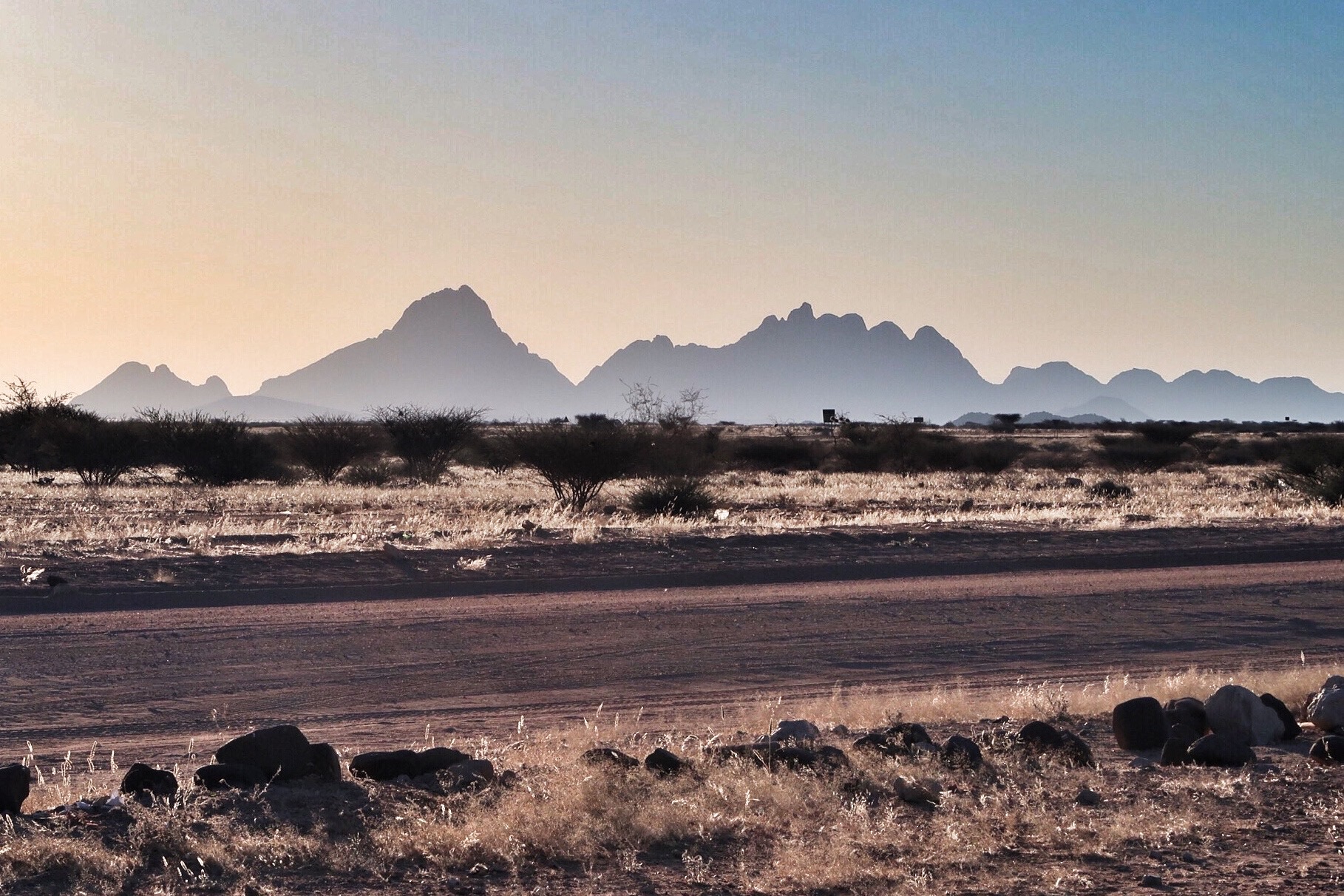
Gratuitous landscape shot: Spitz Koppe Mountains in the distance. A World Heritage site that holds rock paintings that are thousands of years old.


Stay tuned

Vern Seward

Namibia: Baby Steps

DISCLAIMER
The contents of this blog are mine alone and does not necessarily reflect the views of the U.S. Government, the Peace Corps, or the Namibian Government

Someone once said that every great adventure starts with a step. I’m sure I’ve mangled the exact wording, but you should be able to understand the sentiment. Movement forward is progress. It doesn’t matter how fast or how far you move, but moving away from your current position in life is progress.

Progress is an interesting word, it denotes an advancement, a change in position that’s usually or at least anticipated to be positive. But moving forward does not always result in finding yourself in a better position. In fact, it could be pretty much the same as the spot you left, or a whole lot worse.

Joining the Peace Corps, coming to Namibia, and now approaching my first real day at work I find that the house that I’ll call home and the office from which I’ll work for the next two years are not very different than my home in Florida or the office I left when I retired. Just as my Florida house did and still does, my Namibian home needs work. My office offers a computer, phone, and the typical tools one uses to get the details of business done, just as my old office did.

It might seem that I’ve gone through months of training and travelled half way around the world to do and be exactly what I did and was before I started this journey. At least, it may seem so from a casual glance.

Namibia, and more succinctly, Arandis, needs the ideologies of business management and the technical support associated with such in order to grow. There is so much potential here, and a matching desire by the constituency to realize that potential. Everyone is eager for progress, but few know how to get things moving. That’s why the Peace Corps is here, it’s presumably why I’m here.

As I learn more about my intended role in aiding Arandis, I can’t help but feel more than a bit overwhelmed. Where do I start? How do I start? What makes sense and what doesn’t? And while something may make sense to me it may be completely counterintuitive to my hosts, partners, and supervisor.

If there’s one thing I learned in the nine weeks of Peace Corps training, it’s patience, not just with those around me, but also with myself. Our American culture rewards quickness, boldness and efficiency, and frowns on subtlety, measured movement, and the inclusion of all ideas. Here in Namibia progress is measured by consensus and by a holistic yardstick. Relationships are just as important as tasks. So, I must give myself time to observe, learn, and build the relationships I’ll need to get and sustain progress. Take it slow and easy. Baby steps.

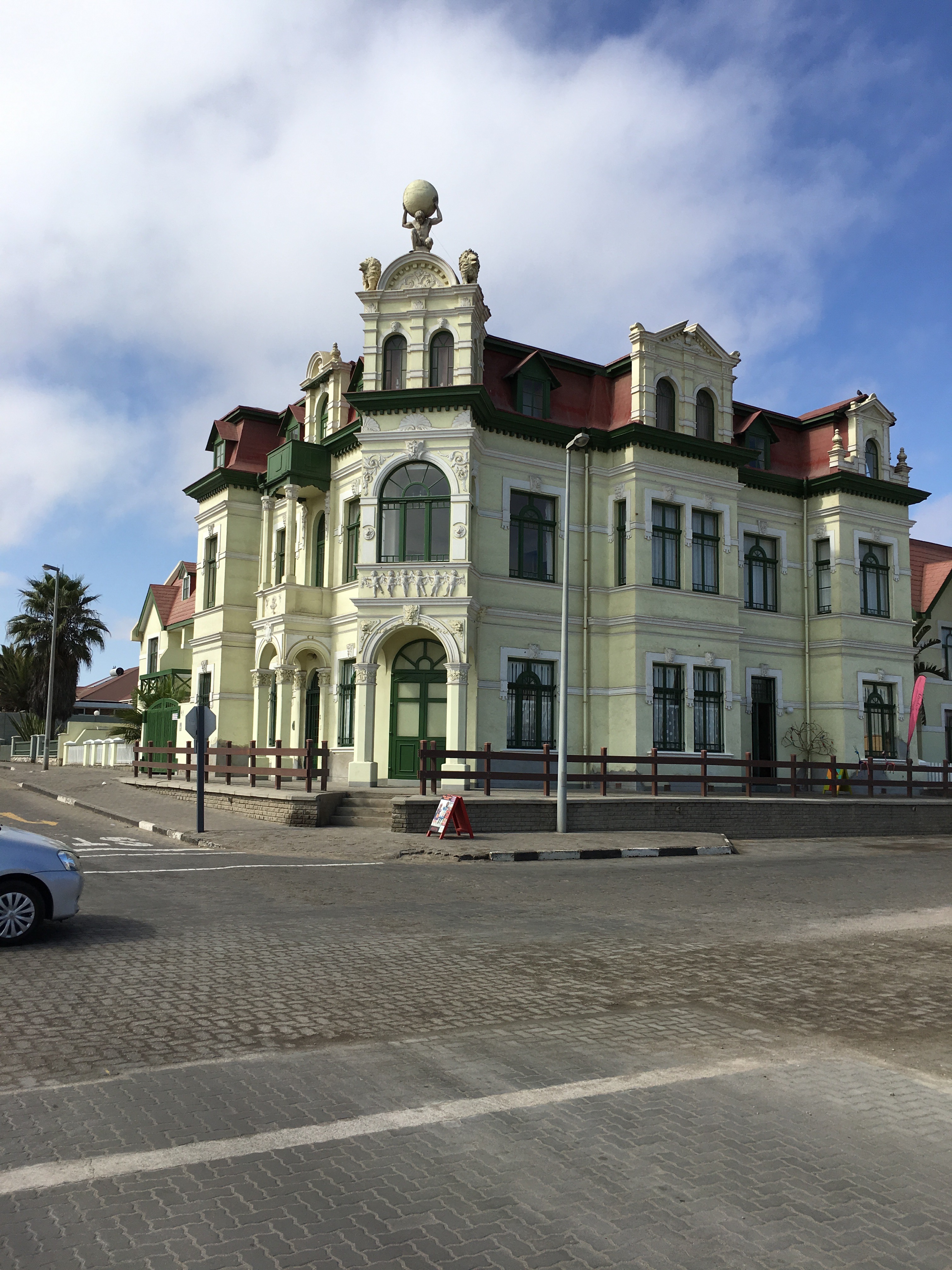
To that point (and in an attempt to lightening this post), I made a trip to Swakopmund this passed Saturday. By all accounts it is a touristy seacoast town and what I saw validated those accounts. There are sizable dunes to the south and the cold Atlantic to the west. The architecture has heavy German influences and there are only an occasional reminders that you are in Africa and not some town on the coast of the Mediterranean Sea.

Typical of the architecture in Swakopmund

 There are lots of shops, restaurants and plenty to see. Even the trip in town, which takes about 30 minutes by cab, was captivating.

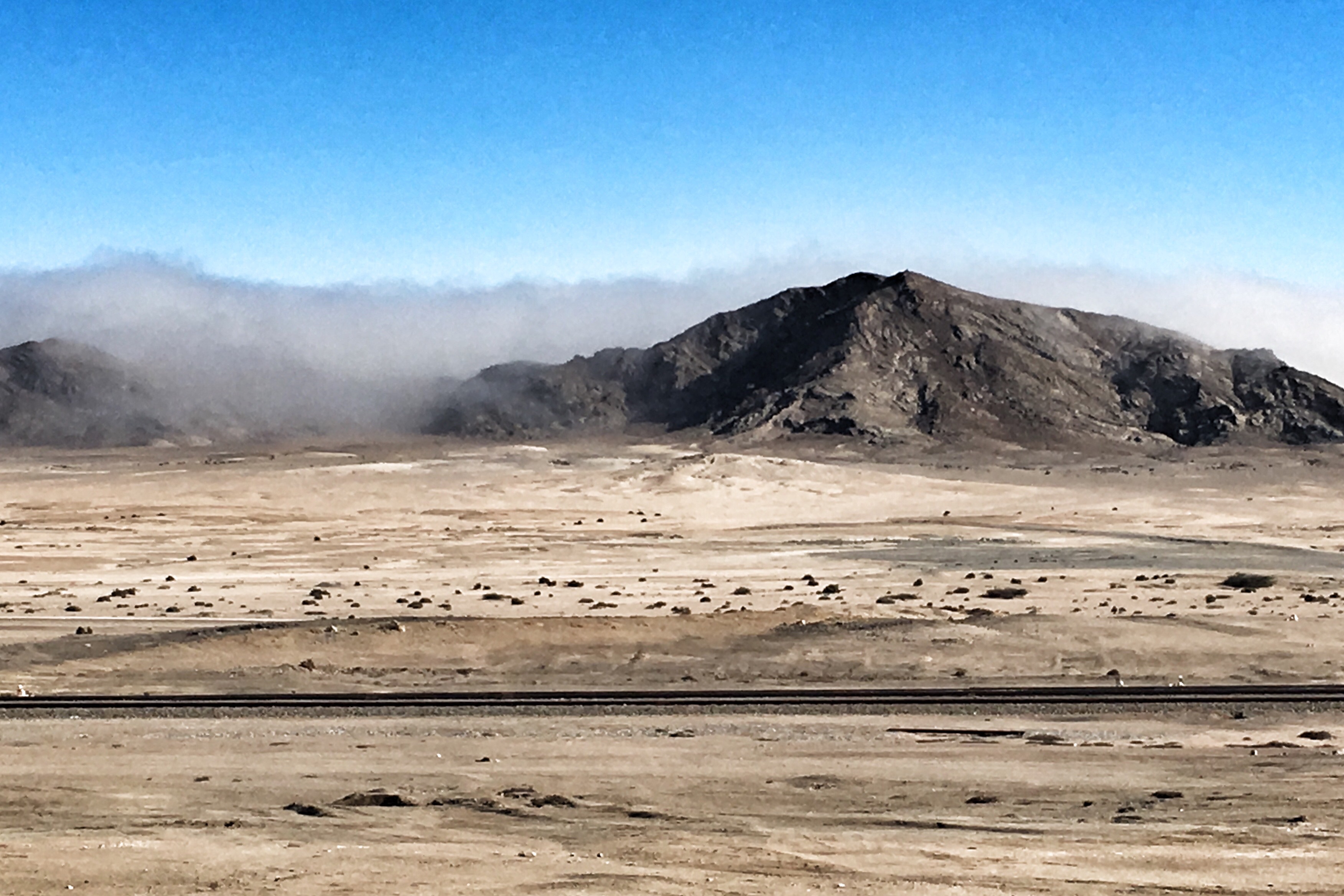
The terrain in the western part of the Erongo Region is arid. Old mountains seem too tired to rise any further above a nearly barren landscape. Fog from the Atlantic hung thick and low, clinging to the old mountains like white fur stoles draping the sagging shoulders of old women. The combination and contrast of soft fog and harsh rock in the morning light was a photographer’s dream. Expect more photos from this area.

Rossing Mountain draped with fog


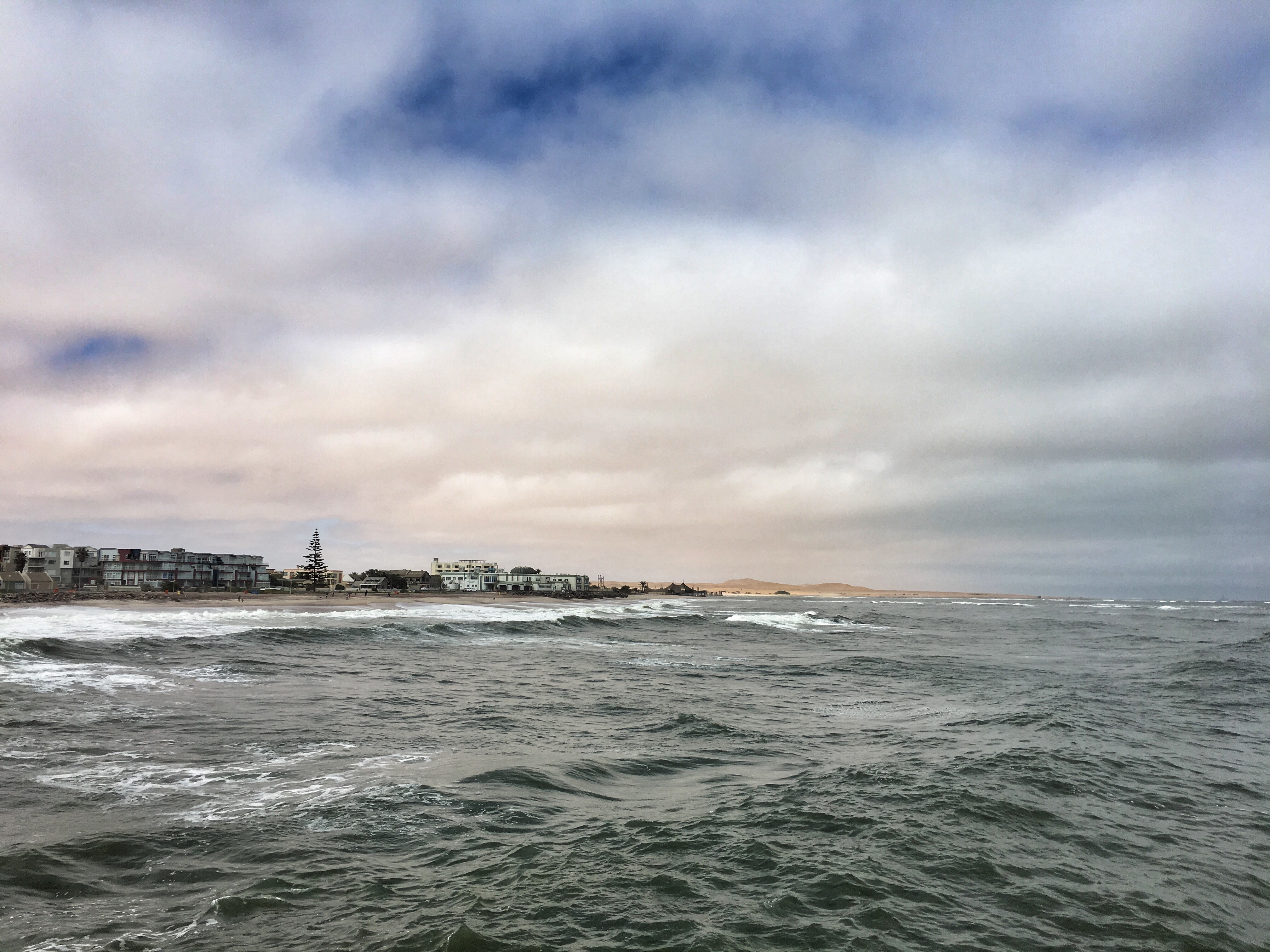
The fog also gave the coast a surreal quality.

Fog lifting from the coast


I didn’t get a chance to see the dunes, but then I have two years ahead of me to make that acquaintance.

There’s so much here. I’ll relay to you as much as I can, in baby steps.

Stay tuned.

Vern Seward
Namibia: Whirlwind Week: A Catch-Up Post

(There was so much happening since Luderitz that this post will only hit the high points. I hope you don’t mind.)

I had just gotten back from Luderitz and had no time to rest. Market Day was the next big event and it was scheduled the following Saturday. More language studies, seminars, and other PCV stuff filled the week.

And, of course, I got sick. I don’t mean, “Geez, ya know, I don’t quite feel myself” sick. No! I mean losing my breakfast, lunch and dinner over the span of 6 horrible ‘get personal with porcelain’ hours sick! I threw up so much I may have hurled a lunch I ate two years ago. At 2 AM I was still hugging the commode and my host mother was sure I was dying. I wasn’t so sure I was not. By 3 AM I called the Peace Corps Medical Office. They suggested a few things, but I decided to ride it out. Luckily “out” was one last upchuck away and things settled down. As per PC instructions I took my temperature and was dismayed to find it hovering around 100 degrees. It was a low grade fever and prolly a side effect of the earlier sickness, but PC suggested I take the day off. That suggestion I took and slept the whole day. When I woke my little fever had broken and I was mildly hungry.

What made me sick? That’s still a head scratcher. A few others also got sick to varying degrees that week. Might have been a stomach virus, who knows. I just don’t want it again.

Because of my illness I missed a talk given by the U.S. Ambassador to Namibia, Thomas Daughton. My group mates said it was an excellent talk and that the ambassador will be at our swearing in ceremony. Sorry I missed it, but it couldn’t be helped.

I didn’t miss Market Day.

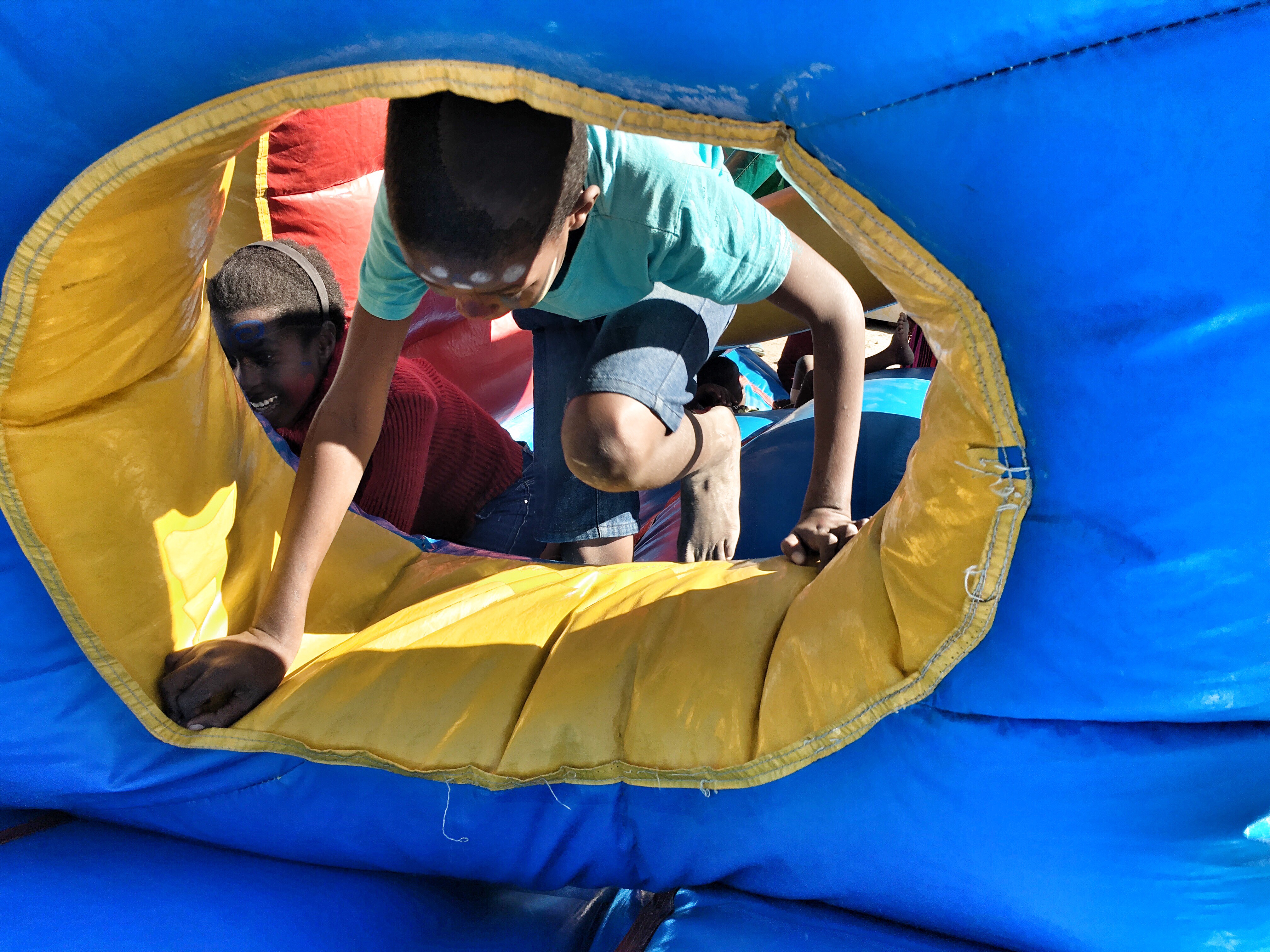
Market Day is where we showcase our small business partners who we’ve been mentoring for several weeks. It’s also a celebration of small businesses in Okahandja. It has a fair-like atmosphere with music, bounce house and face painting for the kids, and lots of food.

Kids and everyone else had a blast at Market Day


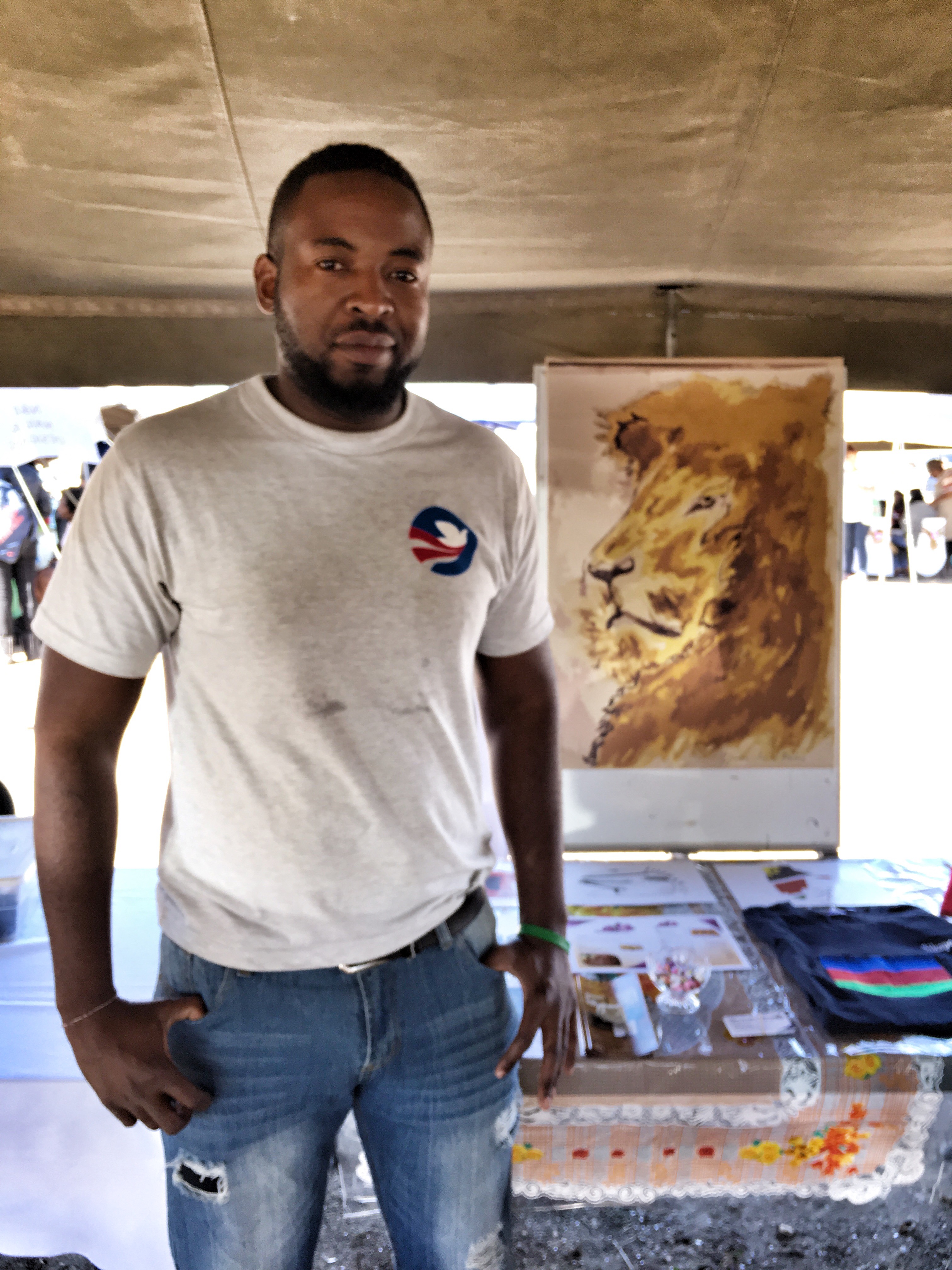
My small business partner was Dominic, proprietor of a graphics design business. His display highlighted some of his work and gave him a chance for others to not just see what he does, but talk to him for possible business in the future. He gave out business cards and got several leads. In fact, many of the small businesses that our group coached expressed delight with the Market Day turnout and exposure their businesses saw.

Dominic in front of his display


The food vendors and some of the other vendors sold out, the kids had fun and by all accounts Market Day was a great success.

But we didn’t get a chance to rest on our laurels, with Market Day behind us we then had to focus on the end of training interviews and language tests. Yes, a very stressful period. I won’t go into the details, but suffice it to say that all 14 of us passed and will become card carrying Peace Corp Volunteers on June 15, 2017.

That’s where we are right now, prepping for one final presentation to our new Namibian site managers, packing, and trying not to get too anxious.

To that end, several of us decided to take a hike to Pride Rock, a small peak to the north of Okahandja. I’m sure there’s a Namibian name for the peak, but Pride Rock seems to fit.

Many of the other volunteers had climbed it before, but this was my first opportunity. I’m glad I went.

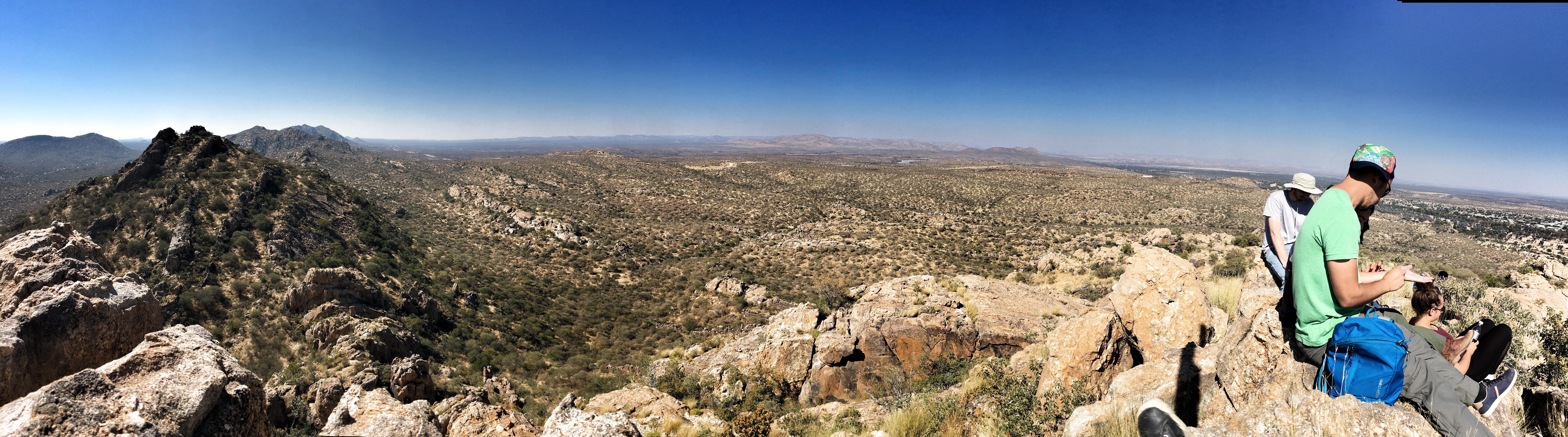
I have to say that sitting on my butt for 8 weeks took its toll, when we got to the steep part I had to stop once. (I gotta get back in shape!) Once at the top, however, I could not help but be awe struck. Take a look at the photo and you’ll understand what I mean.

5040 ft up on Pride Rock!


After chillin and wallowing in awe we returned to more mundane pursuits. I had laundry to do.

This will likely be my last post as a Peace Corps Trainee. Next stop, swearing in and the start of my assignment in Arandis, Namibia.

Yes, I am VERY excited.

The adventure continues.

Stay tuned.

Vern
Namibia: All Part of the Adventure – Luderitz: Part 2

Before I get into the next part of my Luderitz adventure I should give my host, Travis, his due. After reading through what I wrote in Part 1 it occurred to me that it might seem as though my time spent in Luderitz was all fun.

Well… it was, but that doesn’t mean Peace Corps work wasn’t accomplished and that I didn’t learn a lot, which was the purpose of my visit to Luderitz.

Shadowing is when a PC trainee follows around a PCV in the field for several days so that the trainee can “…see how it’s done…” up close and personal. One of the many lessons trainees are taught is to integrate into the community to which we are ultimately assigned. But what does integration mean, and why bother?

Integration basically means to immerse one’s self into the fabric of the community, to become part of the community and allow the community to become part of you. In doing so a PCV increases his/her effectiveness on many fronts including being better able to get tasks done, increase his or her safety, and, of course, create new and meaningful relationships where real cultural ideas can be exchanged.

It’s not as easy as it may sound. In the States, if you move into a new neighborhood there are many things you take for granted, like being able to speak the local language and understand the local customs (unless you move to New Jersey, Rhode Island, or Texas then all bets are off). Here everything is different. People may not speak your language and even if they do they may not completely understand you, or you them. Customs are different, foods are different, smells, sights, sounds are all new and different than what you are used to. Overcoming all of that and your own ignorance of local ideologies, protocols and so on and still make friends can be a daunting task for many.

Travis is a master of integration. He was dropped into Luderitz in a less than ideal situation and he managed to immerse himself so well that the people I was introduced to all think of him as a local. In effect, he is. Each person I met was a well known figure in the community and they all thought highly of Travis and the Peace Corps. So, the time we spent meeting and greeting was time effectively spent, and I’ve learned valuable lessons. I can only hope I can pull it off as well as Travis did and is doing.

OK, back to fun…, I mean work.

On Friday after my arrival at Luderitz Travis and Phil took me to Kolmanskop, a town that the desert is reclaiming.

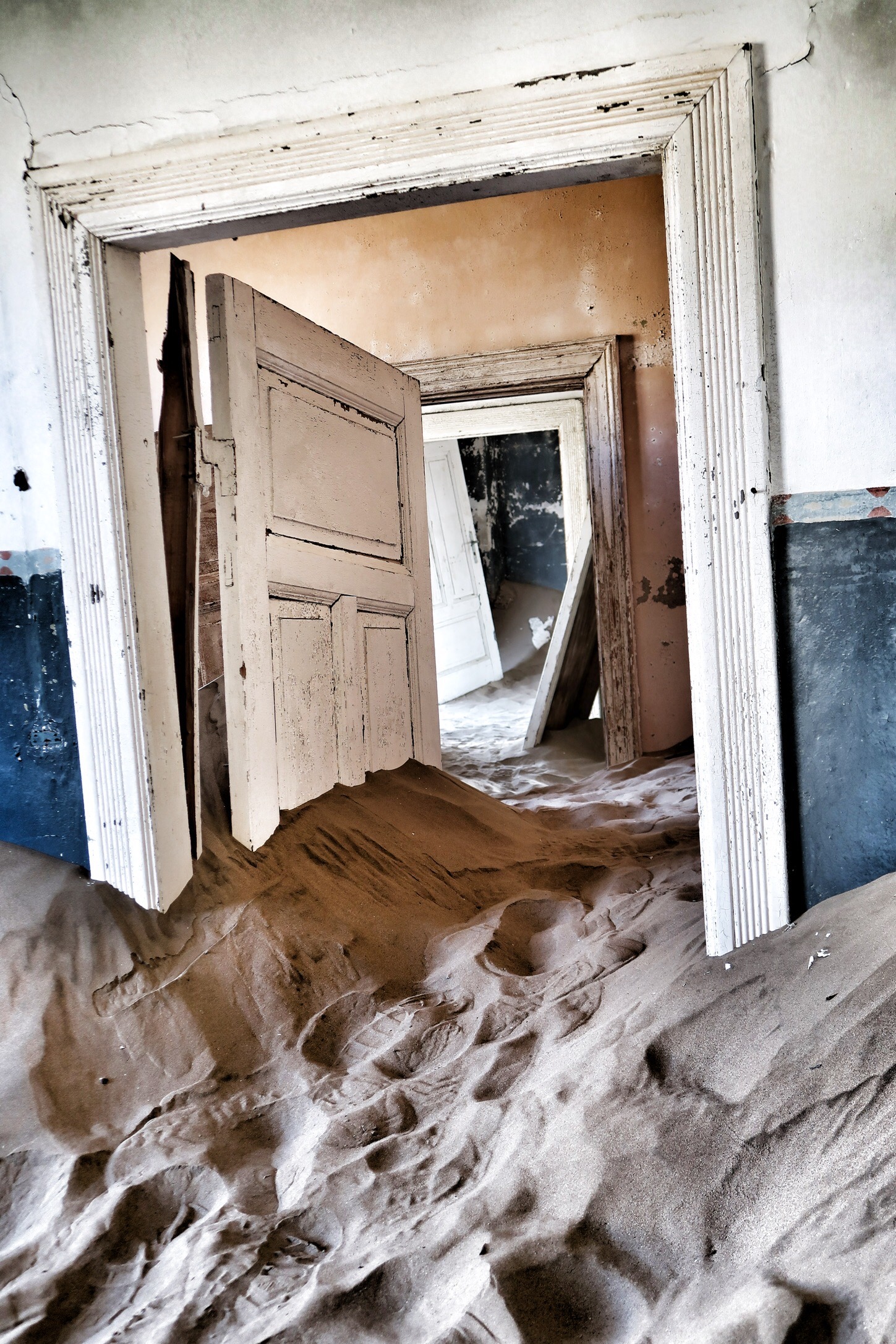
Nature wins in Kolmanskop


Kolmanskop was established in the late 1800’s by Germans when diamonds were found literally lying around on the ground. Germans claimed the land and built a lavish town complete with it’s own icehouse, public rail system, schools, and bowling alley. Remember, this is in the Namib Desert. There’s nothing around for hundreds of miles but rock, sand, more rock and sand, and some distance to the west, ocean. They had to import everything including water. Yet they lived a lavish lifestyle, at least until the diamonds ran out.

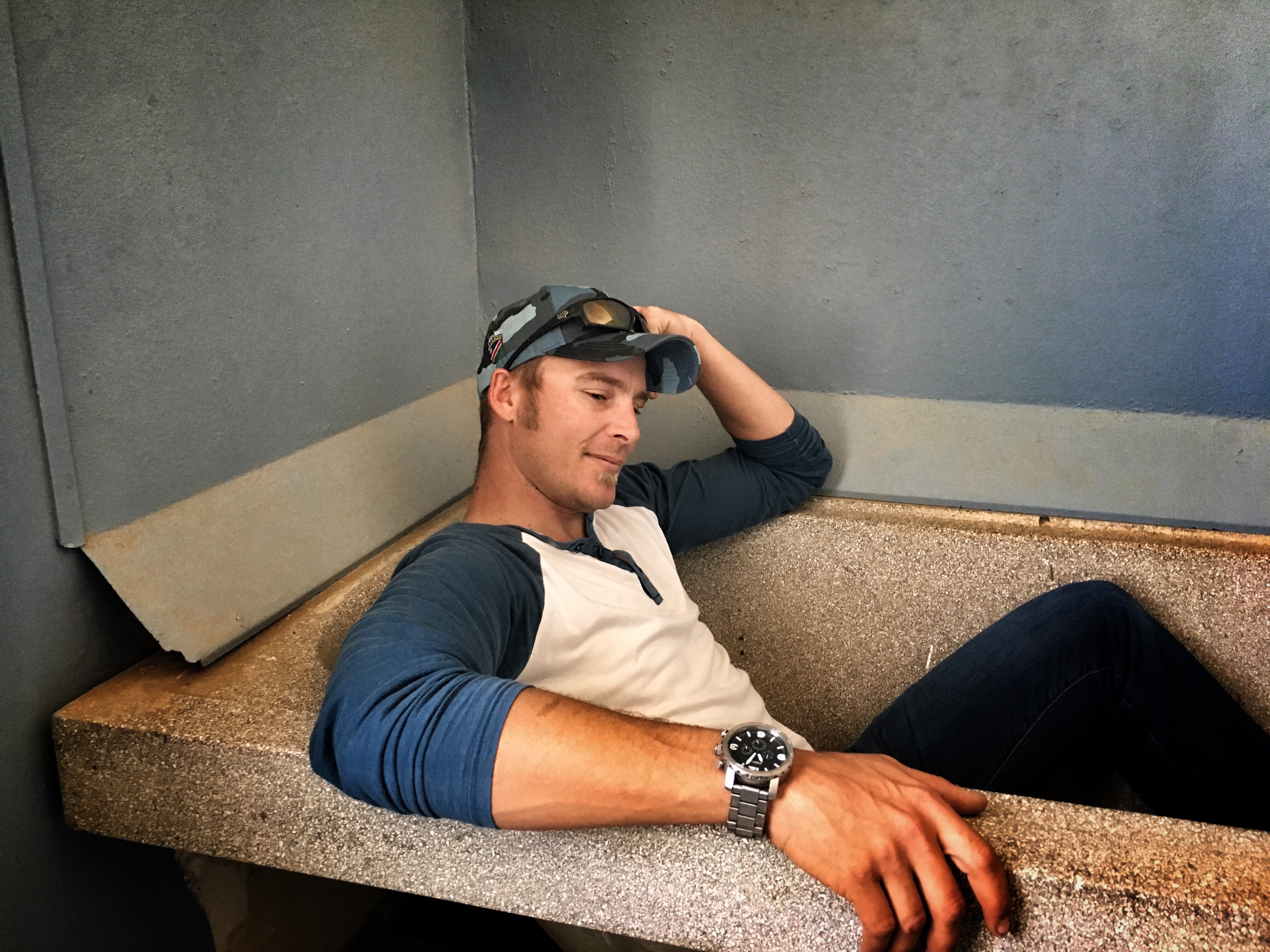
Phil taking a ghost bath in a ghost town


Sometime during the early 1920’s larger diamonds were being dug up further south and Kolmanskop was ultimately abandoned. With no one to maintain it time, sun, wind and sand took its toll on the structures, making for surreal photo ops today.

After Kolmanskop Travis and I went to his office in the Namibian Chamber of Commerce and Industry where we went through some of the projects he was working on. Its a small office, but then the town of Luderitz is small. Still, a lot gets done and Travis has made great efforts in expanding the presence and role of the Chamber of Commerce in Luderitz.

After spending the afternoon in the office we bought gear for a local fishing event the next day then went to a local pub for dinner. There I was introduced to even more people whose names I can’t hope to remember, but all knew and appreciated Travis’ and the Peace Corps’ presence in Luderitz.

To my surprise there was live music. A local who makes unscheduled appearances sang old rock tunes while strumming a guitar. I could have been back in Orlando at any number of watering holes on a Friday night, but I was in Luderitz, and that made it memorable.

We had to turn in early because Travis got us a spot on a boat (he knew the captain of the boat we were on! Again, integration!!!). The event was an annual snoek fishing contest. I hadn’t fished or been on anything that floats larger than a kayak in many years, so I was a bit concerned about getting seasick.
The morning was cold and everyone was dressed like they were mates on an Alaskan trawler. I had on a pair of jeans, two shirts and a jacket. I felt woefully underdressed. But the fishing gods smile upon me and the sun was warm and the winds, at least in the early morning hours, were light.

Maybe I’m a seaman at heart. Maybe not.


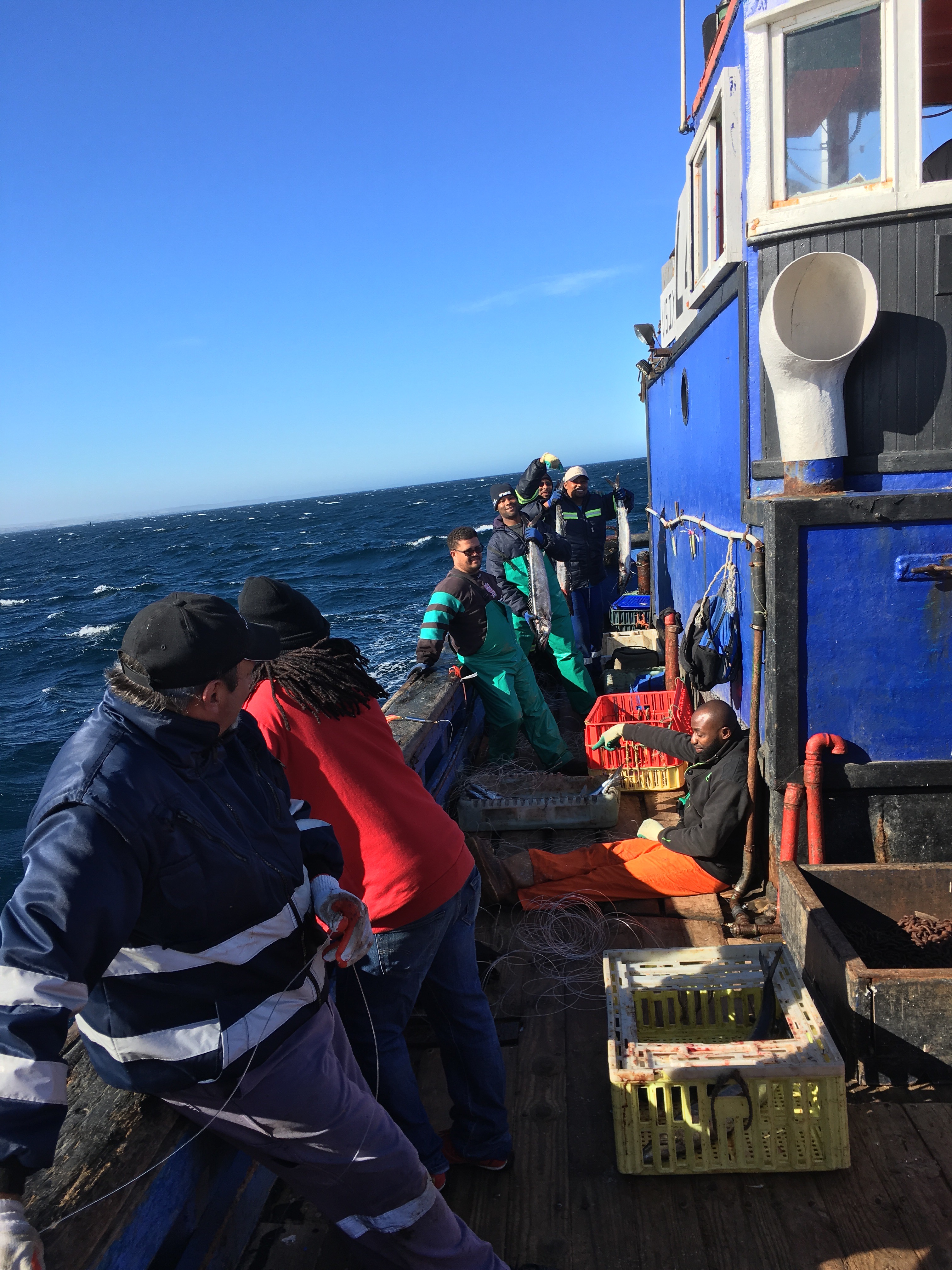
Catching snoek (snook) is not done with a rod and reel, at least not off the coast of Namibia. You use a length of heavy line, a lure that looks like a small squid that covers a hook that would seriously annoy Moby Dick. When the captain tells you you throw your lured line out and let it sink, then slowly pull it in. If you get a strike then you pull in the line using gloved hands as quickly as you can. I got two strikes, but lost both because I didn’t pull in fast enough. There were far more experienced snoek fishermen pulling in fish almost every time the boat stopped. It was exhilarating to watch.

Those better at catching snoek than me


Snoeks are not small fish, they are cousins to barracudas and have teeth that can easily take a finger or two off.

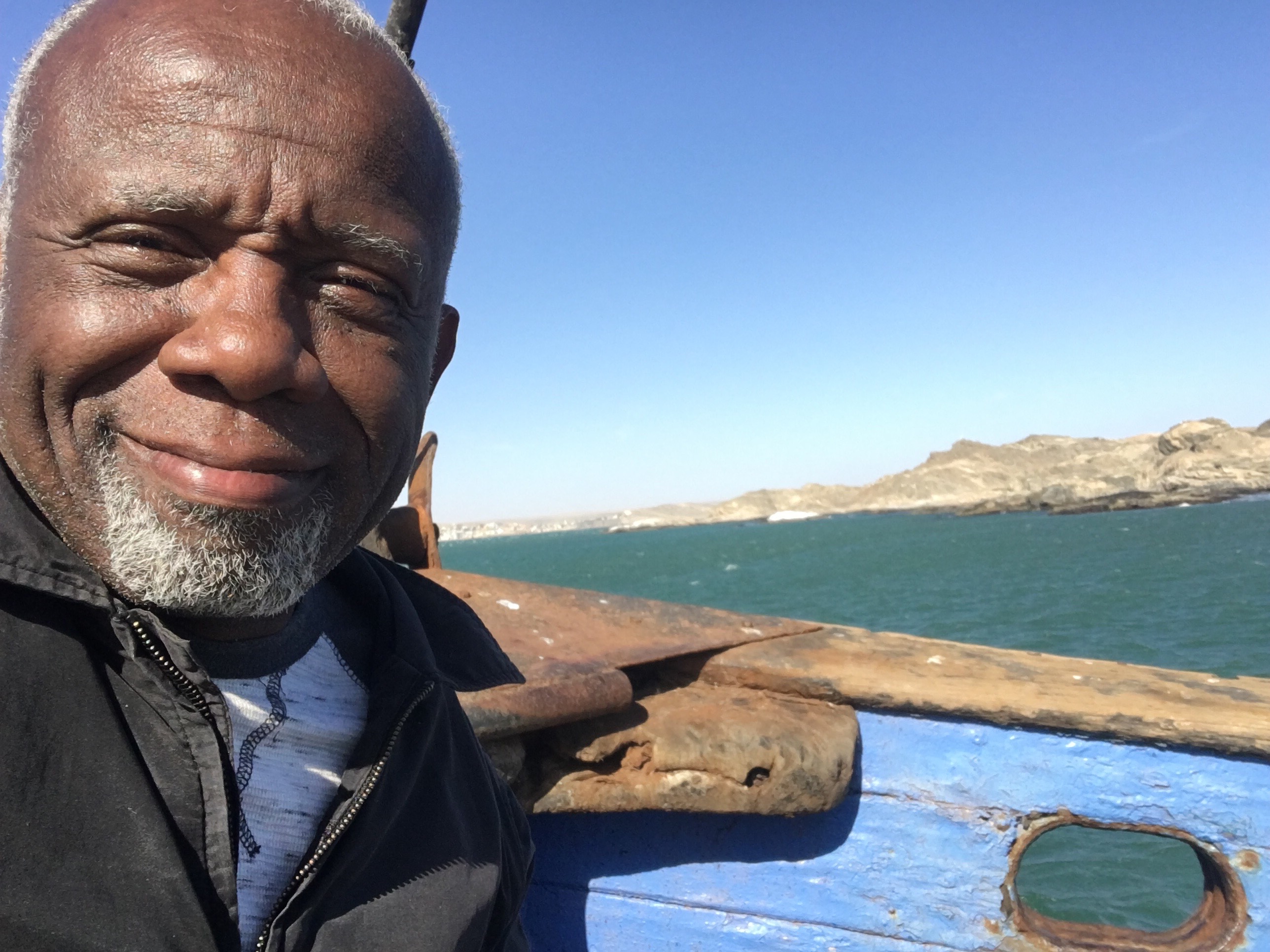
While I didn’t catch anything being on the water off the coast of Africa was an amazing experience. The water was sapphire blue, the sun was warm, and the salt air invigorating. I felt at once at home and completely out of my element and loved every second of it.

Travis, on the other hand, spent almost the entire time lying on deck trying not to chum the water. Poor guy.

Travis puts of a brave face as we head back in


Once we made landfall he spent time recovering while I met up with Janet and ate some of the snoek that was caught earlier. The evening was spent chatting with new friends and drinking a local brew call Savannah Dry.

Unfortunately, I had to turn in early to rest before my trip back to Okahandja.

My return trip was painful. It took 12 hours to complete and most of it was done crammed on a small makeshift seat next to a van door I was not entirely sure was completely closed. Still, I was next to a window facing west and I watch the sun turn a dry savannah golden.

The savannah as I head back to Okahandja


Yes, I had an amazing time in Luderitz and learned so much from Travis that I’ll never be able to adequately thank him.

Today is June 7 and I have 8 days left in my training period. I’m so far behind in telling my story so far because there is simply too much to tell. What I will have to do is pick the stories and hope you find them interesting.

I’ve got a language test tomorrow so there’s studying to do.

There’s more to come so…

Stay tuned.

Vern
Namibia: All Part of the Adventure – Luderitz: Part 1

DISCLAIMER

“The content of this website is mine alone and does not necessarily reflect the views of the U.S. Government, the Peace Corps, or the Namibian Government”

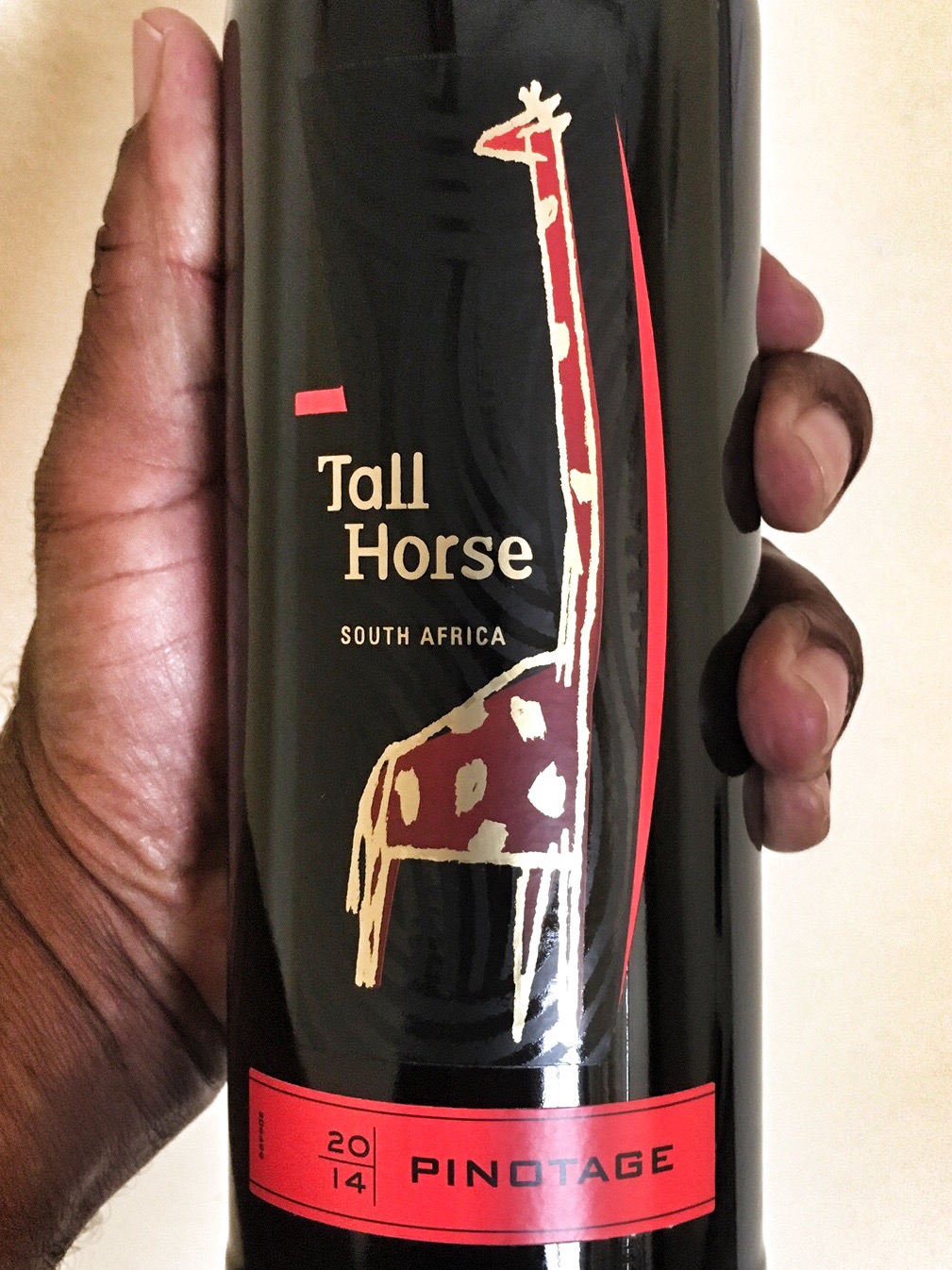
Just so I don’t keep you hanging in suspense, I did find that glass of with my name on it and it was surprisingly good! (Jon Kheer Private Cellar Pinotage 2012) More on that latter.

As I mentioned in my last Quick Update post, I’d made it to Luderitz and got settle in and got some food in me, and was able to stretch my legs, which felt amazing.

The morning after arriving Travis took me around town, and since it was a holiday and with the power out in his office, we wound up spending the whole day out and about.

First stop was a brisk walk to Shark Island, oddly name since it’s a peninsula and not an island. The Island is a manicured campground with an old lighthouse standing sentinel. It nicely laid out and, when Travis and I visited first thing that morning, we could see that it was well used. But there’s a very dark history associated with Shark Island, a history you won’t find referenced on any placard on the campground. In the early 1900s the Island was the site of the first concentration camp where hundreds, perhaps thousand of Herero and Namaqua died at the hands of Colonial Germany. In fact, lessons Germany learned from Shark Island were later used with horrifying effectiveness in the Jewish death camps during World War II. Not seeing at least a reference or something that speaks to the memory of those who died there made for a somber start to the day.

Lighthouse on Shark Island


Travis and I continued our morning with breakfast and a hike up a hill that might have been a high point within the town of Luderitz because there were water tanks and phone towers there. From that vantage point I could see all of Luderitz, and, like seacoast towns everywhere, I could see that the houses closer to the water belonged to the more affluent residence and the further a house is away from the water the more modest it was.

After verifying that the power was still out in Travis’ office, we were about to head back home, but was stopped by a guy in a large tow truck. I was introduce Boyd, a local resident and owner of several businesses in and around Luderitz. Boyd drove us around through some of the poorer neighborhoods and, since it was nearing lunchtime, stopped at a kapana stand. (Kapana stands are everywhere in Namibia. They are small grills where marinated meat, usually beef, is chopped up and cooked while you wait. The meat is sometimes served with finely diced tomatoes and onions in a vinegar sauce and reddish-orange seasoning powder that is savory and spicy. It is eaten by hand and usually shared with anyone who happens to be standing around. It is VERY tasty and I intend to bring the recipe and eating style home with me.)

Boyd


On an impulse, Boyd took us up into hills just outside and to the north of Luderitz to a site where the first large scale wind turbines in Namibia were being installed. The current project calls for three turbines, enough to power all of Luderitz. Only the massive bases of the turbines were install, but it was an impressive site. Even more impressive was the view. To the north I could see where the Namib Desert blew its sands into the air and waters of the Atlantic, seeding storms that can cause so much beauty and damage in the Caribbean and Florida. To the west was the blue Atlantic. To the south, Luderitz and to the east was more desert stretching as far as the eye could see. The sky was so blue, the desert so stark, the sun so bright that it felt like I was top of the world. It was a feeling a pure, unfettered joy and I reveled in that moment.

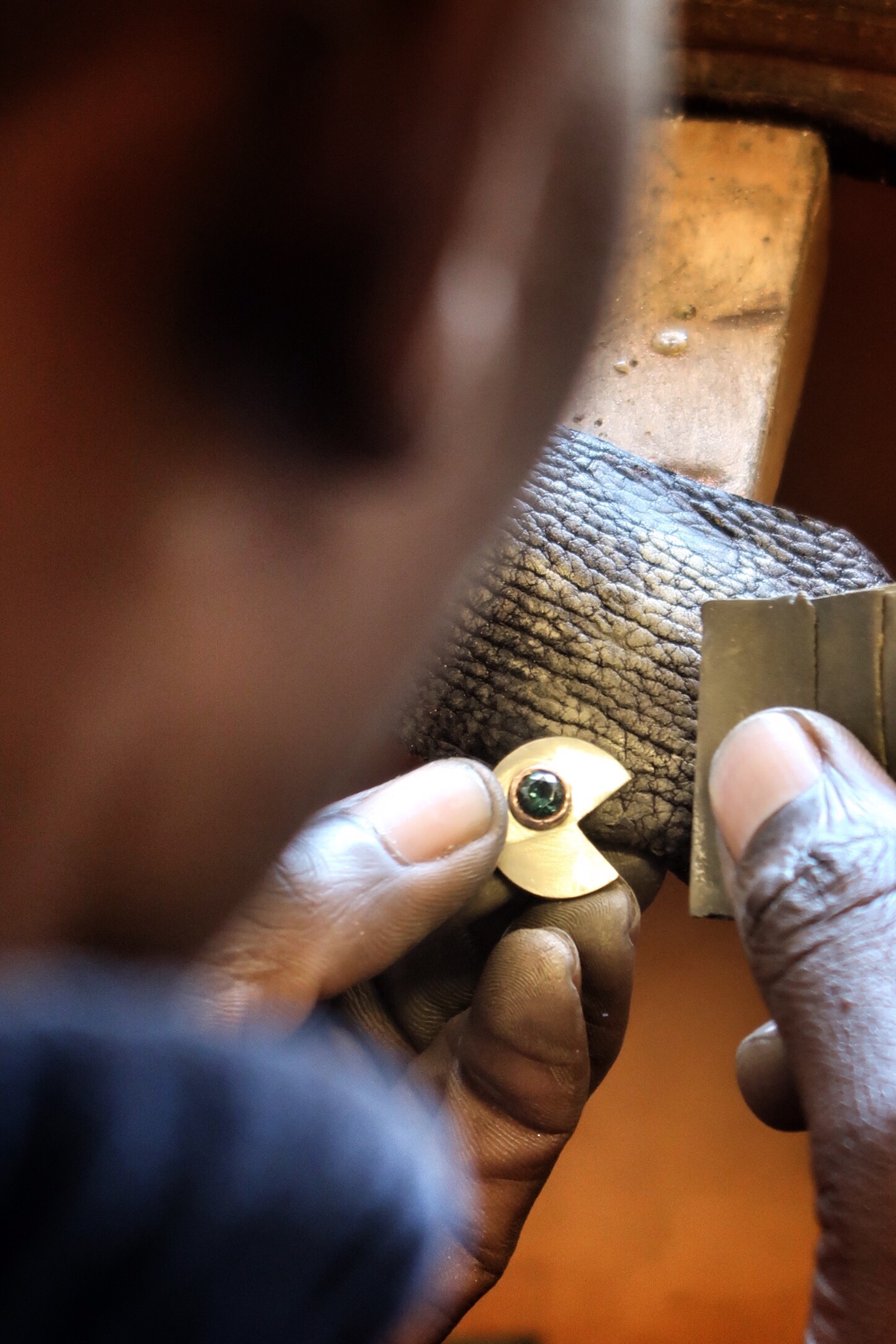
You might think that after experiencing such moments anything afterwards would be anticlimactic, and you’d be right, but this is Namibia! This is Luderitz! Earlier, while he was showing me around, Travis stopped in a shop owned by Liz, a sweet little German lady who stood behind the counter of a shop full of Namibian trinkets, art, and other merchandise. Liz was wearing a large moonstone suspended around her neck by a simple chain. It was clearly the best object in a shop full of wonderful objects. I asked where did she got it. Liz explained that she gets shipments of stones from The Crystal Market in Arandis. Turns out Arandis and working with The Crystal Market is my duty assignment! (Friends and relatives, prepare to get stoned!!!)

Later that day Travis and I ran into Paul, a fascinating man who has sailed around the world several times and claims to be a, “…collector of useless trivia.” We met Paul as he was leaving his “workshop”. To call it a workshop is like calling the Queen Mary a boat. The workshop’s yard, easily the size of a football field, is littered with salvaged boat and ship parts. A half of hull here, a cabin there, all were wrecks pulled from the sea. He reuses the wood and other parts. Some people want stuff for decoration, others have more practical purposes in mind.

Paul


The actual workshop is a huge warehouse divided in two. The front half had been cleared and is to be a movie set for a project I didn’t quite get the gist of. The back half contained at least three sailboats and catamarans in various states of disrepair, one of which had to be forty feet, four cars and a sundry of other nautical and nice hardware and equipment.

What I like about Paul is that he likes conversation, which is different than those folks who talk just to hear themselves. Paul likes to tell tales, but listens to others tell their stories too, then adds appropriate commentary which makes for great conversations.

After interviewing one of the many small business owners in Luderitz, Travis and I ambled over to Liz’s home for dinner. To describe her home as beautifully eccentric would be an understatement. Like Paul’s workshop, Liz’s yard contained a collection of this and that with a boat and the part of another dominating the scene. Plants were everywhere. It was like an oasis designed by a wayward seaman.

Liz’s Yard


At Liz’s I met Janet, an ex-PCV recently returned from the The Republic of Georgia. She liked Luderitz so much that she decided to stop in for a bit before heading back to the States. Paul and his significant other, Ingrid, and another couple whose names I forget were also in attendance.

Dinner was fantastic. Like her yard and her house, Liz’s dinner table was set with a huge collections of tasty dishes and guests just sat around chatting, eating, and chatting some more. It was great to chat with intelligent, witty, and unpretentious people! Such a grand time!

Dinner At Liz’s


Though I was beat, Travis had one more event planned, a ‘braai’ (barbecue) on the beach.

Though I was looking forward to it, I wasn’t sure what to expect. Luderitz can be very windy and its late Fall here. I sincerely doubted there’d be frolicking bikini clad beach babes, nor was I expecting to be huddled around a huge bonfire roasting bits of meat on sticks, drinking some local alcoholic concoction and singing Kum Bah Ya (which, after several weeks of language training, sounds suspiciously like Afrikaans).

As it turned out, there was just three guys, Travis, a guy named Phil who drove us and built the fire, and I. It was very dark when we arrived, and very windy. Phil managed to get a fire started in one of the standing concrete braai-pits and soon we were roasting meat. It seems that building and maintaining a fire in adverse conditions is part of the DNA of every Namibian I’ve met so far. Most don’t bother with store bought charcoal, they make their own with scrap wood, of which there seems to be plenty of.

Phil manning a wind whipped braai pit


I said it was dark when we arrived, but the quality of the darkness was so deep that though the fire was bright, nothing was illuminated by it more than a few feet away. It was like the air was sucking the light and warmth from the blaze.

And in the darkest there were stars. AHHH, the stars!!!! I really wish I had a way to take a photo of that tiny fire against the backdrop of a sky full of stars. Even the memory fills me with awe.

So, what do three guys do while standing around a small fire, drinking beer, and waiting for meat to cook? Campfire philosophy, of course! More great and fun conversation fueled by alcohol and mellowed by roasted beef.

What a day!

This is getting long and there’s lots more to tell.

AND I have 12 days left in training!!! In less than two weeks, if all goes well, I will be a bonafide Peace Corp Volunteer!

I write Part Two later this week so…

Stay Tuned!

Vern

Quick Update: Luderitz!

I guess there’s no rains down in Africa 


After nearly 9 hours sitting on a cramped bus we arrived in Luderitz! Travis, my travel partner and shadowing host, got us off the bus early so we could walk and I heartily thanked him for it.

Our transport 


Crowded


And no leg room 


Turns out we were about a mile from his flat and the hike was welcomed.

It was dark when we arrived so I couldn’t see much, but high on a hill, proclaiming its location with somewhat less enthusiasm than Hollywood’s, were large lit letters spelling out ‘LUDERITZ’.

Luderitz!!!


So, I’m here and I’m tired, dirty, hungry, and would pay real American dollars for a decent glass of wine. At least I got to eat, shower, and rest. I’ll find that glass of vino with my name posted above it in lit letters, like Luderitz’s but with a bit more gusto, tomorrow.

Stay tuned

Vern