A Year Ago

A year ago I was trying to figure out what good I could do here in Namibia. I had been in country a little more than nine months and was feeling like a butterfly caught in a hurricane of emotions. There were times when I could see a path forward and everything seemed to line up only to find that the path was blocked by one or more of a long list of reasons, most of which, it turns out were my fault.

Actually ‘fault’ is not the right term, it implies that I’ve done something wrong, which is only partly true. What I did, like I assume most people from “developed” countries do when they come to Namibia, or to any country not their own, is to bring my country, complete with my systems of value and ethics, with me, and I tried to do things based on those systems.

That was definitely NOT the right approach.

We Americans, in particular, see the rest of the world as somehow wanting, not quite up to our standards, and we, because we are a benevolent lot, want to bestow a bit of our greatness on anyone willing to accept it (Sometimes even on those unwilling to accept it). We come into a country thinking that our way is THE way. After all, it’s kind of worked for us for the last 200 years, right?

The problem is that our arrogance blinds us to what a country and its people are really about. This certainly was so for me when I came to Namibia. I had read up on the country, knew it had modern technology, a thriving economy and so on, but I somehow ignored all of that and was focused on getting “The African Experience”. I never saw myself as being arrogant. I have knowledge and experience and I wanted to share it. I also have time to spend doing whatever I want and I saw myself as being open to new experiences, which was, in essence the take of the give and take when dealing with a new environment. I had visions of living in a mud hut, eating gruel, learning different ways of living while building schools for poor unfortunate souls who inexplicably couldn’t build schools for themselves.

Vern_Seminar

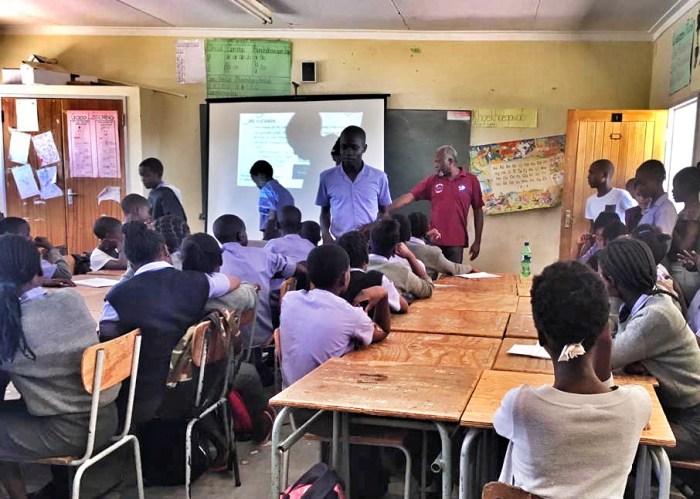
I’m giving a career lecture at a local school.

Namibia, it turns out, doesn’t need a bunch of schools built for them. They can mange building them just fine. In fact, a lot of what I’ve done is to help some Namibians, struggling to earn a living find ways around obstacles that prevents them from succeeding. Those obstacles are part of the brackish environment where traditional Namibian lifestyles meets Western ideologies. The garden project in the town where I stay is a good example. It could and should be a thriving business even though it is set up in the middle of a desert. All of the ingredients are there except for a reliable water source. I’ve been working since I’ve been here to establish a more reliable source, and I’m almost there. But as I look back on the project I have to wonder if it could have been accomplished without me and the assets I brought to bear. In other words, could a Namibian solution have solved the problem. I think it could have, but would have been a lot harder. That path would have been blocked by obstacles that I could not have found a way pass.

My experience here can be summed up as follows: Forget everything you think you know about Africa and Namibia in particular, because nothing is what it appears to be.

Namibia is not some backwards little country ruled by warring dictators. It’s a democracy, and a young one at that, complete with the growing pains typical of a young country. It’s people come from nearly every ethnic group imaginable, though the Black Namibians are primarily of Bantu decent. You’ll find Whites of German and Dutch ancestry, a variety of mixed race tribes who refer to themselves Coloured and Basters, and immigrants from as far away as India, China, and several countries in South and Central America.

The country is still feeling the affects of its history of colonialism and apartheid, it is still feeling out its social and political fabric. That, in large part, contributes to how it views its place in the world.

There are problems at every social, political and economic level and to a tourist or visitor these problems may seem endemic and unsolvable. When I first arrived at my site I felt completely overwhelmed by what I perceived as the problems I was supposed to help resolve and by issues I thought no amount of outside influence could fix. But if one can step back for a moment and look at Namibia at the 10,000 meter level one might see that the overwhelming problems I faced as I unpacked are no different than those found elsewhere in Africa, Asia, Europe or the Great U.S. of A. It was the fixes that are different and that is what we, those of us who come to help, can’t see. At least, not initially.

It took me the better part of my first year to understand that while the problems here can be found anywhere, it will take a uniquely Nambian solution to fix them. We can’t “Westernize” Namibia’s issues away, wipe our hands as we climb on a plane bound for home and think we’ve done some good work. Time after time western solutions to problems here wind up abandoned or half finished and we wonder why, or worse, blame Namibians.

We Westerners fail to consider that Black Namibians have lived here for thousands years, Namibians of other ethnic decent have been in country for hundreds of years. Their way of living is as ingrained in them as taking a breath. We also fail to see that the causes of many of the issues Namibia faces is due to it being pulled into a world that doesn’t always fit them. A good example of this can be found in the ‘Locations’, areas around towns and cities where those who can’t afford housing build shacks out of any materials they can find, usually sheet metal and wood. Most of these shacks don’t have running water, poor sanitation facilities, no power. There’s little in the way of urban planning so streets are often narrow and haphazardly created. The only concession some municipalities may offer is occasional overhead street lighting and water stations for filling jugs.

Trust_Me

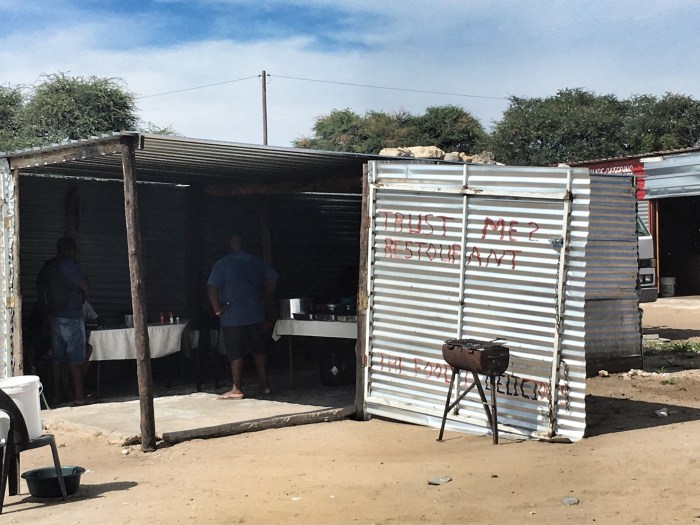
A restaurant in a location near Rundu. This is apparently the second one as the name is ‘Trust Me 2’.

When I first arrived I couldn’t understand why local governments allowed people to live in such horrible conditions. It took several conversations and months of observation to scratch the surface of how these locations came to be and why they persist.

Black Namibians tend to have family and farms in the norther regions. There they live a subsistence lifestyle where the number of cows determine a family’s riches. Homes are made of concrete block and metal roofs or the more traditional mud and stick walls and thatched roofs. Floors are dirt, cooking is done outside over an open fire, and kids run barefoot. Here outsiders will find the real Namibia where people are friendly, neighbors take care of one another and the pace of life follows the changes of the seasons and the movement of the herds.

Cows

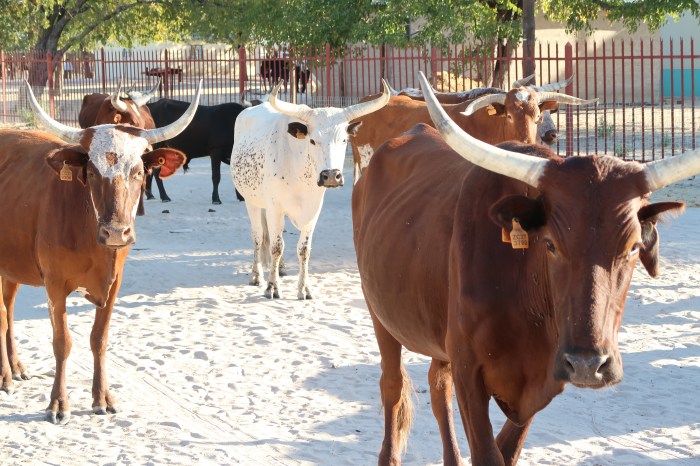
This herd is a typical sight in northern Namibia. This one was near Rundu.

What disrupts this idyllic lifestyle is the desire for “things”. The young ones watch movies and TV, see relatives who have gone to the cities and found good paying jobs and they believe that riches awaits them if they leave the farms and head to town. Many are only minimally educated so they wind up taking what few low paying jobs there are which don’t pay enough to rent a decent flat. Also, many send much of what they earn back north to their families, keeping barely enough to make it to the next paycheck. They minimize expenses by living in the shacks. They reason that it’s only temporary, and for some, it is, but for many more it become their new existence. As with many who live hard lives, they often find escape in alcohol or worse, which further entrenches them in poverty. They could go home, but often there’s a matter of pride. They’ve left the farm to make a fortune, they don’t want to return home empty handed.

broll_pounding_mahangu (1)

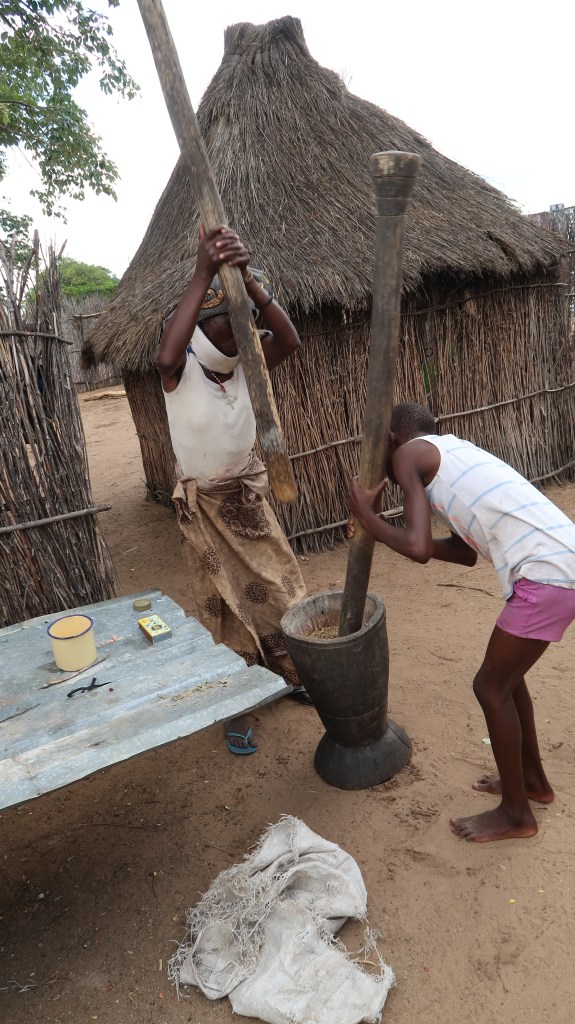
A common scene in the simple lifestyle of Namibians up north. This is in a homestead and they are pounding Mahangu, a grain used to make porridge.

That is just one facet of just one of the many issues facing Namibia, one that will require a uniquely Namibian solution. Which bring me back to why I’m here. My presence, my job here isn’t to save Namibia by instilling western business ideologies into the local populace. My job, as I see it now, is to find a way to bridge my knowledge and culture with those of my Namibian counterparts and to find sustainable solutions to problems we face. What should happen, if I do it right, is that as we address issues we come away with new knowledge that is applicable here and may find use elsewhere. In other words, my Namibian counterparts and I both learn something new and, hopfully, find innovative ways to address issues that affects not only Namibia, but the rest of the world.

kimmie_school_still (13)

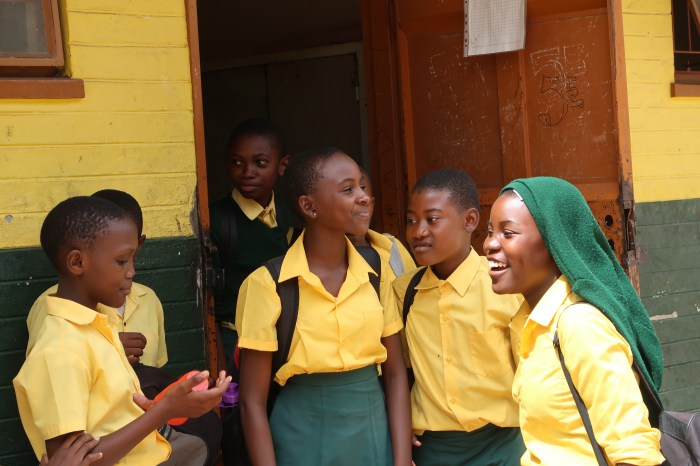
Girls at a school in the Kavango Region

Sounds like a tall order, but it isn’t as hard as one might think. To start all it takes is to step out of our world, remove the Western blinder and truly see what is around us. Only then can we become effective agents of change. Of course, removing our blinder may not be easy. We first have to recognize that we have them.

God Bless The Rains Down In Africa

“It’s gonna take a lot to take me away from you
There’s nothing that a hundred men or more could ever do
I bless the rains down in Africa, I bless the rains down in Africa”

Namibia is a land of contrasts. It’s dry for most of the year here in The Namib Desert if you don’t count the fog that occasionally rolls in from The Atlantic. Most days where I am it is sunny, breezy and warm. Not overly warm, the heat felt elsewhere in The Namib is moderated here by the cool ocean winds. There are the few days a year, sometimes only a few minutes a year, when there is rain.

Fog on the beach in Swakopmund

As luck would have it, I missed the rainfall that dampens this area for two years in a row. I was traveling up in Oland last year. This year the rains came early, while I was on a trip to Windhoek. Friends texted me about the weather I was missing. The air in Windhoek didn’t look particularly promising for precipitation, but when I went to sleep that night I could smell the rain in the air.

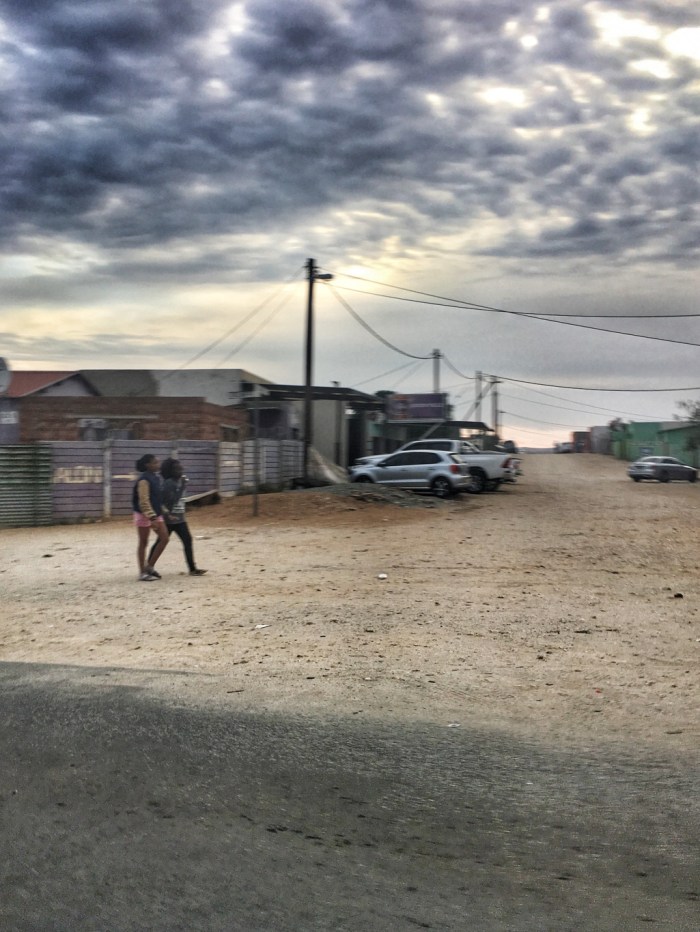
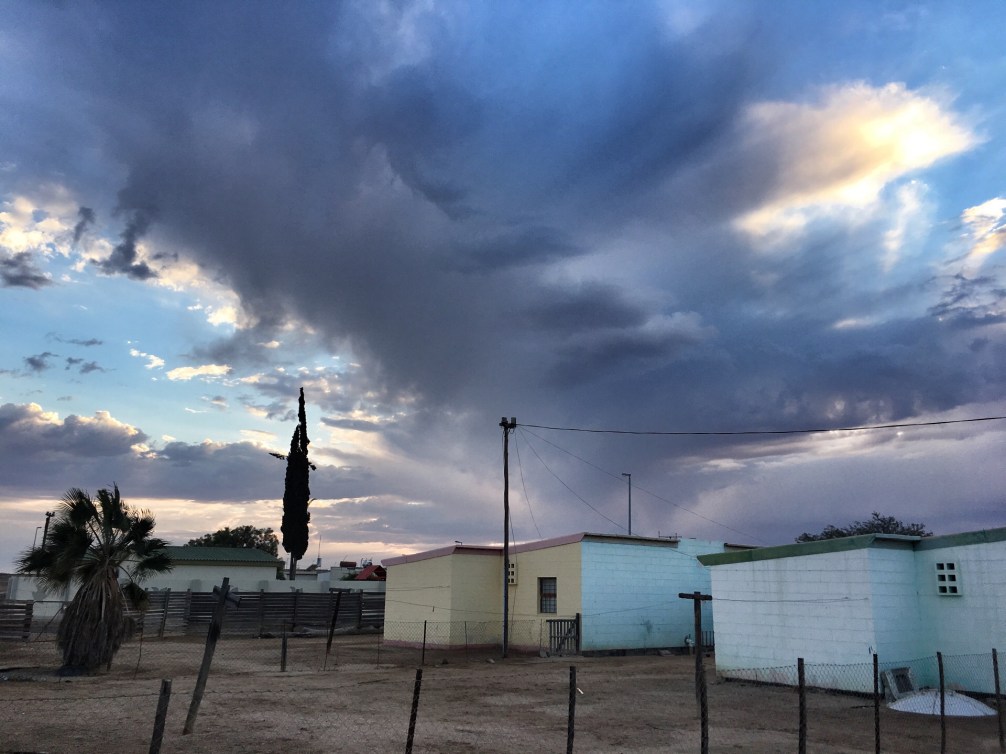
Evening in Katutura, Windhoek

I woke to a cool cloudy morning. I made coffee and took a look outside my hotel room and noticed that the ground was wet. Steel grey clouds hung low and moved sluggishly through the hills nearby.

As I watched, a light drizzle began and slowly got heavier. The shhhh of the many raindrops hitting cars and roofs and trees was soon accompanied by a symphony of drips and plops of water from those surfaces. Then, as if God wanted to add a finishing flourish, a single blue-white strobe of lightning flashed followed by a deep rumble of thunder.

Morning rain in Windhoek

Just as slowly as it had begun, the downpour slowed to a drizzle, then stopped.

“The wild dogs cry out in the night
As they grow restless longing for some solitary company
I know that I must do what’s right
As sure as Kilimanjaro rises like Olympus above the Serengeti
I seek to cure what’s deep inside, frightened of this thing that I’ve become”

My colleagues and I had two meetings to attend. The morning had promised more rain, but that promise was largely unfulfilled. The sun broke through the clouds, warming the streets and turning the cool, damp air into a steam bath.

With our meetings done, we headed back. We took the B2, The Trans Kalahari Highway, towards Swakopmund. The sun followed us and it looked as though the rains I saw in the morning would be all there was. But as we approached Karibib the weather changed. Ahead of us was a storm that darkened the horizon. Several flashes of lightning flickered through the clouds around us and the wind grew stiff and cool.

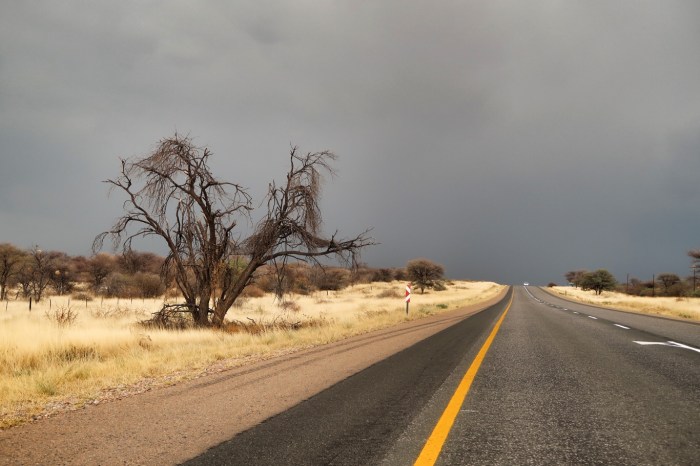
Storm up ahead

We drove into a downpour. There was so much water that the parched sand couldn’t absorb it fast enough and large puddles, some could easily be thought of as ponds, formed. By the time we got to Karibib the heaviest part of the storm had passed, but the water it left behind told just how serious the storm was.

The main street in Karibib was flooded, in places it was knee deep. Towns in The Namib aren’t designed to manage water and as we drove through we could see streams of water cascading down from the hillsides, adding to the pools we drove through.

Flooding in Karibib

As we drove towards Usakos the clouds had broken and blue could be seen through the grey. A light drizzle followed us for a bit then gave up the pursuit. We stop at a station outside of Usakos to stretch. I looked back at the passing storm and found a rainbow arching over the mountains.

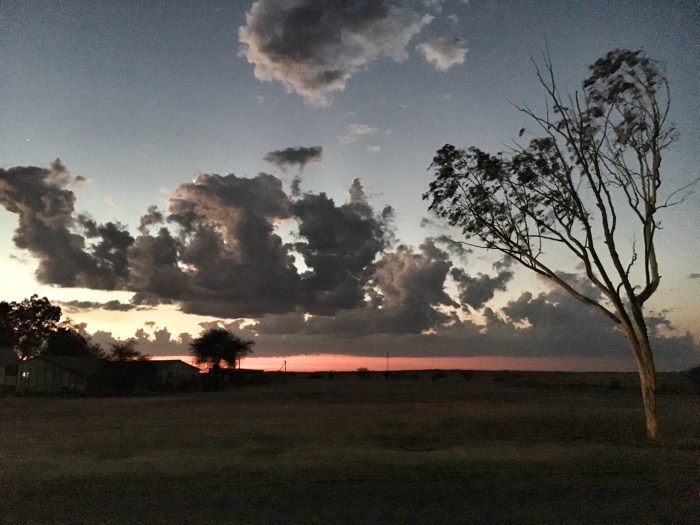
The rain has passed

“Hurry boy, she’s waiting there for you…
It’s gonna take a lot to take me away from you
There’s nothing that a hundred men or more could ever do
I bless the rains down in Africa, I bless the rains down in Africa
I bless the rains down in Africa
Gonna take some time to do the things we never have”
(Lyrics: Africa by Toto, Songwriters: David Paich, Jeff Porcaro)

Stay tuned.

Vern

Zambezi: Part Two

As I’ve mentioned in Part One of this post, The Zambezi Region was fabled to be rich in wildlife and foliage. After spending my first year in the Namib Desert, I was looking forward to some lush greenery full of chattering, chirping, squawking, grunting, roaring animal life. I am from Florida, though not a native, year-round greenery has become part of my DNA.

Don’t get me wrong, I love the desert, but I do miss the rain.

So, it seemed a good omen that it rained the first night we were there. It was a light rain, lasting maybe 15 minutes, but to a man from a land where rain can be a daily occurrence, that drizzle was a godsend.

The next morning was cool and sunny, and me and my media pals went to work documenting Krissy, the Peace Corps volunteer assigned to the remote village we’d traveled so long to get to.

There were many things that didn’t quite jive with what I’d been told about the Zambezi Region. Yes, there’s water, lots of it, in fact. The Zambezi River was maybe a kilometer from the village and even in the dry season, which it was during our visit, the river is wide and deep. But I wouldn’t consider the area we were in lush. In fact, while there were certainly more trees around, I’d say it was sandier than the desert I’ve lived in for the passed year. And far more hazardous. 

On the first night there Krissy warned us not to go barefoot, “There are spikey things everywhere.”

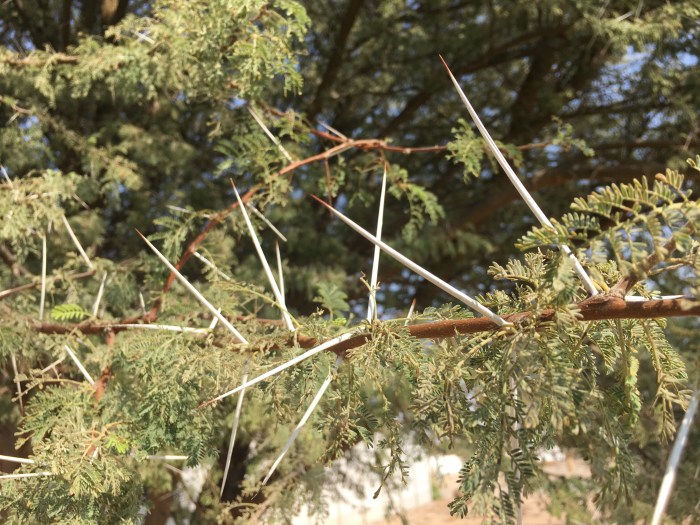
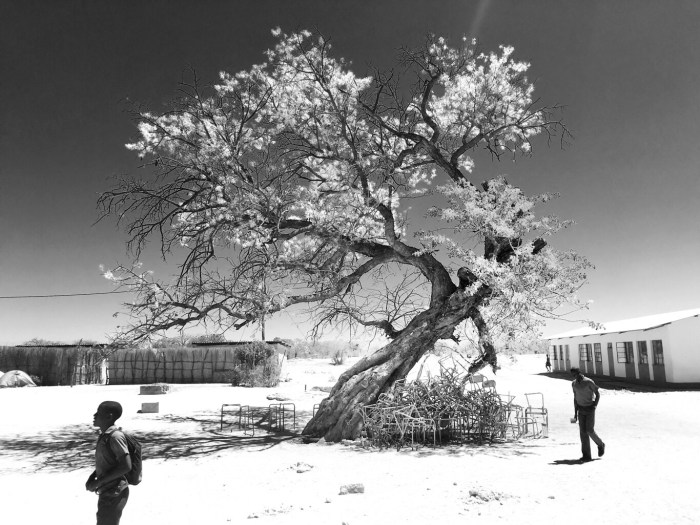
In the Namib, like in the deserts in the southwest U.S., plants tend to have thorns or spikes. Cactus is what most people think of when calling to mind a spikey plant. In the Namib even the few tree that there are have spikes that would put the thorniest cactus to shame. Branches are covered with inch long sewing needle sharp spikes that could easily puncture flip-flops and even some running shoes. But those spikes are relatively rare on the ground, and when they are you can normally see them before stepping on them. Where we were in the Zambezi Region, thorns and spikes are far more insidious, they are buried in the sand. No matter where you step you will almost always step on something sharp. The only saving grace was that most of the spikes and thorns are relatively small, not long enough to go through an average pair of flip-flops. But they do get stuck in the flip-flops. I spent many mindless minutes pulling thorns from my sandals and wondering how was it possible that the kids in the area can go barefoot without pulling thorns from their bloodied feet after every stroll.

Typical thorns on a typical tree in the Namib

And if the thorns aren’t enough, check out these eye-stabbing beauties…

Video: These could’ve been in my foot!!!

I mentioned that the Zambezi River is a short, thorny walk away. That doesn’t mean that there was plenty of potable water. People do use river for drinking water after its been filtered and boiled, but that’s not the normal situation. The village gets its drinking water from a borehole a few kilometers away. At the time of our visit, the pump that supplies water to the surrounding homesteads was broken and the only other source of water was from a private borehole within the village. The owner sold water to his neighbors for a relatively small amount of money, but he did charge. So, a morning and evening ritual for most homes was fetching water from the neighbor.

Water is heavy.

I have a full 100 liter tank the Peace Corps requires us to keep and I struggle to move it. Kids in the village half my size haul 25 liter tanks of water as part of their daily chores.  Women magically balance those tanks on their heads and walk over terrain I stumble over without a load. Even our host, Krissy, had to fetch water, but she had the use of a wheelbarrow. Even so, it was not work for the weak. (Try hauling 75 liters of water in a wheelbarrow through loose sand. Should be an Olympic event.)

If you can get pass the buried spikes and water hauling you start to see Zambezi for what it really is. Beautiful. Our days there were warm, breezy and bright, and night were cool and crystal clear. I’ve seen the Milky Way often enough in my town, and I’m still blown away by the view. Where we were in Zambezi there far fewer lights at night and the sky was so full of stars, the Milky Way so bright I could actually see my shadow from it.

Then there are the people. They are kind, generous, hardworking and everything I’ve come to know what Namibians can be. I live in a mining town and it is a melting pot of cultures, languages, beliefs and much more. It is also driven by the quest for money. That quest becomes all encompassing and often overrides what innate ethics Namibians have. For instance, often when people in my town learn that I’m an American (Because of my skin color most initially assume I’m Namibian and ask what tribe I belong to.) it won’t be long before I’m asked for money. It has gotten to a point where I don’t like to be social because people will assume I will pay for their drinks, their food, and more. In Zambezi people are will give you things, are quick to help, and are very curious about who you are and where you are from.

I also found that in Zambezi, and it’s likely true is most regions in the north of Namibia, people adhere closer to their tribal culture which includes singing and dancing at functions. There wasn’t a day that went by during our stay that we didn’t hear some group singing and people, even adults, are likely to break out in a dance if they hear a good beat.

Boys leaving school. One of the school building is on the right, our tents on the left.

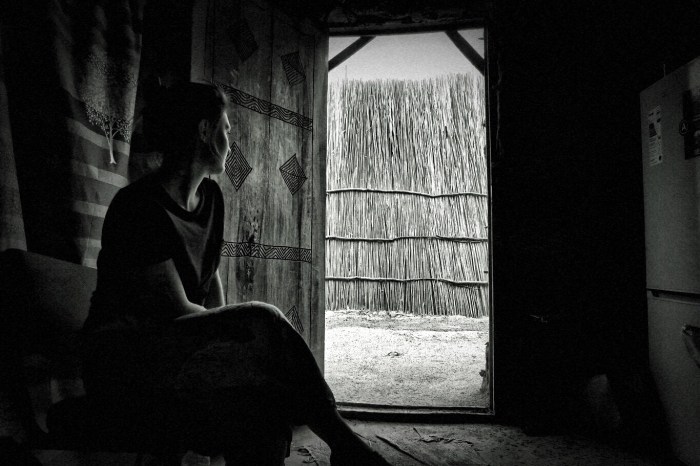
By American standards, the village we were in might be considered poor. Homes had no indoor plumbing, some had no electricity. Cooking was done over an open fire and homes are made of mud with thatched roofs. But it would be wrong to think of these folks as being poor. They have everything they need, though some things are a bit harder to get and maintain than others. For instance, the village school stay open at night so students can study in the electrically lit classrooms, and teachers are on hand to help and answer questions. Parents and teachers get together to discuss how best to educate the kids. There are well attended parent/teacher meetings too. Even by those who don’t have children in school will attend. 

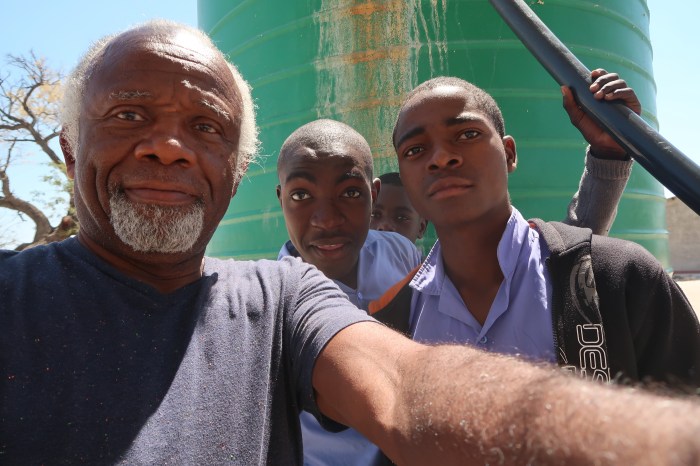
Me with some of the local boys who was curious about movie making and photography.

The village residents earn their living primarily from the river through fishing, or by farming. It is a much simpler life, devoid of the urban bustle that will stress even those born in it. Here, one can understand the term, “Namibian time” to mean that life doesn’t have to be rushed to be well lived. 

I like that.

After 5 full days of filming, photographing and interviewing, our team was ready to leave. Sleeping in a tent while there was not the best experience. During the day the slightest breeze blew fine sand into our tents no matter how tightly we buttoned everything up. I had the shake out my sleeping bag nightly before going to sleep, but by the third day I was was just trying to shake out the heavier grains of sand. The fine sand gets into everything and it’s useless to try to avoid it. 

Media Team member, Katie, waiting for our transportation

Even my camera was affected by the ultra fine dust. I have a Canon GX-7 Mark II, an excellent travel camera. Almost all the photos you’ve seen in this blog were taken with it. The only downside is that the camera isn’t dust proof. It had survived the Namib with only a few particles getting into the lens, but Zambezi proved too much for it and the automatic lens cover jammed. When it finally freed itself after repeatedly turning the camera on and off, it left a sizable scratch on the lens. Luckily it doesn’t affect most of the shots I take with the camera, but you can tell its been through a lot.

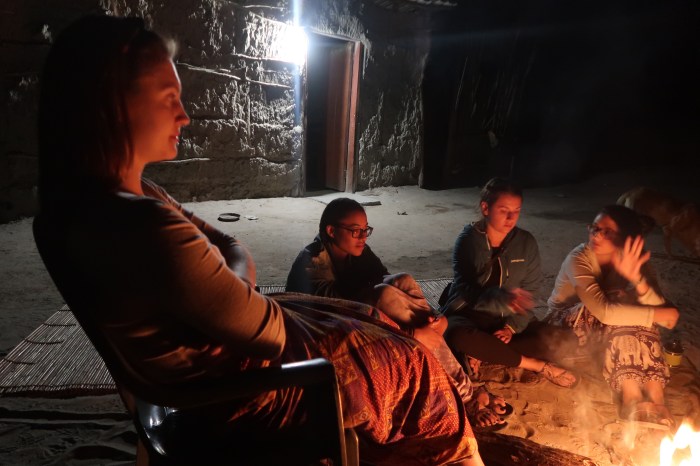
Media Team relaxing around an open fire.

The day came to leave Zambezi behind, and while we were eager to get back to a bed with less sand and a real shower, I, for one, felt a bit sad to leave. We had scaled and baked fish fresh from the Zambezi River over an open fire. We had bathed outside in a stall made of sticks. We had watched the local youths perform a native dance. We had slept on lumpy sand under the stars. We had lived among people who loved their life, their community, their culture. And we had witnessed how a Peace Corps Volunteer can be truly integrated in an environment so different that many back home just could not handle it.

Sun setting on the Zambezi River

Our trip back to our sites were fairly uneventful. Elephants and other wildlife remained hidden from us. I still have several months left in my service. Maybe elephants are still in my future. This is Namibia, after all, you never know what’s beyond the next rise.

Stay tuned.

Vern   
Zambezi: Part One

I recall watching a Mutual of Omaha’s Wild Kingdom episode that featured the Zambezi River. The TV show host, Marlin Perkings, showed animals nervously drinking from the muddy river, hoping to quench their thirst and not become dinner for the huge crocodiles that lurked nearby. It wouldn’t be a nature show if it didn’t show the waters erupting in flurry of reptilian jaws as some poor antelope was snatched and dragged into water and its doom, completing the ‘Circle of Life’.

Back then I wanted to be Mr. Perkings and witness the life and death dramas played out every moment on the African plains and riversides. I didn’t know that, to catch those sequences of life and death struggles, film crews waited days, sometimes weeks to shoot just one clip. Life and death and everything in between plays out at its own pace oblivious to the wants and machination of Man. But I didn’t know that back then. I thought Africans saw such happenings daily, like we see cows, pigs and chickens on local farms or dogs and cats in our urban homes. All one had to do was go there and witness these spectacles play out like scheduled Broadway shows.

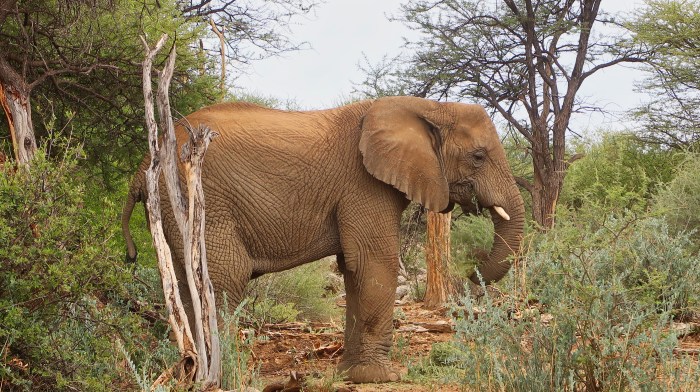
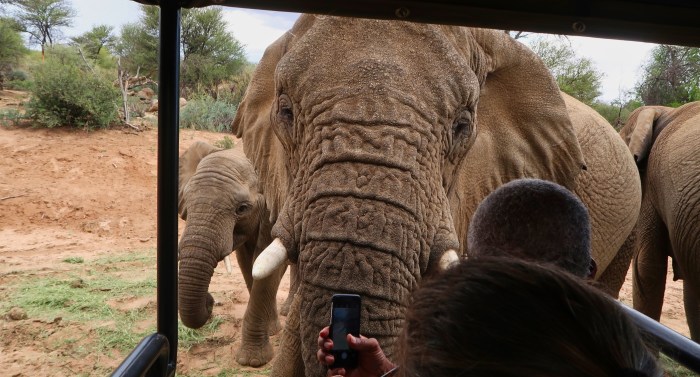
Fast forward about 50 years, as much life experience and the luck of being selected by the Peace Corps to serve in Namibia. I now know that even back then the Wild Kingdom film crews were lucky to get the shots they did. Even so, when the opportunity to go to the Zambezi Region of Namibia came about I couldn’t help but hope to see African wildlife near rivers or hanging out and doing whatever it was that African wildlife does. Specifically, I wanted to see elephants in the wild. I’ve seen zebras, and giraffes, warthogs and baboons, herds of Rock Hyraxes and Springboks, flocks of Love Birds and flamingoes, even a huge colony of penguins, but I’ve yet to see a single elephant in the wild. The Zambezi trip was a real chance to rectify that.

The trip to the Zambezi Region was work related, I’m part of media crew and we were to document the daily routine of a teaching volunteer assigned to a remote village.

When I first found out that I was actually going to spend 2 years in Africa I fully believed that I would do it living in a mud hut, cooking my daily gruel over an open fire and spending my days building schools, aqueducts, or figuring out how to grow crops in a land with an annual rainfall of less than a tenth of an inch per year. Never mind that I hadn’t so much as camped in my backyard and every houseplant I owned was artificial because I always managed to kill the live ones. We Americans have such a narrow view of the rest of the world. So it was a big surprise when I learned that my assignment was in a fairly modern town, my home for my two year stay is a relatively large 4 bedroom house with hot and cold plumbing. My office has a large, sun filled window and air conditioning. On most weekends I can get a croissant that rivals the best I’ve had anywhere. I was honestly more than a little disappointed. I really wanted the ‘African Experience’.

As it turns out, not every Peace Corps volunteer winds up in offices in some urban center, some actually do get to stay in mud huts and eat traditional foods while executing their Peace Corps duties. The volunteer we interviewed in the Zambezi Region was one such lucky person. She stayed in a Silozi Homestead and taught science at the local school.

When I learned that I was going to go to the Zambezi Region with my media crewmates I was excited. Five-plus days in a region famous for its wildlife, its simpler way of life, its very ‘African Climate’. How could I not be stoked? We even planned to sleep in tents during our stay. Turns out we had to because the village is so remote there aren’t any commercial or semi-commercial lodgings available. We’d set up our tents outside the volunteer’s compound, cook over an open fire (on occasion it turns out), and live, as much as we could, like the locals. We’d truly be getting a fuller sense of the ‘African Experience’.

To top all of that off, there was a very good chance we’d see elephants in the wild! Oh boy! Oh boy! OH BOY!!!

The day came to travel, which I normally have no problem with. As a Peace Corps volunteer, we are not allowed to drive anytime during our service. A cruelty meant to keep us safe. So, we travel as the less affluent Namibians do, we hike. A fellow volunteer and media crewmate, Maggie, hiked with me, so the first leg of our two-day trek was with familiar company and through familiar territory. We hiked to Otjiwarongo (pronounced, “Oat-gee-var-rongo”), the gateway to the northern regions, then to Rundu (Pronounced: “Rune-doo” and you trill the ‘R’.) where we took lodging and met up with the rest of our team.

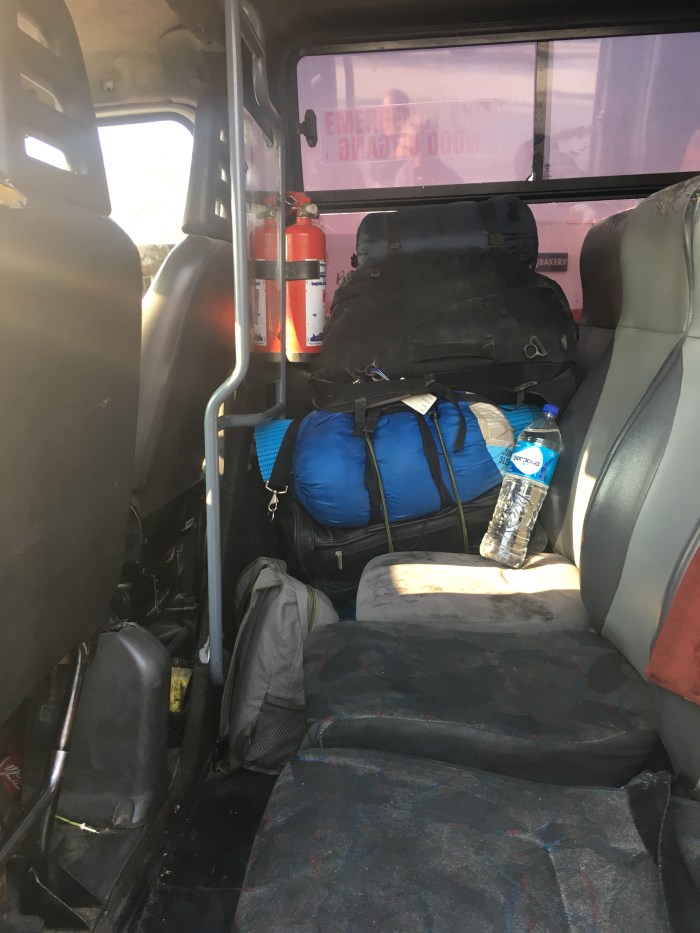
All packed up and ready to go!

Rundu is a large town as towns go in Namibia. It has all of the amenities, including rush hour traffic. We spent one night in there and found a transport to Katima, the capital of the Zambezi Region. If you take a look at a map of Namibia you’d see why this leg of the journey is so interesting. Zambezi is the easternmost region connected to the bulk of Namibia by geo-political isthmus, a strip of land that starts in the Kavango East Region to the west, with Angola to the north and Botswana to the south. The single major roadway is B8 and, as I was told, “here, there be elephants!”

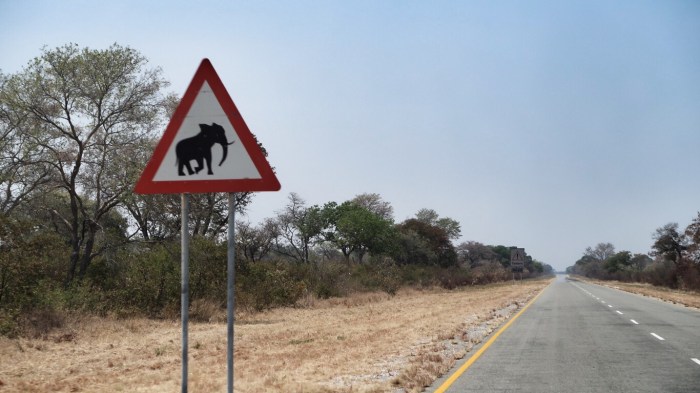
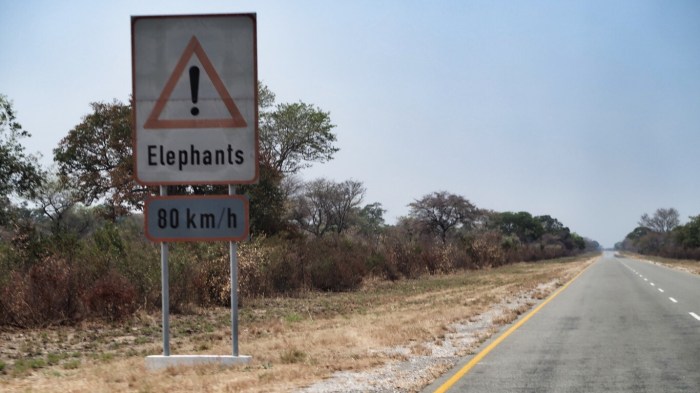
We were lucky enough to get a driver who had a small 7-seat vehicle, which we filled with equipment and ourselves. I sat in the copilot seat, camera ready to record the largest land mammal in its natural setting. Of course I was excited when we set out that morning. Partly cloudy skies meant a cooler trip, and I had a commanding view of the road ahead. After an hour or so of our 5 hour trip we started seeing elephant crossing signs. I took them as a good omen. Elephants would soon appear grazing languidly along the roadside, mother pachyderms shielding their rambunctious kids from trucks and other road hazards, agitated bulls flaring ears and shaking their huge heads, trumpeting at our intrusion. My hands became sweaty as I griped my camera in anticipation.

They promised elephants!!

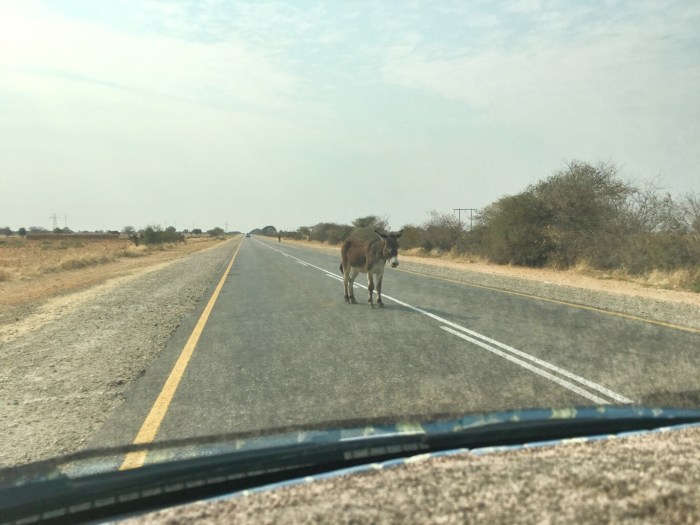
After 2 hours the only animal life we saw were dogs, donkeys, cows, goats and, occasionally, their herders. Not exactly wild, but the cows, donkeys and sheep tended to play in traffic, crossing the road whenever the moods struck them. Still the signs we saw promised elephants, and began to be emphatic about it. First you’d see the elephant crossing sign then several meters behind you’d see another, but one had a ‘!’ sign above it as if to say, “Elephants! No, really! We’re not kidding!! Elephants!!” If my excitement was waning it was rekindled after seeing these signs. There must be elephants ahead. Patience, Vern! Patience!!!

Donkey determined not to let us pass

4 hours into the trip and the signs promising elephants, even the insistent ones, seemed no more than a lie. We had passed fields, rivers and flood plains with pools of water, perfect places for elephant hangouts, or so I thought, but we saw none. Our driver explained that it was mid afternoon and the beasts were likely deeper into foliage, were its cooler and away from people.

Trust us! Elephants here!

Well, that’s just great! No elephants! Maybe we’ll see some on our return trip.

We arrived in Katima late in the afternoon. Katima is the largest town in the Zambezi Region and also a shopping hub for the region. You can pretty much find anything you might want or need in the stores and shops, but the best place to go if you want to see real Namibian shopping is the open market, where local vendors offer up everything from fish, to handmade tuxedoes. It’s a cacophony sounds, smells, and sights all vying for your attention. It’s hard not to look like a tourists there. Even I stood out, my mannerisms were so un-local-like. I supposed me whipping out my camera didn’t help me blend in much either, but I couldn’t help it. There was beauty everywhere.

My teammates spent plenty buying chitenges and souvenirs. Even I bought a traditional dashiki.

We camped out in the living room of a local volunteer which foreshadowed our sleeping arrangements for the next seven days. Concrete floors are not the most comfortable, especially for an aging body like mine. Sleep was elusive.

The next day we got a ride to our final destination late in the afternoon. When we finally arrived at the small village, a little more than several homesteads near a minor crossroads, the sun was setting, we still had to setup our tents and arrange for dinner.

Did I mention that I’ve only slept in a tent 3 times in my life, and have set up a tent twice before? I’d never set up a tent in the dark and the tent I had, one I borrowed from a friend, looked easy enough to construct, so I wasn’t worried. It had only one tention pole, after all. How hard could it be?

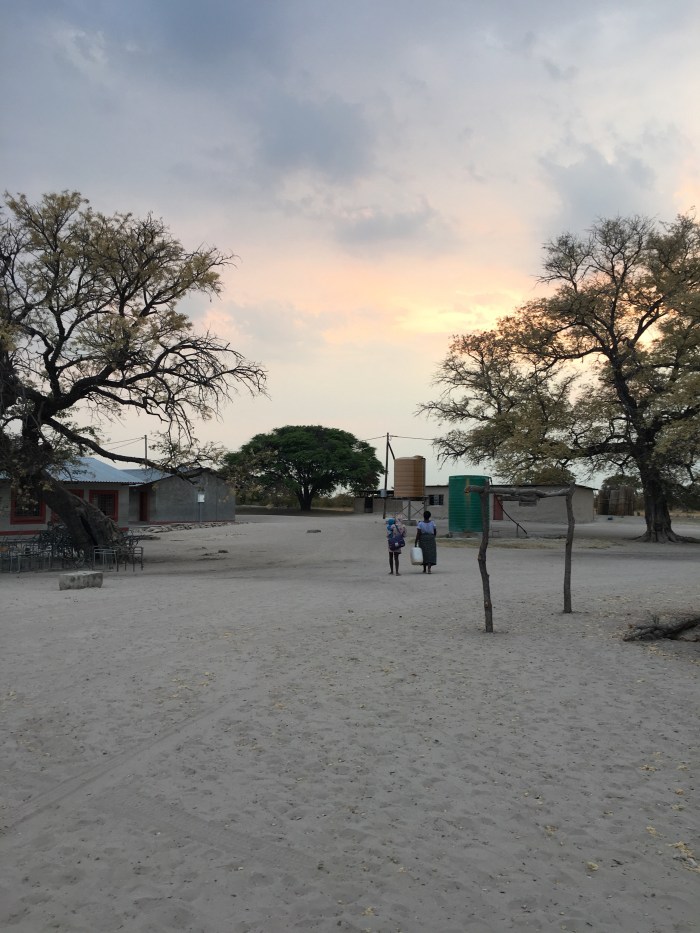
Woman and child fetching water in the village where we stayed

45 frustrating minutes later my humble temporary abode stood, somewhat lopsided, in the sand. To the credit of its designers, not my ability to figure it out, the tent accepted me and my belongings without collapsing and I was able to get into my sleeping bag without too much ceremony. After a light dinner and media team meeting I settled into my new sleeping arrangements determined to make the best of the experience.

So ends the first part of my Katima journey. More to come shortly.

Stay tuned.

Vern
Namibia Observation: Odd Rain

I’ve mentioned how dry it is here in the Namib Desert, but I think I might have gotten some of my facts wrong. While it is certainly very dry, depending on the time of year and where you are in the Namib, things can get downright soaking with water.

If you live in the seacoast town of Swakopmund, for instance, drying your laundry can be a challenge. I’m told that, if you’re lucky, it can take 2 days to dry some things, and often laundry is wetter after a day of hanging out in the fog and humidity than when it was first hung.

Not so in Arandis, Usakos or Karibib, towns about 40-100km inland from the Atlantic and about 60-120km north-east of Swakopmund. On almost any given day I can hang out a dripping wet bath towel and fetch it, as dry as Mars, an hour, maybe an hour and a half, later. I say “almost” because there are a few days here, especially in Arandis which is the closest to the ocean of the three towns I mentioned, and especially during the summer months (November thru April), when dense Atlantic fog rolls in and dampens everything. On those mornings trees with condensation ladened leaves produce showers beneath them with each breeze, and buildings, especially those with night-cooled metal roofs, have little sandy mud and water moats all around them.

There are even rarer days when there is actual rain that falls from actual clouds. Storms, complete with thunder and lightning, will drench the desert. Pools of water, some knee-deep, will form, and dusty streams and dry riverbeds are renewed as rainwater gathers and follows gravity toward the ocean.

I mention all of this because I just stepped outside. It‘s 3 AM. Instead of clear skies filled with stars and a cool, dry desert wind I was met with clouds and a relatively warm and damp breeze, and a distinct smell of moisture. It’s winter here and rain just does not happen this time of year, yet, when I checked my weather app I see that it predicts a 60% chance of rain in about an hour. If we get anything it’ll likely be no more than a sprinkle, but I want to be in it. Having gotten used to Florida weather, I miss water falling from the sky.

It’s an hour later and, sure enough, it started raining! Just now! Not heavy, but enough to wet the streets. There’s even some lightning too! And yes, I stood out in it. It felt amazing.

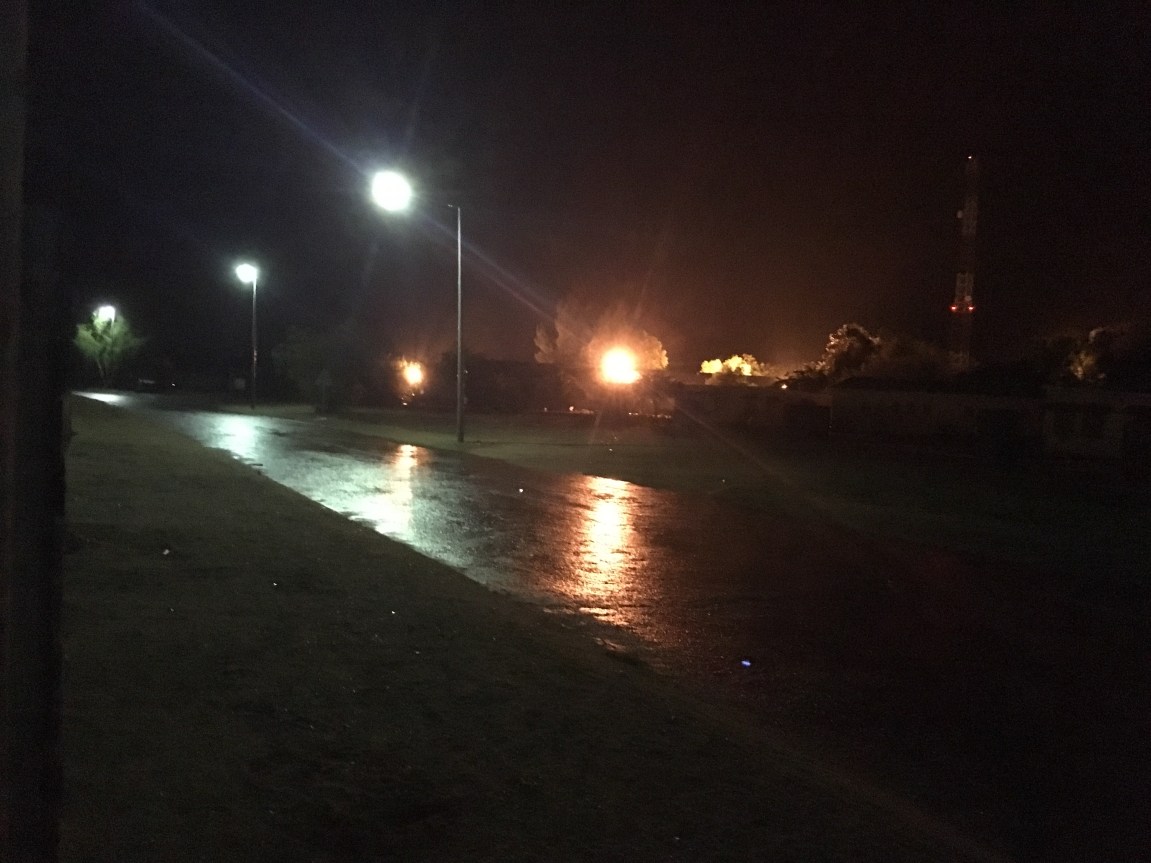
Wet streets at 4AM

Just as quickly as it started, 10 minutes later, it was done. Barely enough to form small puddles in the street. Already the pavers in my back patio are drying. Soon, if I hadn’t witnessed it, been out in it, I would have found it hard to believe it happened at all.

But it did.

Epilog: It’s 8 AM an it has sprinkled a bit since the wetting rain 4 hours ago. Now it looks like there one last shower coming before the sun and the dry desert wind pushes the moisture West. My neighbor, Michael, tells me the rain isn’t normal. He thinks it’s cool. I agree.

The wind from the East is picking up. The weather forecast calls for the rain to end and for more typical weather for time of year, high, dry winds and high temps, to return Tuesday.

Maybe another brief shower

Ah well. It was fun while it lasted.

Stay tuned.
Vern
It’s Been A While…

It’s been a while since I’ve posted, it’s because I’ve been rather busy, which is a good thing.

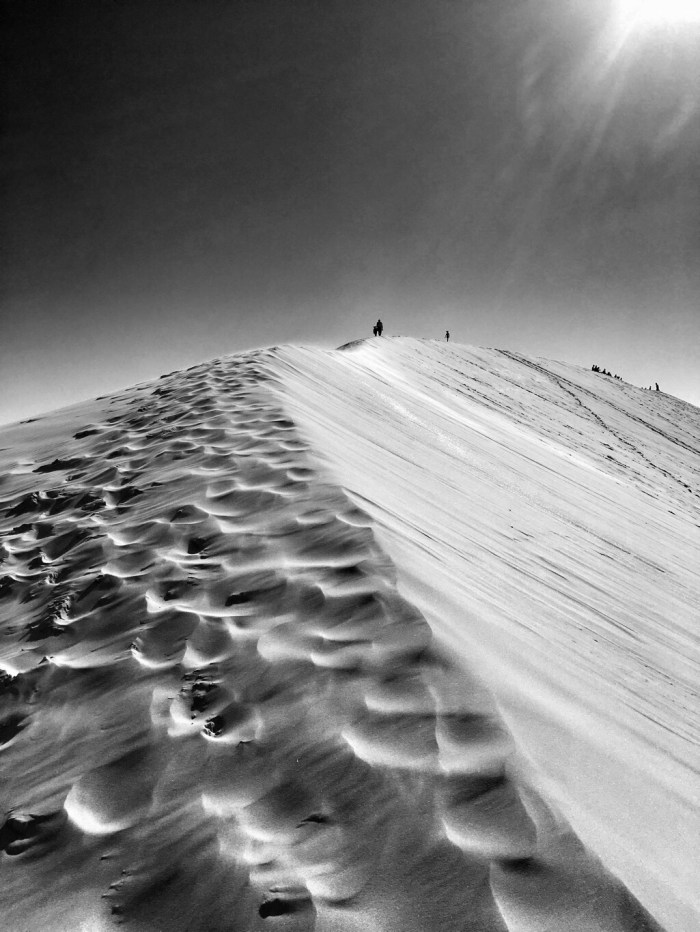
To the top of Dune 7

I’ve travelled to Luderitz with the Media Committee team on a project. That was a blast. Been back to Windhoek several times for different reasons, and to Okahandja. I have several weeks of a respite from traveling, but that will change soon as I need to go to Okhabdja again, then Windhoek, then out to the Zambezi region.

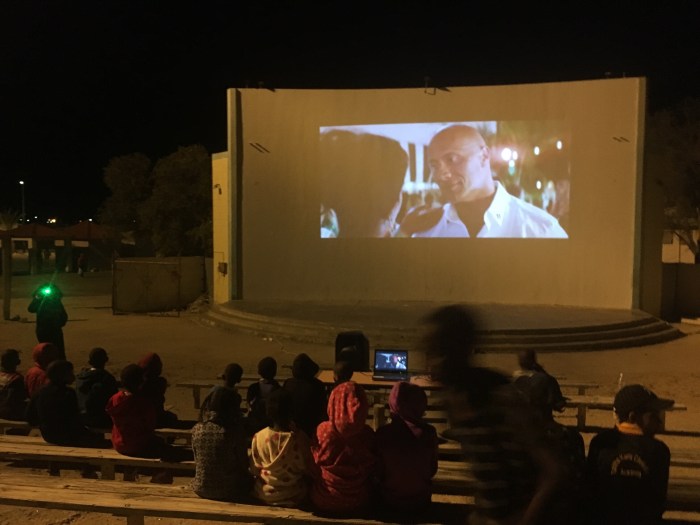
I haven’t been sitting idle while here at site either. Movie Night is still moving along. Last Friday we showed Jumanji and even though it was chilly we had a nearly a full house. There’s a lot to get done with Movie Night still. We need to set up the advertising process, advance the renovation of the amphitheater (walls and seats are the next focus), and finalize the whole process for making it self sustaining. It’ll get there.

Movie Night in full swing

One of my primary projects, Dreamland Gardens, had a major move forward. I was able to get a fully funded grant to buy and install two 10,000 liter water tanks and fix their irrigation system. I’ve been busy working the details of that and it’s moving along nicely.

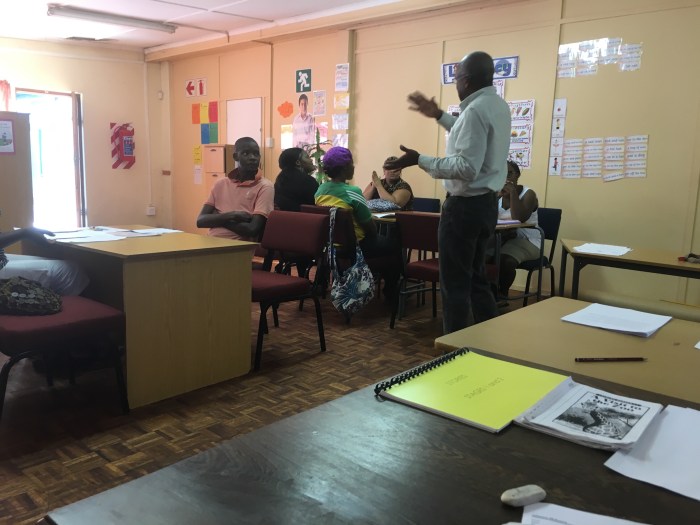
My adult English class was a minor hit and I was able to get help from colleagues to offer remedial English to adults to augment the classes I offer. I’m going to offer my original class again and offer and second level class that focuses on research. The skills I’m teaching may not seem like they are business related, but actually they are. Being able to write a clear, concise and reasonably well researched essay can help learners create business plans and job proposals that are a step above their peers. It can be the defining difference in winning a job, loan, or grant. Combined with what my colleague are offering, learners taking our classes can advance their reading, writing and comprehension of English well pass what they’ve learned in public school. At least, that’s the goal.

English Class for adults

My supervisor seems happy with what I’ve been up to, so much so that he wants to expand it. He’s also asking me to mentor a handful of local small businesses. So, my time on site will definitely be full for the next quarter at least.

It hasn’t been all work, work, work though. The Peace Corps staff asked several of us ‘veteran’ volunteers to host trainees in what called ‘Exposure Visits’. The purpose is to give the trainers a taste of what life is actually like at various sites around Namibia.

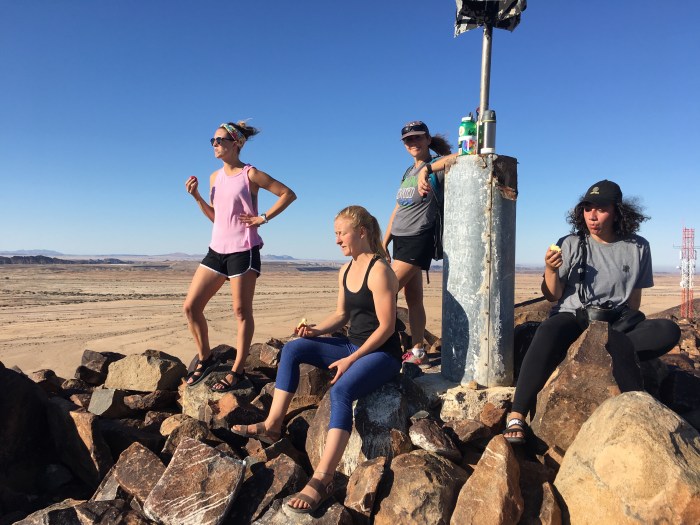
I got 4 trainees (the house at my site is big by local standards and I can easily accommodate more if people don’t mind sleeping on the floor). The visit happened on a weekend when there was a Namibian holiday, so some of the planned meeting and greeting I had set up didn’t happen. Instead I was able to give them more of a environmental and cultural experience with the help of my friend and colleague, Engombe Florian, who drove us literally everywhere. The girls (Laura, Alex, Courtney, and Hailey), hiked, spelunked, climbed, and otherwise explored the desert around my site. We had a blast! We saw wildlife (ostriches in the wild), climbed mountains, and explored abandoned sites and more. Also, as part of the cultural exposure experience, we attended a local hip-hop concert.

Exposure Visitors getting exposed

I know that sounds like a vacation rather than work, and for them it was a bit of a time-off, but the point of exposure visits is to let the trainees experience some of the things they were taught about and warned against during their two-month long training. Women especially need to take notice since the culture here tends to be male oriented. At the concert, for instance, they were exposed to how aggressive young male Namibians can be in their quest for a hook-up. I, with Chris, a fellow PCV at my site, and Engombe watched over my charges as the concert progressed. We had to intervene a few times when situations got a bit much.

In all, it was a very positive experience for them, and me, since it offered me a glimpse of what female PCVs have to go through.

Today is the first full day I’ve had where I can do my normal household routines: washing clothes, sweeping and cleaning, and preparing the main meal for the rest of the week. (This week it’ll be pasta with meat and mushroom sauce.)

So, that’s what I’ve been up to. I’ll try to be a bit more diligent in posting more often. Can’t guarantee it though.

Even so, please…

Stay Tuned

Vern

The Trip to O-Land

“I was sick that day,” he tells me.

Larry is of average height and build with short cropped hair and skin as smooth and dark as Swiss chocolate, but you would not know it to look at him now. He is hunched forward with one hand on the steering wheel, the other on the manual shift knob. His eyes, normally clear and vividly brown, are now dull and veined. He’s been driving for 7 hours with just a few short stops for gas and restroom breaks. I am a willing, but largely useless passenger. I’m not allowed to drive, one of the Peace Corps’ seriously enforced policies meant to keep me safe in a country where traffic accidents is one of the leading causes of death. Never mind that it’s also one of the leading causes of death in every industrialized nation on earth and yet I have survived over 40 years behind the wheel driving, but a policy is a policy and I’m relegated to reprise my role as copilot and entertainment director on this trip north.

Typical road hazard in O-Land

As a copilot, I’m horrible. I don’t know the roads, I have no map and my phone’s connection to the internet is dicey at best, Google Maps is not going the happen. And for most of the trip I felt I was failing in the entertainment department too. My experience with people for whom English is not their mother tongue has led me to believe that any conversation with deep subject matter is likely a lost cause. Language is the barrier. Though Larry’s english is impeccable, he still has problems (as most people do when learning American English) with American cultural references, inferences and allusions, and it’s surprising how much of our day to day conversation is made up of such. Still, I tried. Jokes, facts about this and that, even a brief run through the American political landscape, none of it seemed to ignite a conversation of great length and more often than I wanted we fell into a mildly awkward silence.


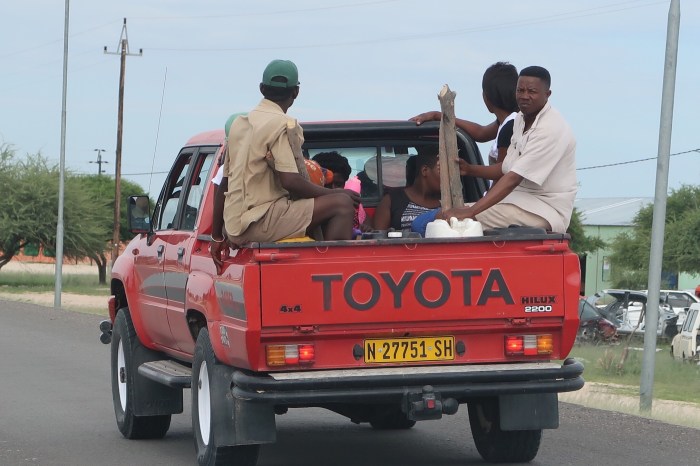
Bakkies are the most versatile vehicles around

All of that changed when we stopped in Otjiwarango which serves as a gateway to all the regions in northern Namibia. The regions directly north of Otjiwarongo are collectively known as Ovamboland or O-Land. The area gets its nickname not only from its inhabitants, who are primarily of Ovambo decent, but also because the names of the four regions and many of the towns and cities within them all begin with the letter ‘O’. The four O-Land regions are Oshana, Ohangwena, Oshikoto, Omusati. (I asked Larry about the names and he said there’s no real reason for it, it just is. Then he tells me a joke in which some foreigners were trying to talk to a woman who only speaks oshikwayama and after trying unsuccessfully to ask the woman to get into a car someone suggested that they preface each English word with ‘oshi’. The the resulting instruction was, “Oshi-please oshi-get oshi-into oshi-the oshi-car!” Apparently it worked!)

The Oshana Region, is where Larry was born and raised and his excitement on returning to his home region plainly showed in his actions. Instead of me trying to find things to talk about Larry would point out places and explain some of the history or memories he’s experienced when he was a child. He’s normally a guy who laughs easily and seems to know everyone, and that trait was most prevalent here. Anytime we stopped anywhere in O-Land Larry would see an old friend or acquaintance and they’d laugh and talk about old times.

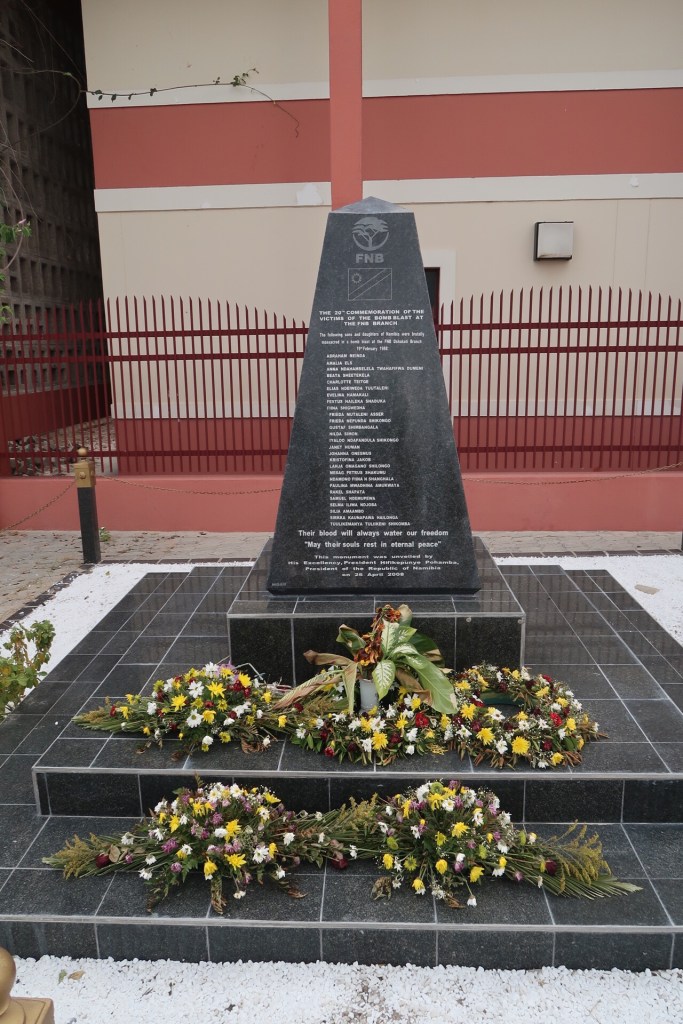
We were driving through the town of Oshakati, the largest in the Oshana Region, when he pointed to a fairly new building near the center of town. Out in front of the mauve colored structure was a black granite obelisk surrounded by a short, ornate fence. “It happened there. It used to be a bank, a First National Bank branch,” he said, then pointed to a grassy area not far from the building. “That’s where I was waiting with a friend. As I said, I wasn’t in school that day because I was sick. I was 14.”

The strip of grass, perhaps 5 meters wide and several hundred meters long, is now surrounded by a wire fence. “The fence wasn’t here then.”

Larry parked the bakkie (pickup truck) we rode in and we walked over to the fence. Leaning lightly on a fence post, he said as he pointed, “We were right over there.”

All around us people went about their endeavors, much as they likely did 30 years ago. Everyone but a few cabbies looking for fares ignored us as we walked across the street and stopped in front of the obelisk. “30 people died,” he said. “Mostly women. Professional women. Nurses and teachers. It was a payday for them.”

On the obelisk was a list of names. Above the names, an engraving of the Namibian flag and these words:

The 20th Commemoration of the victims of the bomb blast at the FNB Branch
The following sons and daughters of Namibia were brutally massacred in a bomb blast at the FNB Oshakati Branch 19th February 1988:

Then the names: Johanna Onesmus, Beata Sheetekela, Silia Amaambo, Lahja Omagano Shilongo…


Monument commemorating those who dies in the blast

Larry studies the names for a moment. I wait in silence. Time hasn’t shorten the list for him. I think he reads each name to himself. After a moment, he sighs, turns and walks back to the bakkie. I follow.

We are in O-Land for meetings with some local entrepreneurs. The meeting isn’t until the following day and we need to find our accommodations for the night. And dinner. We leave the mauve building and black obelisk and find food and shelter between Larry chatting up old friends. He’s very happy to be home.

The next day the meetings go well, we’ll be helping some farmers establish several commercial gardens that will provide jobs and fresh produce to the area. After a few more meetings with local organizations who will also be involved, we pack up to head back south. Before we leave we make one last stop. The obelisk.

“There is a businessman who is now a friend of mine, his cousin’s fiancé died in the explosion,” he tells me. “They were both heading into the bank when a man asked the brother for a job. He stayed outside to talk to the man while his fiancé went inside. Then the explosion happened as she was about to leave. She died later, on the 26th of February. The cousin says he would likely be dead too if that man hadn’t asked him for a job.”

I wonder if the cousin gave the man a job, but I don’t ask, it seems inappropriate somehow. I do ask who planted the bomb and why. “There is speculation, but no one knows for sure who planted it. No one took credit for it. They didn’t have video surveillance like they do today. Since no one took responsibility, no one knows exactly why. It was during the time of apartheid and many bad things happened during that time.”

He gives one last look at the site and the names on the stone, then we start back. You would think the ride south would be somber, but that isn’t who Larry is. While in O-Land we visited his mother and other relatives, delivered gifts to role models who inspired him, and toured places he once explored as a kid. These are obviously good memories and he’s glad to share them with me.

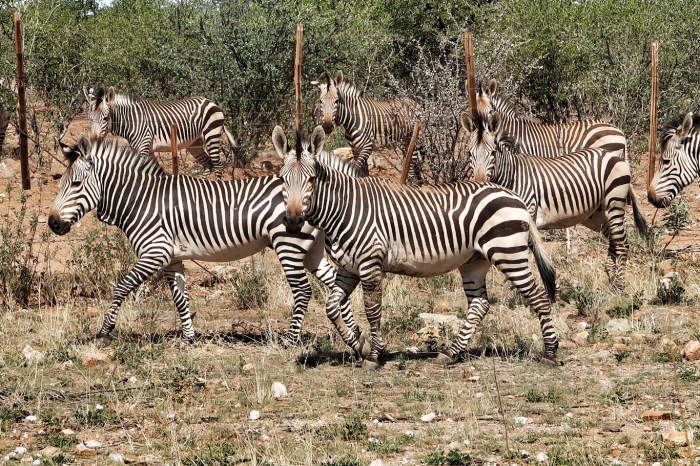
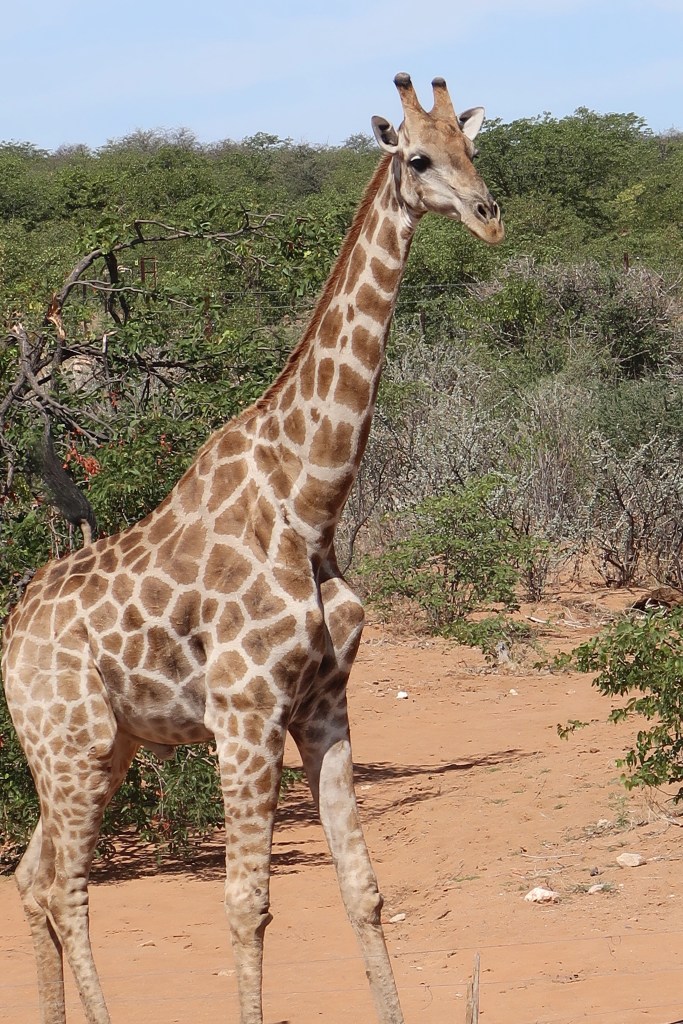
Instead of heading directly south he detours so that our path skirts Etosha, a huge national game reserve, in hopes that we’d see something interesting. We do! We see springbok grazing, a herd of zebras crosses the road in front of us, and not far away a small herd of giraffes watch us go by.

Zebras!!


… and giraffes!!

The detour has added at least two hours onto our five hour drive back over dark gravel roads. Just at sunset we got a flat. We’d hit a sharp rock that put a gash in the left rear tire about the length of my hand. I finally felt like I had something to contribute and helped change the tire. While doing so it became obvious why vehicle maintenance is critical in Namibia, especially if you travel the backroads.

By the end of the drive Larry was a spent man, but he somehow managed a smile. My guess is that he’s happy to be back with his family, but I also believe that, as it might be for most Namibians, any reason to go north is a good reason to go north. It’s returning home, recharging the spiritual batteries, to walk through memories, both good and bad, and re-center one’s self. I think he managed a smile because he got to go north, to go home.

I get that.

Stay tuned.

Vern
Another Blog Editor Test

OK, this is another editor called BlogPad Pro. It looks like it has every bell and whistle a blogger could want, except a clean, uncluttered writing environment. Which is a shame because this app has captioning and nice tools to properly imbed photos and videos.

I think what I’ll have to do is continue using Notes then copy/paste what I’ve written and add photos here. I guess I can live with that, until I can’t.

BlogPad Pro seems to have it all, and maybe a bit too much


If any of you have blog editor suggestions please let me hear about them.

Stay tuned,

Vern


Namibia: Observations: The Night Sky

There are still many places on earth where light pollution hasn’t blotted out the stars, I’m glad to be in one of them.

One a clear night, like tonight, there are so many stars out that it’s hard to see some of the constellations. Orion is always the easiest to recognize, but others get lost in the speckled immensity of the Namibian night sky.

The Milky Way is easily seen as a smudgy swath of luminance bisecting the night. Looking at it makes it hard to believe that the smudge is the cumulation of millions of suns so far away that their individual light, dimmed by unfathomable distances, can only be seen as a tiny pinprick.

The Milky Way as seen from my backyards

Those bright spots are set in a sea of black. At least, we see it as black, but in fact, it is filled with energy that we are shielded from and can only perceive with the aid of our technology.

But I don’t care about that. I just enjoy looking up and getting lost in the vastness of it all.

What’s also interesting is that aircraft of any type is rarely seen over many parts of Namibia. I’ve been at my site for eight months and I’ve seen only one aircraft, likely a jet flying so high that its flashing running lights moved slowly against the starscape.

Orion Constellation (the three stars are the belt)

That’s not to say that I don’t see interesting things moving around in the sky at night. I’ve seen several meteors and a flock of relatively low flying birds. All a lot of fun to see, but the weirdest thing I’ve seen is what I call a brief battle in space.

While enjoying a beautiful night and view of the Milky Way I saw a series of bright flashes.

The first light, almost directly west of me, flashed then died, lasting maybe half a second. The second flash was not as bright as the first and dimmed slower. Maybe a second and a half. It was to the right of the first by maybe 1 degree.

Then another light way to the right about 15 degrees flashed like the first but not as bright. It flashed again about 2 seconds later, then went dark.

The last light was in the vicinity of the first but more to the right by about 5 degrees. It flashed for a second then died away.

That was it. The whole show lasted maybe 15 seconds. I watched the area for another 20 or so minutes, but no more flashes occurred.

Alien space ships zapping each other to smithereens? Americans and Russians duking it out in low earth orbit? Distant stars going nova in sync? Your guess is as good as mine. I saw lights flashing, you take it from there.

The weird flashes, the Milky Way, the gazillion stars. The night skies here are amazing.

Stay tuned.

Vern
Namibia: Getting Around

As of February 15, 2018, I have served 1/3 of my 24 month commitment to the Peace Corps here in Namibia.

There’s a saying that seems appropriate about time flying, having fun, and so on. For the most part, I have to say that I’m having a blast! I’m really feeling integrated into my community (Peace Corps speak for people recognizing you and saying hi), I feel like I’m contributing to the greater good of Namibia (more Peace Corps speak for teaching classes and providing counseling to those seeking business advice), and I feel I’m doing well in cross cultural exchange (still more Peace Corps speak where I talk about life in the States and get schooled about life in Namibia). As with any venture, there are ups and downs, but this one has, thus far, been mostly up.

My job with The Rössing Foundation requires that I travel through many of the northern and western regions of Namibia ( a definite ‘up’). As a member of the Peace Corps Namibia Media Committee, I get to range even further into the country. While I’ve only been in country 10-ish months, I’ve been able to travel to places many PCVs don’t get to go as part of their normal duties. And as another saying goes, getting there is half the fun. Which brings me to what I want to talk about in this post: travel in Namibia.


Women crossing a flood plane near Onesi

There are several ways to get around in Namibia, which you choose depends on where you want to go, what you need to carry with you when you go, what you can afford or, if you are lucky enough, who you know. There’s the normal compliment of motor vehicles available to the adventurous traveller, which we’ll get into in a bit, but there are also (slow) trains, planes, and bus services. These tend to be limited to major towns and cities in each region and not all services are available to even these. I have not taken any of these, those I may catch the Intercape Luxury Bus Service if I need to go south. Others have used the Intercape and liked it.

Most people who own vehicles own pickups, except here they are called bakkies. They are usually white, usually 4WD, usually capable of seating 5 in the cab, and the bed is likely covered. I’m lucky, I have a friend who owns a bakkie and doesn’t seem to mind giving me rides if he’s headed where I’m headed. As you may imagine, bakkies are the workhorse vehicles of choice here. Regardless of whether it is open or closed, bakkie beds are loaded up to overflowing with anything and everything. It is not uncommon to see 10 or more people in a bakkie bed, often riding along with their luggage.

A typical ‘Bakkie’

The only vehicles more popular than the bakkie are the small 5-seat sedans favored by cab drivers. Realistically these sedans comfortably seat 4 adults, but cabbies will cram 5 in regardless of the size of the adults in question. (More on this later.) Small children may ride free if they can sit on your lap. I’ve seen at least 3 small kids ride this way, which brings the passenger tally up to 8. Watching people climb out of these wee vehicles always reminds me of circus clown cars.

A typical ‘cab’

Next we have the kombies, which are small buses capable of seating 7 to 15 depending on the size. Again, the advertised seat count is theoretical. These are typically used for intercity transports and typically haul trailers for luggage, packages, even furniture and small caged animals. Like cabs, kombies can be in various states of repair (or disrepair). If you really want to experience travel in Namibia, go by kombi. Opt for the larger ones that at least look like they’ve maintained. You’ll find that Namibians are generally friendly, generous, and have a great sense of humor. You can practice your Afrikaans, Oshikwanyama, and other local languages.


Kombies at the Rhino Hikepoint in Windhoek

I’ve come to believe that kombies drivers are frustrated Indy 500 driver. They are only supposed to go 100kph, but they tend to move somewhat faster, passing double-length trailer trucks like they were standing still, all while pulling a loaded trailer and carrying more people than they should.

Kombie trailer loaded with goats

The well heeled urban Namibian is likely to drive a Euro-luxury sedan from Mercedes, BMW or Audi. These tend to be black or dark gray with heavily tinted windows. Like in the States, these are status symbols.

Well heeled Namibians who live out in the sticks drive expensive 4WD RangeRovers, LandRovers, LandCruisers and the like. Here, 4WD is actually needed, the rural terrain is unforgiving and road service practically nonexistent. Even some parking lots require 4WD because of deep sand or sharp, shifting rocks. And everyone carries full size spares that have been pressure checked. I’ve taken 3 trips to the north and have gotten flat tires twice. And I don’t mean a nail-in-the-trend type flats, these were rip-a-hole through-2-inches-of-rubber type flats. And both happened many kilometers from the nearest town. Unpaved roads harbor sharp rocks that can challenge even 4×4 tires. Spare tires are essential.

As a Peace Corps Volunteer, I’m not allowed to drive (this even though my duties can carry me far and wide), so I am forced to get around like the average Namibian; I hike.

Hiking is done in one of three ways: you can call a transport company and arrange to be picked up, you travel in air conditioned comfort, and they drop you off at your destination. (This is hiking only in the vaguest sense.) You can go to a hike point and climb on one of the kombies or get a private car heading in your direction, or you can head out to the highway, put out your thumb and hope someone picks you up. That last one is not as unpredictable as it sounds. Many are quite successful getting around using their thumbs. Still, as it can be anywhere, hiking can be dangerous. Namibia, is a relatively safe country to be in, but bad people can pop up, or in this case, drive up anywhere, and there are long stretches of road where there’s not even a mobile phone signal. Extreme caution is advised.

Hiking the B2 Highway can be a lonely and dangerous endeavor

Hike point travel is far more reliable and these places are typically brimming with cabs, kombies and private vehicles vying for your dollar. In fact, the drivers can get so worked up that they jostle and shove each other, yelling at you to pick him over the ten others yelling at you. For women, especially young women, it can be a nightmare. The drivers will often grab her belongings and shove them in the trunk of his car, forcing her to either go with him of demand her stuff back. I’ve seen women crying while trying to get a ride.

Hike points are not for the meek.

Drivers mobbing a cab at a hike point in Windhoek

Normally I take the far more comfortable and predictable transport company, but today I wanted to ‘rough it’, and walked to the road leading to Windhoek and tried my luck.

Hiking from the side of the road is a bit less intimidating than hike points. You can stick your thumb out to passing RangeRovers, trucks and VW GTIs, but they seldom stop ( I suppose there are many factors that play into the decision to stop for a hiker. I would likely only stop if the hiker was alone and neatly dressed.) The vehicles that do stop are old sedans and small 7-passenger quasi-station wagons (think micro-vans like the Mazda MPV and you’ll get the idea). These are enterprising Namibians who fill in the transportation gap by picking up hikers and charging a bit less than what you might pay at hike points.

The 7-passenger thingy is what I caught into Windhoek this morning and I can tell you that the only 7 passengers that can sit comfortably in that vehicle are a troop of emaciated, vertically challenged Oompa Loompas.

As luck would have it, my fellow passengers were of normal dimensions, except for the woman next to me, who grossly exceeded her already small seating allotment to the point were an imprint of the door trim I was squeezed against will likely stay with me for the remainder of my service here.

My overly ample, but pleasant seat mate

I suppose we were luckier than most, our vehicle had air conditioning running. Normally very loud music is substituted for AC. I guess the thinking is that if you make the music loud enough passengers will be more concerned about bleeding eardrums than sweating brows.

It seems to work.

Hike point hiking is really how it’s done here, though the Peace Corps frowns on it. I get their concern, too much can go wrong. Vehicles tend to be poorly maintained, drivers can be overly aggressive, and the environment can be dangerous to the less worldly. On the other hand, you can meet really interesting people and feel closer to the environment. There are inconveniences (like the rather large one this morning who pressed so close to me that when I felt my stomach rumble it turned out to be hers), but I honestly believe its worth it. The woman next to me was very kind and caring, offering snacks to those around her (Namibians share, it seems to be part of their DNA).

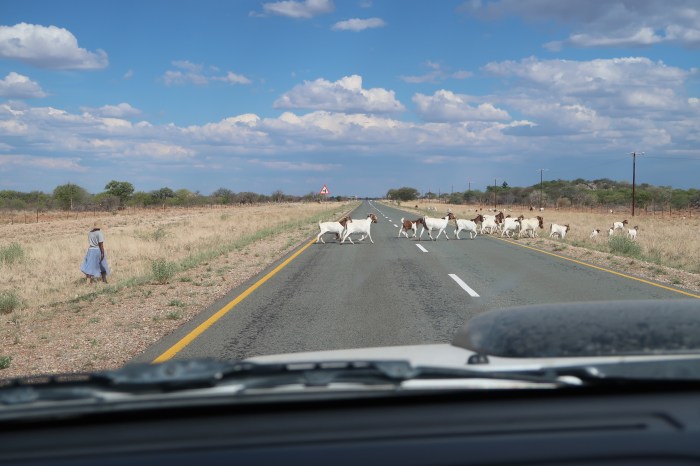
I also enjoy the scenery. Regardless of which part of the country I’m traveling through, I’ve found the views mesmerizing and often breathtaking. For a guy whose driven through much of the U.S. and rarely seen anything more interesting than a herd of white tail deer grazing along the roadside, sitting in the passenger in on a Namibian road is a treat. I’ve seen baboons, warthogs, and ostriches. Cows, goats, sheep and donkeys will wander onto the road as well. And if you’re very lucky, you’ll be forced to stop while a herd of zebras cross in front of you. While stopped you might see a small herd of giraffes grazing at a safer distance from the road.

You never know what you’ll try not to run into, cows, donkeys, …


…warthogs or baboons,…


…or a herd of zebras crossing the road.

It can be a lot of fun.

I will continue to take the more comfortable passage if available, but I now have no qualms of taking to thumbing it. It’s all part of the adventure.

Stay tuned.

Vern